
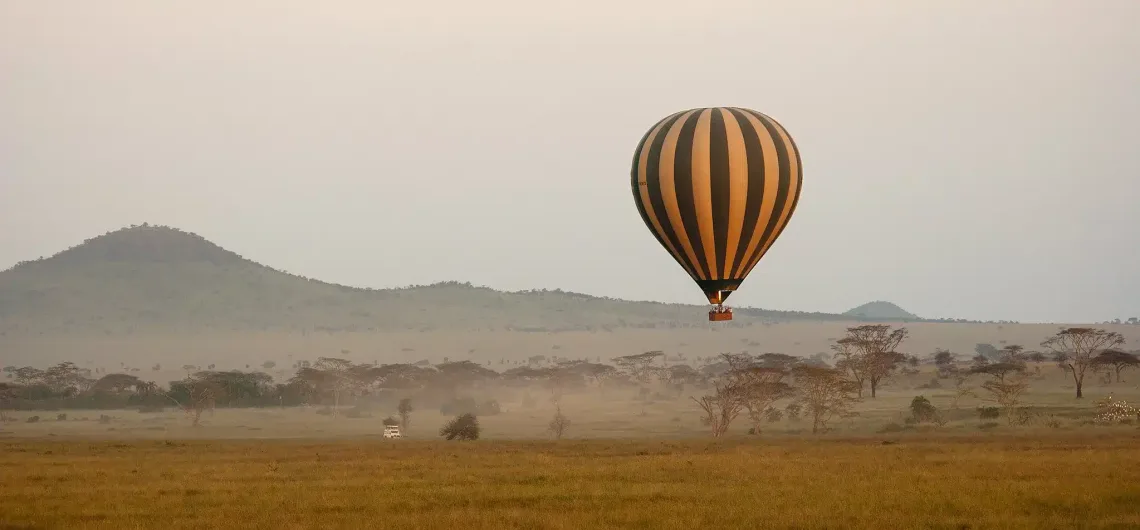
You want to take part in a hot air balloon safari during your trip to Tanzania, and you are wondering where to start. Well, we have prepared everything you need to know about our balloon safari flights in Tanzania. A balloon safari in the Serengeti is quite similar to a hot-air balloon safari in the Masai Mara, Kenya. The main difference is the colour of the balloons; even the different balloon operators have their own distinctive designs, some even come in deep red love shapes, while others are draped in the colours of the Tanzanian flag. As in Cappadocia, hot air balloon rides offer a premier, year-round sunrise experience over stunning “fairy chimney” landscapes in the endless savannah plains.
See the stunning beauty of Serengeti National Park from a hot air balloon. When the sun rises, you’ll float wherever the morning wind takes you. Your pilot can guide the balloon close to the treetops or lower, offering you a unique view and great opportunities to photograph the wildlife below. Sometimes, you’ll soar high above the plains to take in the wide, breathtaking views of the Serengeti. The pilot adds heat to the balloon with quiet burners. Between these times, you’ll enjoy calm silence, disturbed only by the sounds of nature below.
A balloon safari over the Serengeti gives you a rare chance to see the wide plains from above. At first, animals look like tiny dots moving across the land. As you get closer, you’ll spot zebras with their distinctive stripes, large elephants making their way to a waterhole, warthogs searching for food in the grass, and the mild movement of lions’ tails as they rest under the trees.
As you float gently through the air, you can look in every direction and take in all the beauty below. From up here, you can see almost everything.
The Night Before Your Flight
Rise Before the Sun
Tea Before Take-Off
Breakfast in the Bush
Why You Should Add a Balloon Safari to Your Trip
Detailed Itinerary (Typical One-Day Balloon Experience)
• 7:00–8:00 PM – Pre-flight briefing at your lodge (safety, pickup time, packing list).Day of the Safari
• 3:45 AM – Wake-up call in your lodge (earlier if you’re staying farther away).
• 4:00–5:00 AM – Private transfer to the balloon launch site (30–90 minutes depending on lodge location).
• 5:00–5:30 AM – Arrival, hot tea/coffee served while crew inflates the balloon.
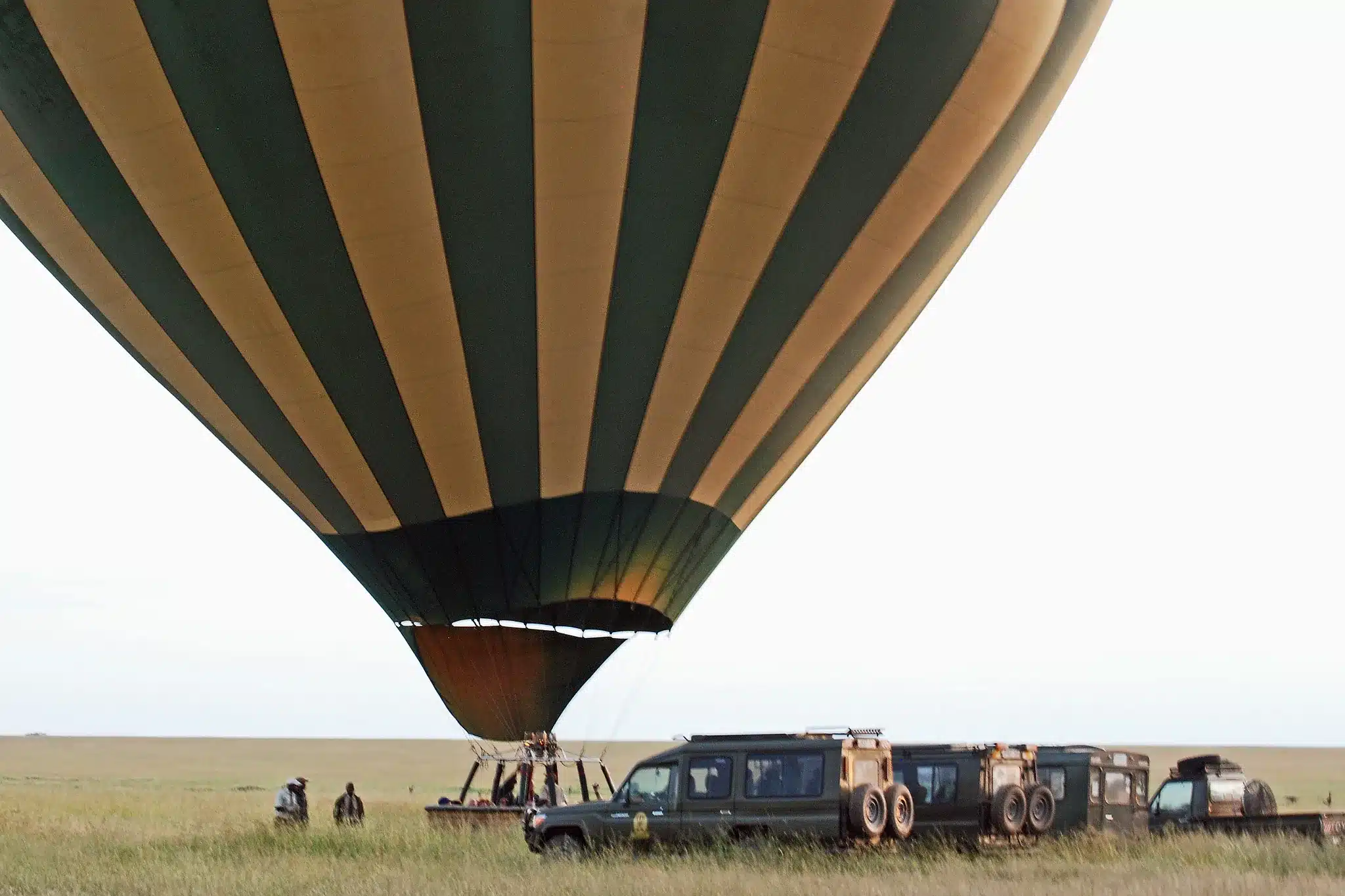
• 5:30–5:45 AM – Final safety briefing and boarding (basket starts on its side for the unique Serengeti lift-off).
• 5:45–6:00 AM – Take-off at first light.
• 6:00–7:00 AM – One-hour scenic flight over the Serengeti plains and migration herds.
• 7:00–7:15 AM – Gentle landing and short transfer to breakfast site.
• 7:15–8:30 AM – Champagne bush breakfast in the middle of the savannah.
• 8:30–9:30/10:00 AM – Scenic drive back to your lodge with possible game viewing. Total time away from your lodge is about 5–6 hours.
Companies Operating Balloon Safaris in Tanzania
- Serengeti Balloon Safaris (Balloon Safaris Ltd.)

Serengeti Balloon Safari waiting for take off
Serengeti Balloon Safaris acts as the pioneer and largest operator in Tanzania. Founded in 1984, this company introduced commercial balloon flights to the Serengeti and has since flown more than 300,000 guests. It has received multiple accolades, including the World’s Leading Balloon Ride Operator distinction. The company operates year-round in Serengeti, Tarangire, and Ruaha, offering several balloon sizes and prioritising safety with Cameron and Ultramagic balloons, onboard seatbelts, and rapid-deflation systems. Their champagne bush breakfast is a repeat highlight. All pilots are commercially licensed, and the safety record is excellent. - Miracle Experience Balloon Safaris

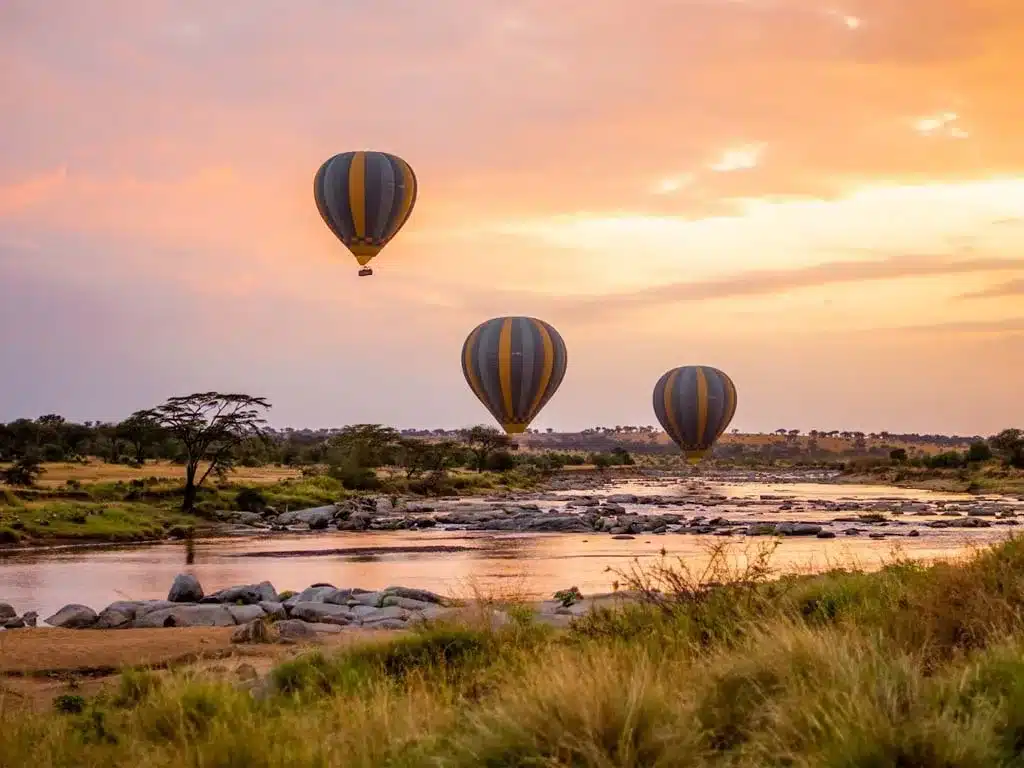
Miracle Experience Balloon Safaris delivers a premium and intimate eco-luxury adventure. This operator is honoured with awards and consistent high ratings, focusing on smaller group sizes, personalised service, and eco-friendly management. Flights are available over Serengeti, Tarangire, and the private Grumeti Singita Reserve, offering especially scenic and photographic experiences. Luxury charters are also flown under the Miracle Air brand. - Nyssa Balloon Safaris
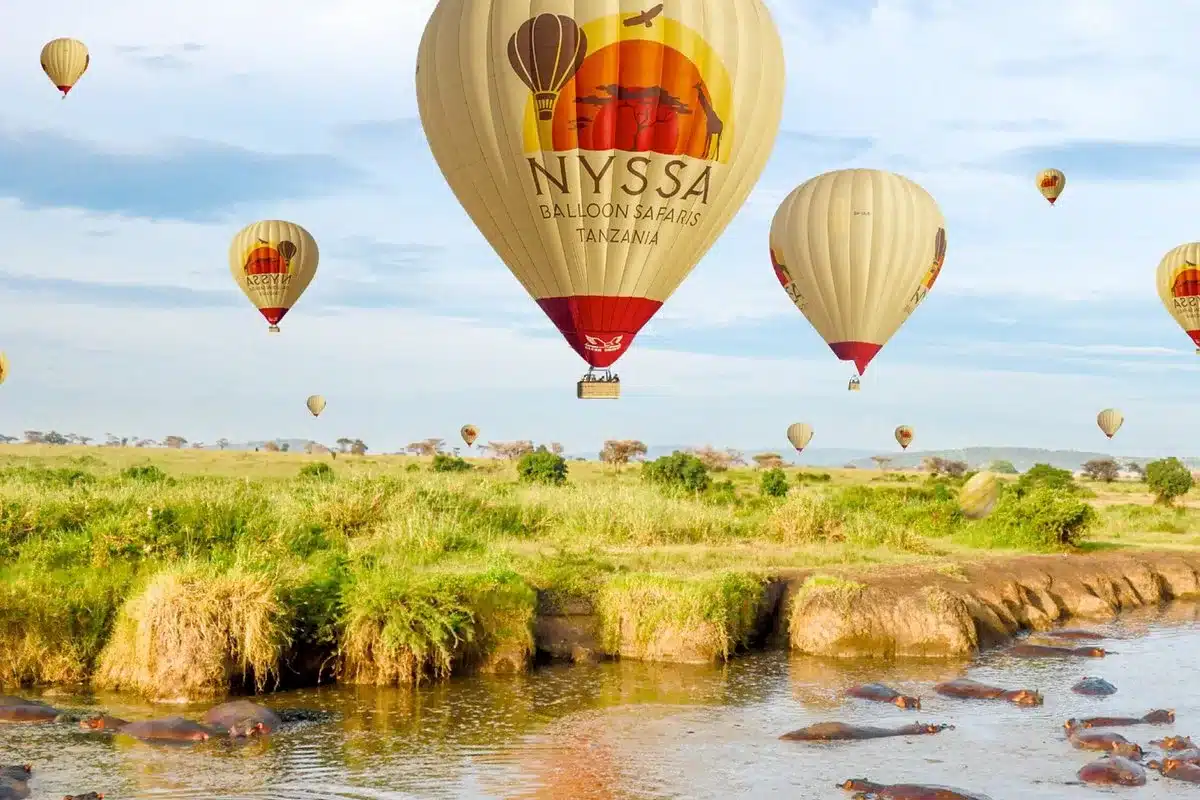
 Nyssa Balloon Safaris offers a licensed, luxury balloon experience across Serengeti, Tarangire, and Ruaha. As a newer yet fully accredited provider, it emphasises exclusivity, smaller group sizes, and personalised attention, creating a boutique atmosphere while upholding high standards of safety and quality.
How safe are balloon flights in Tanzania?
Destinations in Tanzania Where Balloon Safaris Occur
- Serengeti National Park (by far the most popular and iconic)
Flights operate year-round from multiple sites: Seronera (central – year-round), Ndutu (southern – December to March for calving season), Western Corridor (May–March), Northern Serengeti (June–January), and Kirawira/Grumeti. This is the best place to see the Great Wildebeest Migration from above — thousands of animals streaming across the plains at daybreak. - Tarangire National Park
Flights launch near Sopa Lodge and offer spectacular views of ancient baobab trees and massive elephant herds (Tarangire has one of the largest elephant populations in Africa). The landscape is dramatically different from the Serengeti — more hilly and dotted with huge trees — making it a favourite for photographers. - Ruaha National Park (southern Tanzania)
The most remote and exclusive option. Ruaha is Tanzania’s largest national park, known for its rugged miombo woodland, huge prides of lions, and wild, untouched feel. Fewer tourists mean a more private experience. Flights here run seasonally (usually June–November) and are perfect for travellers who want something off the beaten path. - Bonus: Singita Grumeti Private Reserve (adjacent to the western Serengeti)
Some operators (especially Miracle Experience) offer exclusive flights over this ultra-luxury concession, where you may see the migration without other vehicles in sight.
What You Need to Wear and Pack
Clothing (what to wear for your hot air balloon safari):
- Base layer: Lightweight thermal top + leggings (or long underwear) for the cold pre-dawn.
- Mid layer: Fleece or soft-shell jacket (easy to remove in the basket).
- Outer layer: Long-sleeved shirt and long trousers in neutral colours — khaki, beige, olive green or light brown (bright colours or black/blue attract tsetse flies in some areas).
- Footwear: Sturdy closed-toe shoes or lightweight hiking boots with good grip (the basket sometimes lies on its side for the “Serengeti start”, so you step in and sit). No flip-flops, heels or open sandals.
- Headwear: Wide-brim hat or cap + hair tie/ponytail if you have long hair (burner heat rises).
- Optional: Light windbreaker or rain jacket (just in case of early-morning dew).
What to pack in your daypack (small and light — operators provide everything else):
- Binoculars (essential for spotting animals below).
- A camera or phone with an extra battery, a memory card, and a neck or wrist strap (hands-free is best).
- Sunglasses with a strap (the sun is intense after sunrise).
- High-SPF sunscreen (50+) and lip balm with SPF.
- Small bottle of insect repellent (though mosquitoes are minimal at altitude).
- Tissues or wet wipes.
- Passport copy (some operators ask to see ID at check-in).
- Motion-sickness medication (not usually needed — the balloon drifts with the wind).
- Balloon sizes: Standard flights carry 8 passengers; 12-, and 16-passenger balloons are available on request.
- Schedule: Daily flights year-round (weather permitting). Note that at some remote camps, such as Singita Mara River, flights run only from June to November.
- Duration: Approximately 60 minutes in the air, depending on the wind.
- Age & fitness: Children over 7 are welcome; there is no upper age limit. Guests must be reasonably mobile.
- Ballooning in Tanzania has a long-standing safety record and is regulated by the Tanzanian Civil Aviation Authority. Your pilots are all commercially licensed, assuring a safe and comfortable journey.
How much does a hot air balloon safari flight cost?

