
No, you do not need to purify water yourself on Mount Kilimanjaro. Reputable operators collect water from mountain streams and springs, then treat it for you (usually by boiling, sometimes with chlorine tablets or filtering). This water is provided daily at camps and for your bottles/bladder. Where does the water come from? The water comes from natural water sources in its pure and unadulterated form, safe from any kind of pollution and chemicals.
If you’re climbing with us, you don’t have to filter your own water. All programs marketed on Tranquil Kilimanjaro include free and unlimited, safe water to drink. Your mountain crew will properly treat your water on your Mount Kilimanjaro climb, regardless of the technique, to ensure that it is safe to drink.
- Mount Kilimanjaro Drinking Water
- Water bottle vs water bladder for Mountain climbing
- Why drinking water on Mount Kilimanjaro, Mount Kenya, Rwenzori, and Mount Meru is so important
Is Kilimanjaro water safe?
The water provided on Mount Kilimanjaro is generally safe to drink when sourced and treated properly by your trekking operator like Tranquil Kilimanjaro. Most reputable companies handle collection and purification for you, and thousands of climbers do so without issues each year.
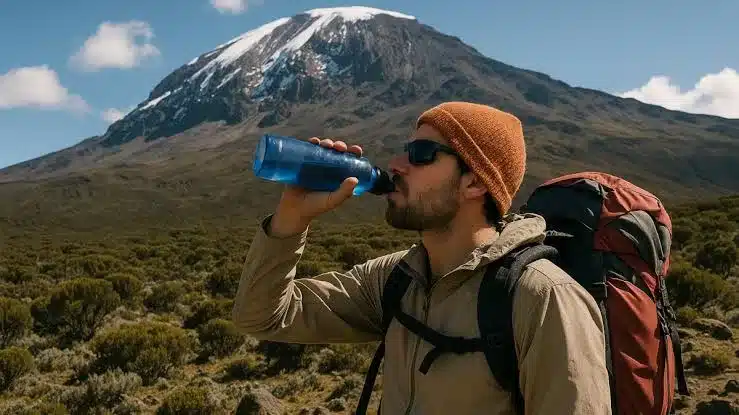
How Water Is Handled
- Porters/guides fetch water from natural sources.
- It is boiled (most common and effective method) or chemically treated before serving.
- You get treated hot/cold water for drinking, tea/coffee, and filling your bottles each morning/evening.
- Many trekkers drink it without issues for the entire trip.
Should You Bring Purification Anyway?
- Optional precaution — Some people bring water purification tablets (e.g., chlorine dioxide) or a filter bottle (like LifeStraw) for extra peace of mind, especially if you have a sensitive stomach or want to treat water on the trail. It’s lightweight and inexpensive.
- Not necessary for most with a good operator.
How Water Safety Works on the Mountain
- Sources — Water comes from natural mountain streams, springs, and glacial melt. It starts relatively clean at higher altitudes.
- Treatment by crew — Guides and porters collect it, then boil it (the most common and reliable method) or use chlorine tablets/filtration. Boiling kills bacteria, viruses, and most parasites. You receive treated water daily for drinking and filling your bottles/bladder.
- What climbers experience — The vast majority report no stomach problems from the provided water. It often tastes fine (sometimes with a slight chlorine note at higher camps).
Hydration Tips
- Aim for 3–5 liters per day (more on summit day).
- Use a hydration bladder + bottles for convenience.
- Drink treated hot drinks (tea, soup) — they count toward hydration and are comforting in the cold.
Stick with a trusted operator who explicitly handles water treatment, and you’ll be fine without personal purification. Focus on drinking enough—that’s far more important for avoiding altitude issues!

