No, Mount Kilimanjaro is not part of a mountain range. In reality, it is the world’s highest free-standing mountain. It is also the tallest mountain on the African continent, making it a member of the Seven Summits, a collection of the world’s highest peaks on each of the seven continents. Most people assume Kilimanjaro is part of the Eastern Arc Mountains, just because they are close in terms of location.
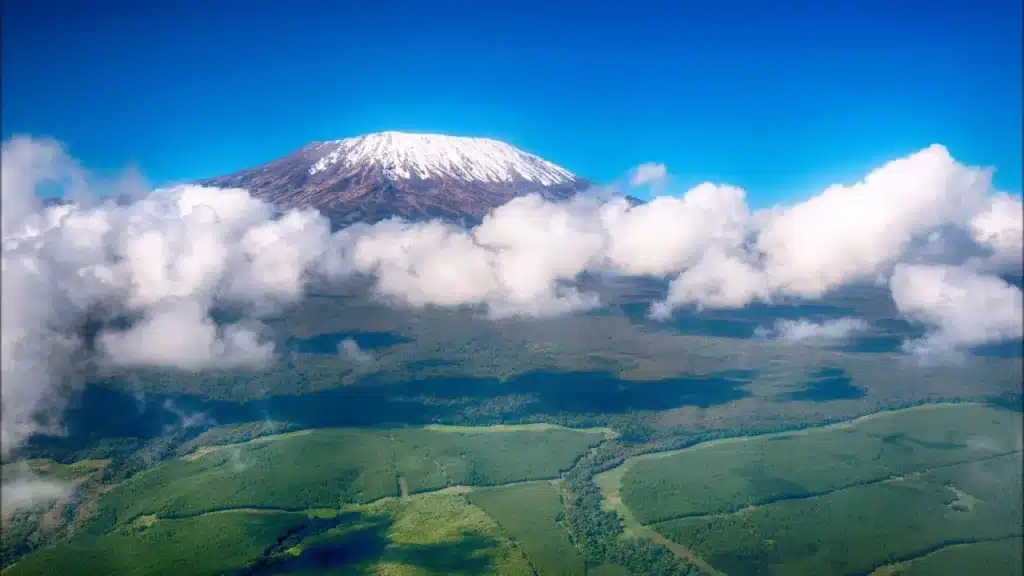
Mount Kilimanjaro is not part of the Eastern Arc Mountains either because it is a young, free-standing stratovolcano formed by tectonic activity along the East African Rift System, whereas the Eastern Arc Mountains are an ancient chain of crystalline rock formations that were uplifted millions of years earlier. Geologically, Kilimanjaro is a relatively recent volcanic creation (its main cones formed within the last 2.5 million years), rising dramatically from the surrounding plains as an isolated peak. In contrast, the Eastern Arc range consists of older, eroded mountain blocks stretching across eastern Tanzania and into Kenya, known for their unique biodiversity and ancient forests. Although both are located in East Africa and influenced by the Rift Valley, they represent entirely different geological processes and timelines, making Kilimanjaro a distinct, standalone mountain rather than a member of the Eastern Arc chain.
Key Facts
- It is the highest mountain in Africa and the highest free-standing mountain in the world (measured from base to summit).
- It consists of three main volcanic cones: Kibo (the highest, with the summit Uhuru Peak), Mawenzi, and Shira.
- It formed millions of years ago due to volcanic activity along the East African Rift System, but it is not part of a continuous chain like the Rockies, Alps, or Himalayas.
This isolation is what gives Kilimanjaro its iconic, towering appearance — you can see it from far away, rising out of the plains. Would you like more details on its geology, how it compares to other volcanoes, or what the crater looks like

