
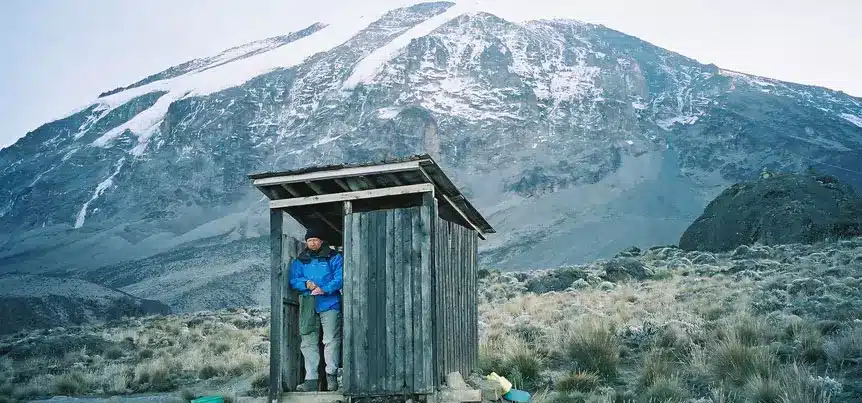
Public toilets on Mount Kilimanjaro are basic, indian style long-drop pit latrines—simple wooden (or sometimes concrete) huts built over deep holes dug into the ground. Every official campsite has them, and they are the standard for most climbers.
Popularly known as the “loo with a view”, the public toilet facilities on Kilimanjaro vary depending on your location and altitude, and range from flush toilets at lower campgrounds to very primitive wooden squat latrines. Climbers have expressed their displeasure with the level of hygiene, which varies significantly. At bigger campgrounds, public restrooms may be a short walk from your tent, which is inconvenient, especially when temps drop below freezing overnight. As a result, on the mountain, private toilet tents have grown popular.
What to Expect
- Design — A squat-style platform (sometimes with footrests) over a deep pit. No flushing system, no running water, and often no sink. Some have a door (which may not lock or close properly), while others lack one entirely for ventilation.
- Condition — They vary widely. Some are reasonably clean (especially early in the day or on less busy routes/camps), but many become smelly, dirty, and messy due to high traffic. You may encounter waste on the floor, strong odors, or slippery conditions, especially after rain or at popular camps. Park staff tries to maintain them, but it’s challenging with hundreds of users.
- Privacy & comfort — Minimal. Expect limited privacy, cold/windy conditions at higher altitudes, and potential queues during peak times. Higher camps (like Barafu) can be particularly unpleasant.
- Availability — Reliable at camps, but sparse or nonexistent between them. Some routes (e.g., Marangu) have slightly better hut-style facilities.
How do I book a private toilet tent for my Kilimanjaro climb?
Practical Tips for Using Them
- Bring supplies — Always carry your own toilet paper (or wipes), hand sanitizer, and a headlamp for night visits. Biodegradable options are best.
- Hygiene — Sanitize hands thoroughly afterward. Some climbers use “pee funnels” (for women) or go behind rocks during the day to avoid the toilets when possible (pack out all waste/tissue per Leave No Trace principles).
- Nighttime — Challenging due to cold, darkness, and distance from your tent—many regret not having a closer option.
Private Toilet Tents (Popular Upgrade)
View this post on Instagram
Many operators (including mid-range and premium ones) offer private portable toilet tents for an extra fee, but at Tranquil Kilimanjaro, we offer the toilets for free on every trek. These are:
- A small tent with a bucket-style or basic flushable toilet.
- Maintained by a dedicated porter (emptied and cleaned regularly).
- Much cleaner, more private, and convenient (placed near your tent).
This is highly recommended by many trekkers for comfort and hygiene, especially for longer trips or those with sensitive stomachs. Public toilets are functional but basic—part of the adventure (and challenge) of Kilimanjaro. Lower your expectations, prepare with supplies, and consider a private option if budget allows. It makes a noticeable difference in overall enjoyment!

