
For Mount Kilimanjaro, you need a 4-season sleeping bag with a comfort rating of -10°C to -18°C (14°F to 0°F).
Warmth. As previously stated, the nights on Kilimanjaro, or any high-altitude hiking adventure, may be quite chilly. As a result, your sleeping bag must be able to withstand extremely cold temperatures.
Recommended Temperature Ratings
- Ideal minimum: Comfort rating of 0°F / -18°C (or warmer). This is the most common recommendation from reputable operators and experienced climbers.
- Safe all-rounder: A bag with comfort rating -10°C to -15°C (14°F to 5°F) works well for most people.
- If you sleep cold, are female, or climbing in colder months: Go for -20°C / -29°F or lower (e.g., -20°F comfort rating).
Why This Rating?
Nighttime temperatures on the mountain drop significantly:
- Lower camps: Can be 5–10°C (41–50°F)
- High camps (e.g., Barafu or Crater Camp ~4,700–5,000 m): Often -5°C to -15°C (23°F to 5°F), sometimes colder with windchill.
- You’ll be sleeping at high altitude where your body is already stressed, and many people wear extra layers inside the bag.
Key Features to Look For
- Mummy shape with a good hood and draft collar (traps heat better).
- Down (lighter, more compressible) or high-quality synthetic (better in damp conditions).
- Weight: Ideally under 2–2.5 kg for easier carrying.
- Add a sleeping bag liner (adds 2–5°C of warmth and keeps the bag clean).
What Do the Ratings Mean?
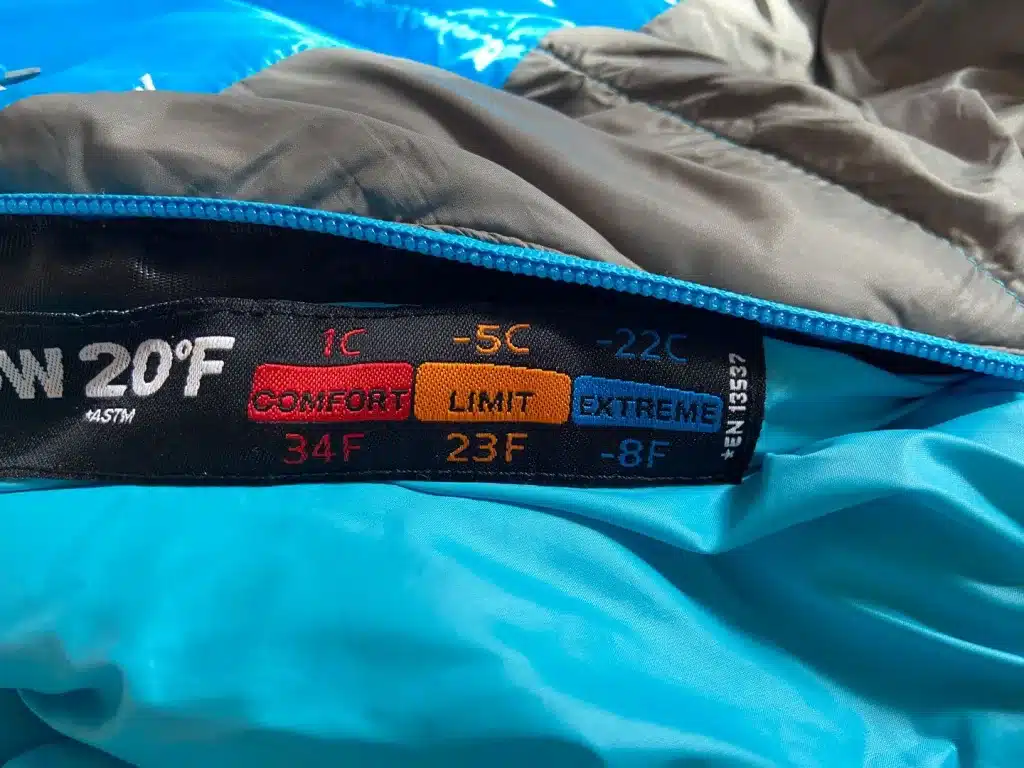
Modern sleeping bags use the EN 13537 / ISO 23537 standard (the official European testing standard). Every properly rated bag comes with three numbers:
| Rating | What It Means | Who It’s For | For Kilimanjaro? |
|---|---|---|---|
| Comfort | Temperature at which a woman (or cold sleeper) can sleep comfortably | Average female or cold sleeper | Most important number – Use this one |
| Limit | Temperature at which a man (or warm sleeper) can sleep in a curled position | Average male or warm sleeper | Use as a secondary reference |
| Extreme | Survival temperature (you will be very cold, possibly hypothermic) | Emergency use only | Ignore for normal use |
Example:
A bag labeled Comfort: -10°C / Limit: -16°C / Extreme: -35°C
→ This means a woman/cold sleeper should feel comfortable down to -10°C.
How to Check the Rating Properly
- Look for the EN/ISO label
- Reputable bags will have a tag or hangtag with the official EN 13537 numbers.
- Avoid cheap no-name bags that just say “-15°C” without specifying Comfort/Limit.
- Check the manufacturer’s website
- Go to the brand’s site (e.g., Marmot, Mountain Hardwear, Rab, Sea to Summit, North Face) and search the model.
- Good brands clearly list all three ratings + test conditions.
- Understand real-world adjustment
- Add extra warmth for Kilimanjaro because:
- You’re at high altitude (weaker recovery)
- You may be tired and dehydrated
- Wind and cold ground
- Rule of thumb: Choose a bag whose Comfort rating is 5–10°C colder than the lowest temperature you expect at camp.
- Add extra warmth for Kilimanjaro because:
Recommended Ratings for Kilimanjaro
- What sleeping bag would you recommend for climbing up Mount Kilimanjaro?
- Can I rent a sleeping bag and mattress for the Kilimanjaro climb?
- Importance of dry bags when packing for Kilimanjaro, and ziplocks or staff sacks for storing items
- The Recommended Sleeping Pad or Mat for Climbing Kilimanjaro
| Your Sleep Type | Recommended Comfort Rating |
|---|---|
| Sleep warm | 0°C to -10°C |
| Average sleeper | -10°C to -15°C |
| Sleep cold / female | -15°C to -20°C |
Best all-round choice for most climbers:
A bag with Comfort rating of -10°C to -18°C (14°F to 0°F).Extra Tips
- A good sleeping bag liner (silk or thermal) adds 2–5°C of warmth.
- Pair it with a good sleeping mat with R-value of 4+ (inflatable insulated mat).
- Many operators rent proper -15°C to -20°C bags for $20–40 for the whole trip.
Pro Tip: Many good operators rent proper sleeping bags (often -15°C to -20°C rated) for a small fee. This is a smart option if you don’t plan to use it often after the trip.Would you like specific sleeping bag model recommendations, rental info, or how to combine it with a sleeping mat for maximum warmth?

