
Paying a fair price for your Kilimanjaro climb is important for ethical, practical, and safety reasons. It directly supports the local workforce—especially porters, guides, and cooks—who make the trek possible, while ensuring a higher-quality and safer experience for you.
We feel that tour operators who follow the rules and treat their workers properly are more likely to be concerned about your safety and well-being. This is why paying a reasonable amount to climb Kilimanjaro is critical. Please be aware that there have been several cases of tourist fraud, such as visitors not receiving the services for which they paid or being requested to pay more halfway up their climb. Furthermore, when climbing, you will be reliant on your guides and porters. Experienced and well-trained mountain guides are more likely to obtain work with reputable tour companies. Porters who aren’t treated well have a lower motivation to look after you.
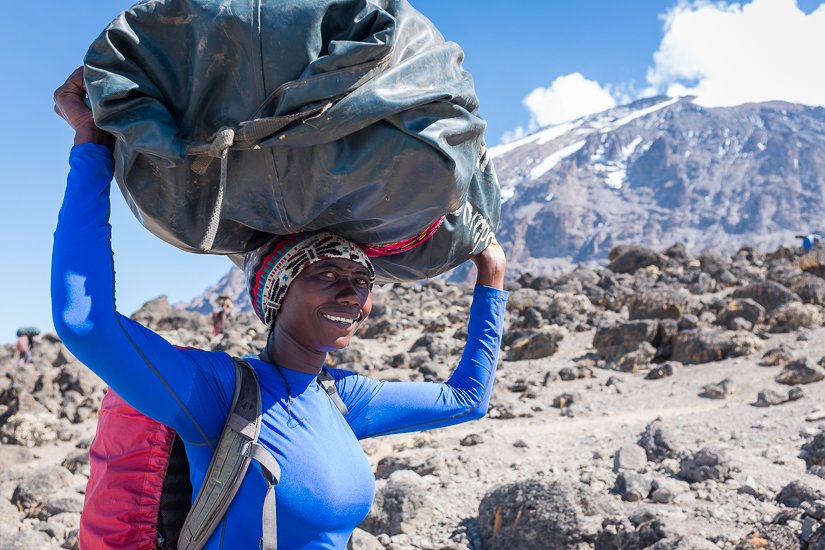
1. Fair Wages and Ethical Treatment for Porters & Crew
Porters carry heavy loads (up to 20–25 kg), walk long distances daily, and work in harsh high-altitude conditions. Many operators pay below living wages, leading to exploitation. Organizations like KRTO (formerly KPAP) set minimum standards:
- Fair daily wages (e.g., ~$10–16+ USD per day for porters, plus tips).
- Proper food (3 meals/day), shelter, and clothing.
- No overloading, no bribery for work, and medical care if needed.
Cheap climbs (<~$1,800–2,000) often cut these corners, meaning porters may be underpaid, underfed, or poorly equipped. A fair price (typically $2,500–$4,500+ for a quality 7–9 day trek) ensures crews are treated well.
Tipping your Kilimanjaro Crew of Porters & Guides
2. Better Safety and Service for You
Well-paid, motivated, and properly equipped crews provide:
- Better care (health monitoring, emergency response).
- Higher-quality food and camp setup.
- Experienced teams less likely to cut safety corners.
Happy crews are more attentive, which improves your chances of summiting safely and enjoying the trip. Unethical operators may prioritize profits over your well-being.
Safety Tips for Climbing Kilimanjaro
3. Sustainable Tourism and Local Impact
- Supports families and communities around the mountain (many porters are local).
- Reduces exploitation and bribery.
- Encourages operators to maintain high standards, improving the industry overall.
- Preserves the mountain environment (ethical companies follow better Leave No Trace practices).
Mount Kilimanjaro female guides and porters, the unsung heroines
How to Ensure You’re Paying Fairly
- Choose KPAP (they undergo audits).
- Avoid suspiciously cheap deals—the savings usually come from the crew’s pockets.
- Research reviews, ask about crew policies, and budget for recommended tips (~$200–400 per person for a standard trek).
A fair price isn’t just “more expensive”—it’s an investment in responsible travel that makes your climb more rewarding and meaningful. You’re not just buying a trek; you’re supporting the people who make it happen. If budget is tight, opt for a reputable mid-range group climb rather than the absolute cheapest option.
- How much in Dollars does it cost to climb Mount Kilimanjaro in 2026, 2027, and 2028? Prices in USD, CAD, and AUD
- Kilimanjaro Climbing Costs in Euros for 2026-2027
- What is the Price of climbing Kilimanjaro in Yuan, Rupees, and Yens
- How much do i pay in British Pounds to climb Mount Kilimanjaro?

