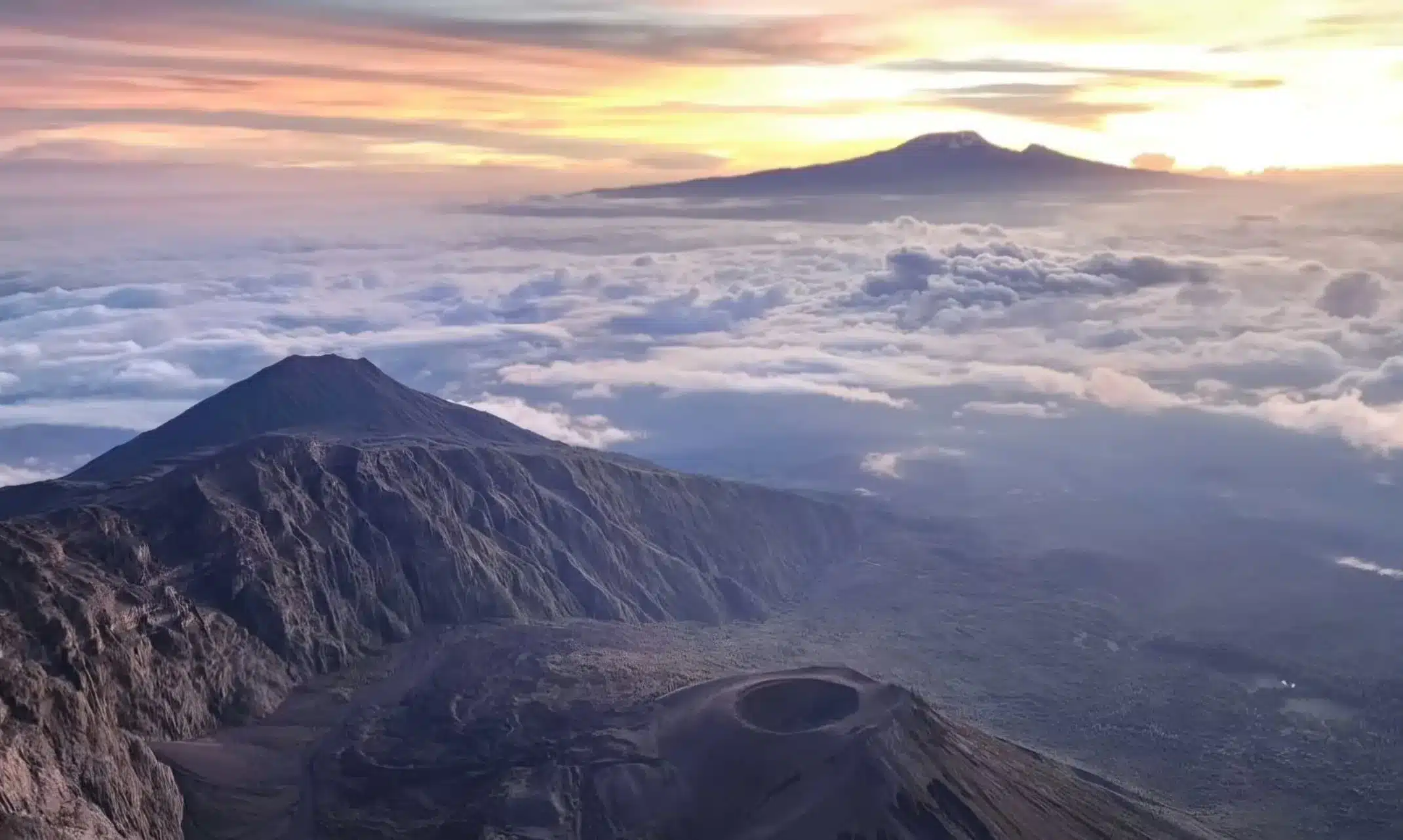
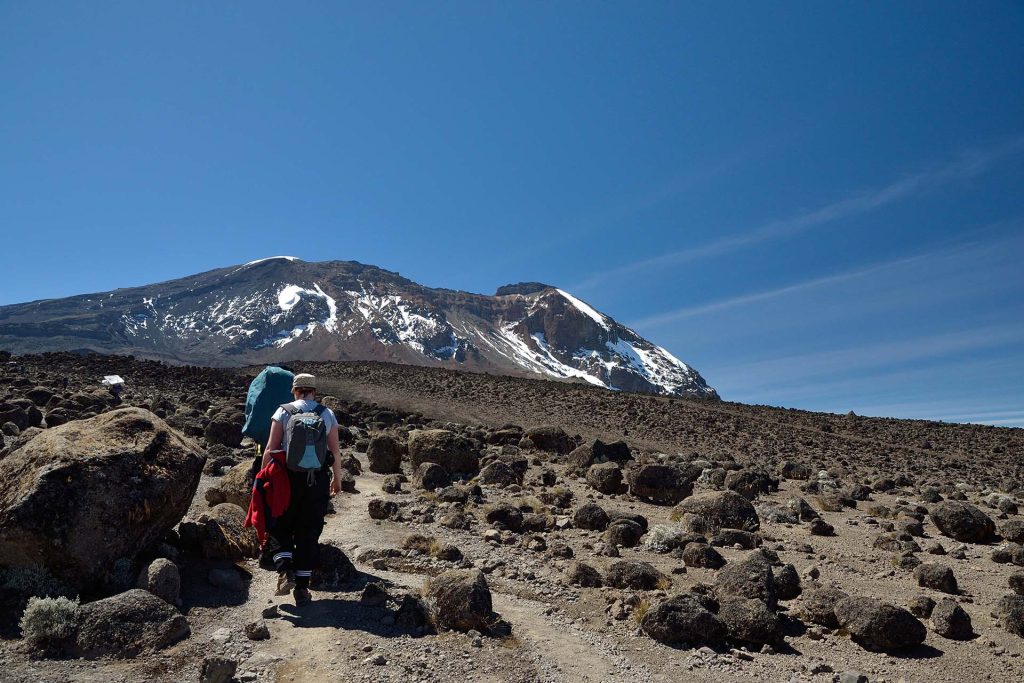
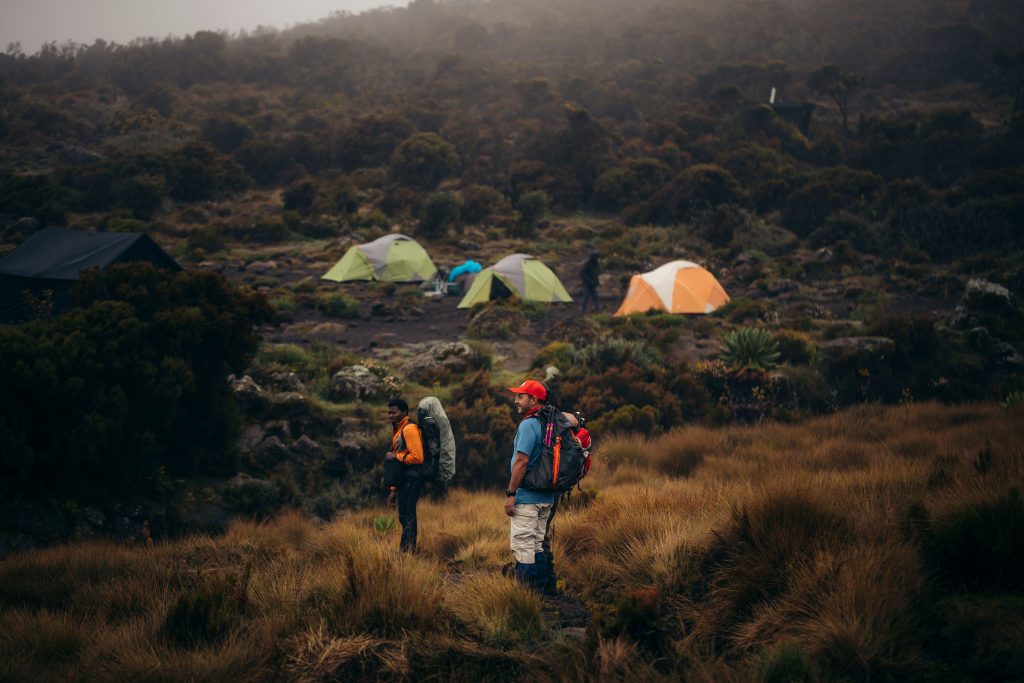
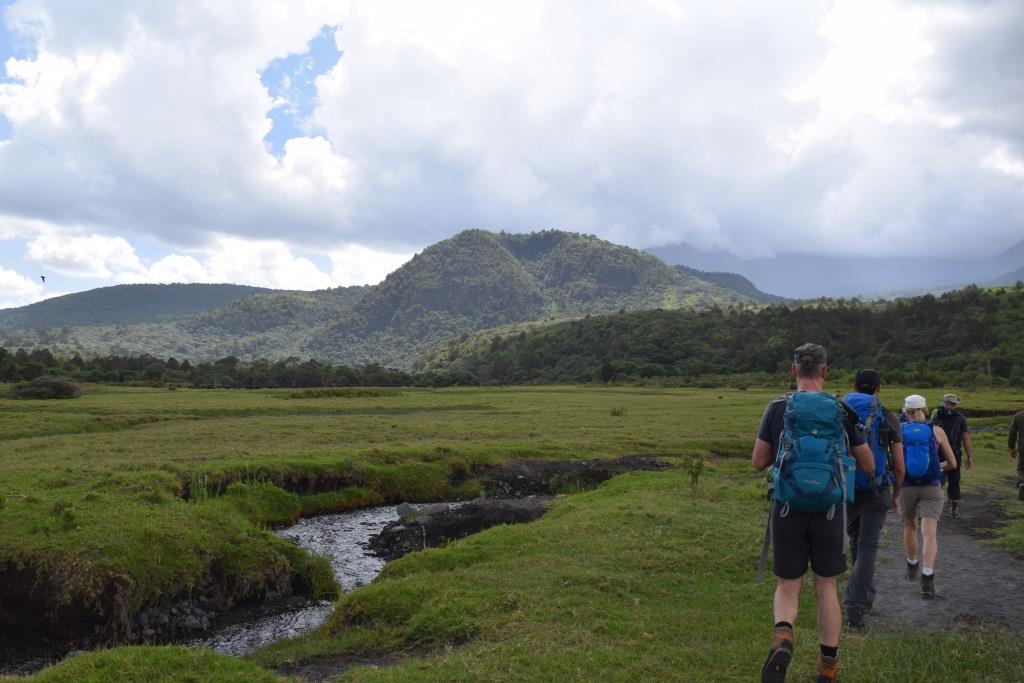
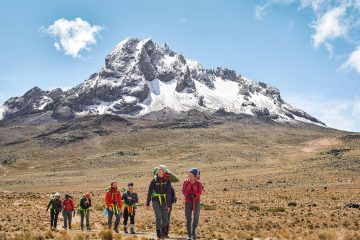
2 weeks to conquer the 2 highest peaks in Tanzania. What Mount Meru lacks in height, it makes up for in the slope profile because, even though Mount Meru is shorter than its bigger sister, Kilimanjaro, it is steeper. This itinerary can be customised, especially if you have previous climbing experience in high altitudes. Instead of doing Mount Meru in 4 days, you can do it in 3 days. As for Mount Kilimanjaro, you can choose your route of preference. For example, you can do 3 days Mount Meru + 7 Days Lemosho and so on and so forth. Just let us know how you envision your trek of combining these two majestic peaks of Tanzania. Alternatively, you can check out our 3 peaks, 3 weeks challenge that combines these two mountains plus Mount Kenya. The two mountains might be close to one another, but they are unique in their own way. Since Mount Meru is located within Arusha National Park, it has more varied wildlife species. That is why to climb Mount Meru, you will need an armed Ranger due to the presence of buffalo on the lower slopes of the Mountain. There is a spot on Mount Meru known as the Kilimanjaro viewpoint, where you can see Mount Kilimanjaro from Mount Meru.

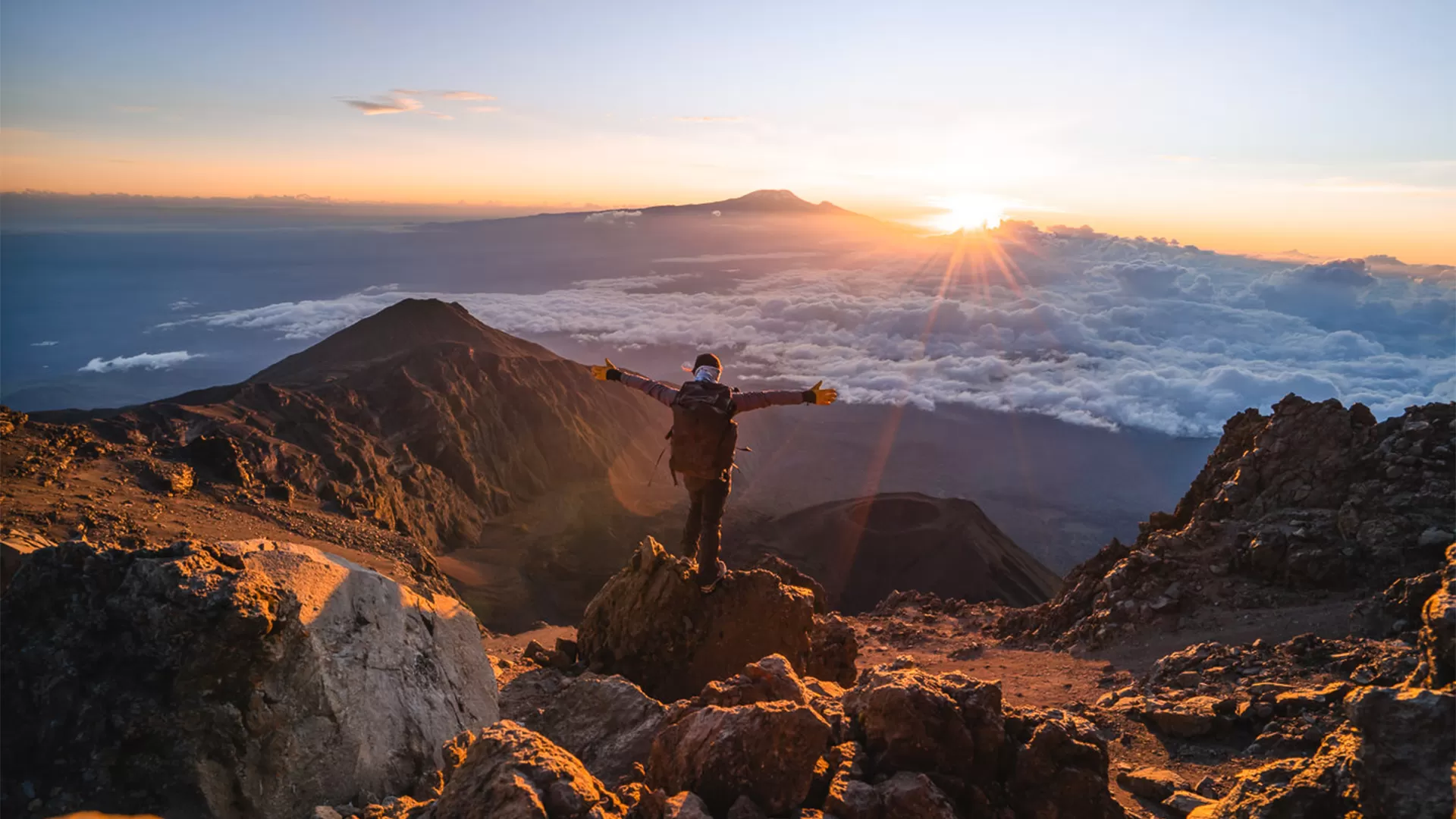
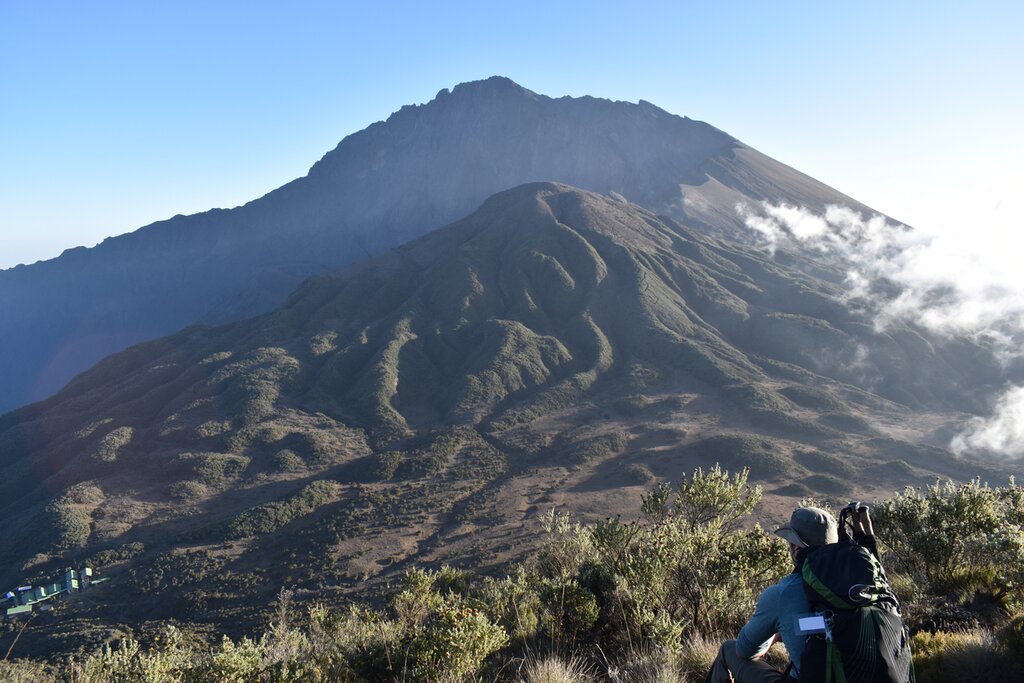
See Mount Kilimanjaro from Mount Meru

Mount Meru features a more rugged, technical feel in parts (like the final ascent with handrails in spots), while Kilimanjaro is mostly steady uphill walking. Meru offers closer wildlife encounters in Arusha National Park, contrasting Kilimanjaro’s stark high-altitude barrenness.

4 Days Mount Meru Trek + 7 Days Machame Route

This 14-day trekking trip comprises a 4-day Mount Meru hike and a 7-day Machame Route climb to the summit of Mount Kilimanjaro. This Mount Meru and Mount Kilimanjaro climb combo is perfect for mountaineering enthusiasts who seek nothing but pure adventure. The two mountains offer unique and unrivalled experiences. Mount Meru is amazing for sightseeing and wildlife watching, while Mount Kilimanjaro is purely a high-adrenaline climbing adventure. You can consider the Mount Meru hike as acclimatization warm up to conquering the highest mountain in Africa, Mount Kilimanjaro. Mount Meru, standing at an altitude of  4,565 m above sea level, is the second-highest mountain after Mount Kilimanjaro, which stands at 5,895 m.

Mount Kilimanjaro & Mount Meru Trek Itinerary Overview

  • Day 1: Kilimanjaro Airport to Moshi
  • Day 2: Moshi to Miriakamba Hut
  • Day 3: Miriakamba Hut to Saddle Hut
  • Day 4: Saddle Hut to Meru summit to Miriakamba Hut
  • Day 5: Miriakamba Hut to Momela Gate
  • Day 6: Arusha – Moshi
  • Day 7: Moshi to Machame Gate (1,800m/5,905ft) to Machame Camp (3,000m/9,840ft)
  • Day 8: Machame Camp (3,000m/9,840ft) to Shira Camp (3,840m/12,600ft)
  • Day 9: Shira Camp (3,840m/12,600ft) to Barranco Camp (3,950m/12,960ft)
  • Day 10: Barranco Camp (3,950m/12,960ft) to Barafu Camp (4,600m/15,100ft)
  • Day 11: Barafu Camp (4,600m/15,100ft) to Uhuru Peak (5,895m/19,340ft) to Mweka Camp (3,100m/10,170ft)
  • Day 12: Mweka Camp (3,100m/10,170ft) to Mweka Gate (1,500m/4,920ft)
  • Day 13: Moshi Day Trips or Relaxation
  • Day 14: Depart

Why Mount Meru Is a Great Warm-Up for Mount Kilimanjaro

Climbing Mount Meru first is widely recommended as an excellent acclimatisation strategy before tackling Kilimanjaro, especially for those concerned about altitude sickness. Here’s why it works so effectively:

  • Altitude Preview: Reaching 4,566 m on Meru exposes your body to significant thin air (lower oxygen levels) without the extreme demands of Kilimanjaro’s 5,895 m. This helps your body produce more red blood cells and adapt physiologically, reducing the risk of acute mountain sickness (AMS) symptoms like headaches, nausea, or fatigue on the higher peak. Many climbers report feeling noticeably better on Kilimanjaro after Meru.
  • Shorter, Manageable Trek: In just 3–4 days, you gain experience with multi-day hiking, camping, pacing (“pole pole” – slowly slowly), cold nights, and basic logistics. This builds physical endurance, mental resilience, and confidence without the exhaustion of a full Kilimanjaro climb.
  • Back-to-Back Timing: Scheduling Meru immediately before Kilimanjaro (e.g., finish Meru, rest 1–2 days in Arusha/Moshi, then start Kili) maximises the acclimatisation benefit. The recent high-altitude exposure lingers, giving you a head start on adaptation.
  • Bonus Perks: Meru provides stunning crater views (including glimpses of Kilimanjaro on clear days), wildlife sightings, and a quieter experience to test gear, fitness, and teamwork with guides/porters. It’s less crowded, more affordable, and serves as a standalone rewarding trek if weather or fitness shifts plans.
Day1

Arrival - Kilimanjaro Airport to Moshi

We’ll take you from Kilimanjaro Airport to a cozy hotel in Moshi, the starting point for most Kilimanjaro treks. You’ll meet up with your fellow adventurers and your tour guide, and we’ll walk you through a full schedule as well as all safety considerations and a kit check to ensure you have everything you need and that it’s up to par: safety isn’t an option on our trips! If you have some free time, Moshi’s peaceful coffee shops and lively market, which combines African and Asian elements, will keep you occupied. Moshi is where you’ll spend the night for dinner and overnight at the hotel.

Day 2

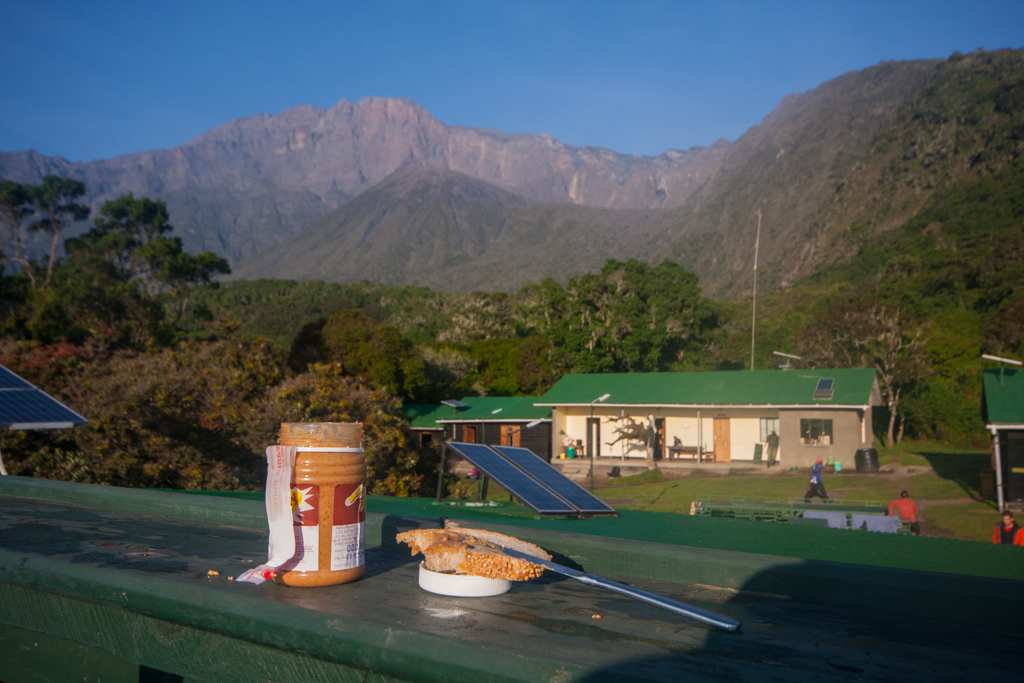
Moshi to Miriakamba Hut

As we drive to Arusha National Park for our Meru adventure, we get an early start to take advantage of the cool, clear morning. The spectacular cliff-edged Ngurdoto Crater set in lush forests filled with Spanish moss; the azure and teal Momela lakes, verdant grassland and savannah – the breathtaking array of landscapes support a plethora of animals such as waterbucks, dainty klipspringers and colobus monkeys as well as nearly 400 species of birds – Arusha National Park is a naturalist’s and botanists haven.  The park also served as the exotic setting for Howard Hawks’ 1962 epic “Hatari,” starring John Wayne. Near the Ngarenanyuki River, the hike begins.

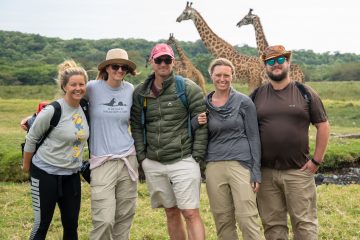
You may expect to see buffaloes, waterbucks, giraffes, warthogs, zebras, and gazelles along the way, and if you’re fortunate, a distant elephant or leopard in the distance. We’ll end our exciting day at the Miriakamba Hut, where we’ll have a delicious meal and get a good night’s sleep in preparation for our next day of adventure.

Day 3

Miriakamba Hut to Saddle Hut

For the hard climb up the trail from Miriakamba to Saddle Hut, you’ll need a solid, energy-dense meal. The wooden steps at the beginning of your journey give way to a wild trail surrounded on all sides by thick forest vegetation, and as it thins out, you’ll catch views of Meru’s crater as you walk higher. If you’re feeling particularly enthusiastic, you can climb to Little Meru (3820m) and return in time for a well-deserved dinner at Saddle Hut and an early night, in preparation for your trek to Meru’s summit, which begins at midnight.

Day 4

Saddle Hut to Meru summit to Miriakamba Hut

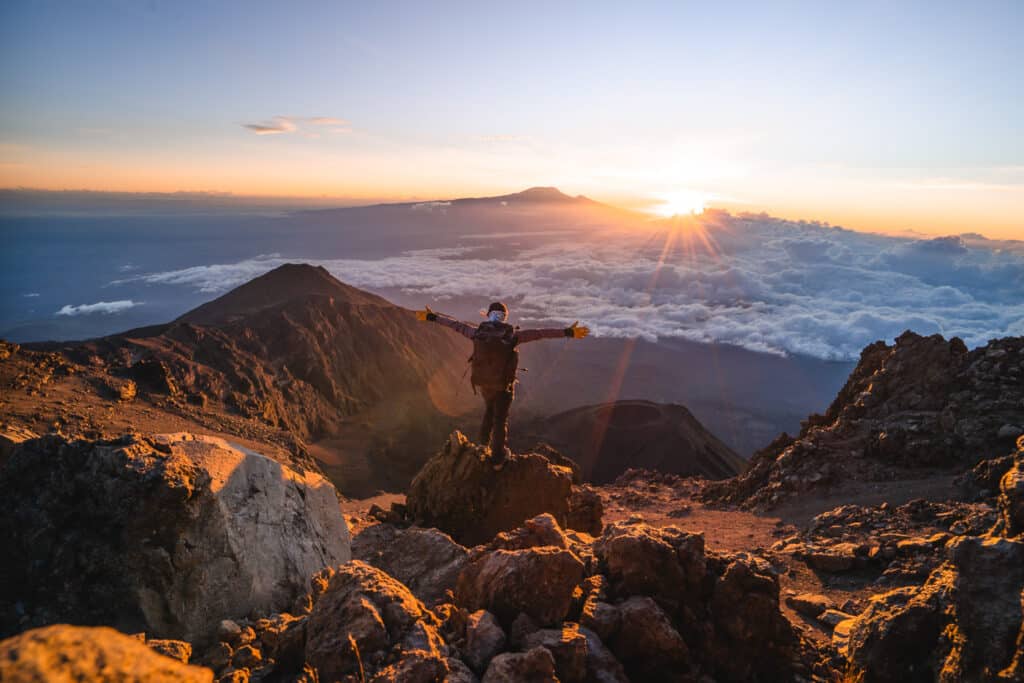
The most difficult segment of your Meru trip is still to come: an apparently innocuous level trail followed by some chilly switchbacks, all by the light of your headlight. After a small downhill section, you’ll begin a gradual and steady rise that will require all of your power to scramble up the trail, which is a difficult mix of volcanic rock and loose gravel. The amazing vistas of patchwork landscapes painted in pink and apricot by the sunrise at the peak, however, will make the effort worthwhile.

Before we retrace our steps back down to Saddle Hut, you’ll have time to take photos and bask in the glory of your accomplishment, but this time you’ll see what you missed on the way up: the morning skies turning from gold to the brightest blue, cotton-wool clouds below you, mountains in the distance, and the crater-edge trail ahead of you. A delicious lunch at Saddle Hut will re-energize you for the journey down to Miriakamba Hut and the closing portions of your Meru experience before embarking on your Kilimanjaro adventure.

Day 5

Miriakamba Hut to Momela Gate

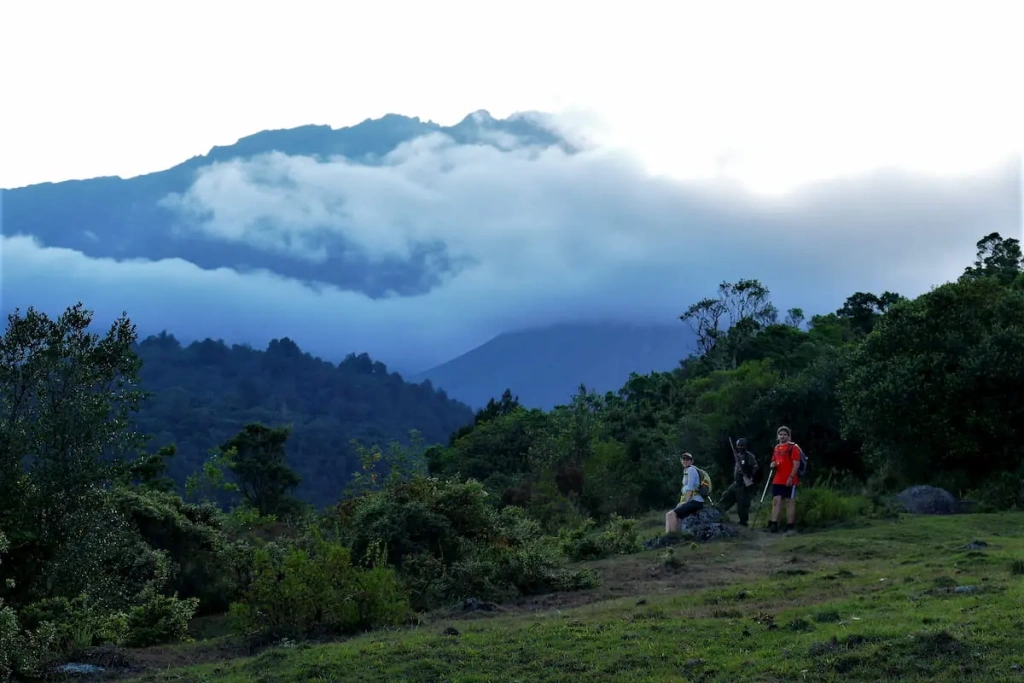
We’ll go off through the cloud forest towards Momela Gate after a well-deserved and hearty breakfast at Miriakamba Hut. Rather than being described, the cloud forest is a landscape to be experienced. Imagine yourself in a lichen-festooned woodland, sometimes eerily quiet but more frequently alive with the sounds of the Black-capped Mountain Greenbul, African Crowned Eagle, or one of the numerous local or emigrant bird species that flourish there. Our vehicle will be waiting for you at Momela Gate, and once you’ve had the opportunity to purchase a Coke and a commemorative t-shirt, we’ll whisk you back to Moshi, where you can rest in the afternoon while learning about Kilimanjaro.

This is the most important one! However, the confidence you earned from your victory on Meru should help you conquer Kilimanjaro.

Day 6

Arusha - Moshi

Day 6 of your 14 days Mount Meru + Mount Kilimanjaro climb will give you the much-needed break as you recover and get ready to attempt the Mount Kilimanjaro trekking adventure. Your Tranquil Kilimanjaro driver will take you to Moshi from Arusha. Moshi is the nearest town to Mount Kilimanjaro and there are various day trips around Moshi that you can partake in. Dinner and overnight at a hotel in Moshi that we will recommend.

Day 7

Moshi to Machame Gate (1,800m/5,905ft) to Machame Camp (3,000m/9,840ft)

You’ll leave Moshi for the Machame Gate, nestled in the beautiful rainforest in Kilimanjaro’s southern slopes, after a good night’s sleep and a magnificent breakfast. The 45-minute trip will take you through the heart of Tanzania, passing through off-the-beaten-path coffee farms and peaceful communities. We’ll have the stuff ready at the Machame Gate while you register with the national park officials — the park takes safety extremely seriously. Your trek to Machame Camp begins in the jungle, which is blazing with the color and sound of vibrant plant and animal life, but as you rise, you’ll come across airy, breeze-caressed grasslands and wildflower meadows teeming with insects.

When you arrive at Machame Camp, you’ll be rewarded with a breathtaking vista of your destination, Kibu Summit: so close but so far! Relax after a long day of hiking while your cooks prepare a delicious meal for you al fresco, where you can enjoy excellent cuisine and good company beneath the stars.

Day 8

Machame Camp (3,000m/9,840ft) to Shira Camp (3,840m/12,600ft)

You have the most amazing day ahead of you. After a substantial breakfast, pack your belongings and head off on an open, sunlit route with huge blue skies above you and sun chasing away any lingering morning mists. Nature will give you to a variety of stunning sights as you ascend: forest canopies towering above you, golden savannah reaching for miles below you, and the scary volcanic peaks of Mawenzi and Kibo in the distance. Today’s hike will help you acclimate to higher elevations; when you go to the high moorlands, the wildflowers and grasses dry away, but you’ll be accompanied by groundsels, heather, and the magnificent Lobelia Deckenii. Shira Camp is a good place to spend the night.

Day 9

Shira Camp (3,840m/12,600ft) to Barranco Camp (3,950m/12,960ft)

You’ve made it halfway through this difficult journey, but the best is yet to come. You’ll approach the Lava Tower, a 300-foot high plug of volcanic rock that transforms from a glorious landmark into an ominous, looming passageway as you pass by. Today you’re aiming eastwards towards the gorgeous Shira Plateau on ever-steeper terrain. As you climb, you’ll see one of Kilimanjaro’s most famous sights – you’ll approach the Lava Tower, a 300-foot high plug of volcanic rock that transforms Your hard effort will be rewarded with a rapid descent to Barranco Campsite, and you’ll have more energy to appreciate the views on this slightly easier portion before arriving at the Camp, which is the most spectacular of all the sites on Kilimanjaro.

You’ll sleep with the majestic Kibo mountain straight in your eyeline across broad, empty sky, bordered down on one side by volcanic cliffs and glaciers gleaming in the sunlight. Before a well-deserved relaxation, have a delicious dinner.

Day 10

Barranco Camp (3,950m/12,960ft) to Barafu Camp (4,600m/15,100ft)

You’d best have a healthy breakfast because the first thing you’ll have to do this morning is scaling the 300-meter-high Barranco Wall, dubbed the Breakfast Wall for reasons we don’t understand. This 90-minute scramble up volcanic cliffs ends with the majestic Helm glacier towering above you, and it’s a great way to stretch those calf muscles before heading off to the Karanga Valley, where you’ll be scrambling over bleached scree on an up-and-down route with stunning views to your right and the gleaming Heim, Kersten, and Decken glaciers for company.

As you approach Kibo on your left, you’ll stop in Barafu camp for an energy-dense meal and an early sleep in preparation for your summit attempt.

Day 11

Barafu Camp (4,600m/15,100ft) to Uhuru Peak (5,895m/19,340ft) to Mweka Camp (3,100m/10,170ft)

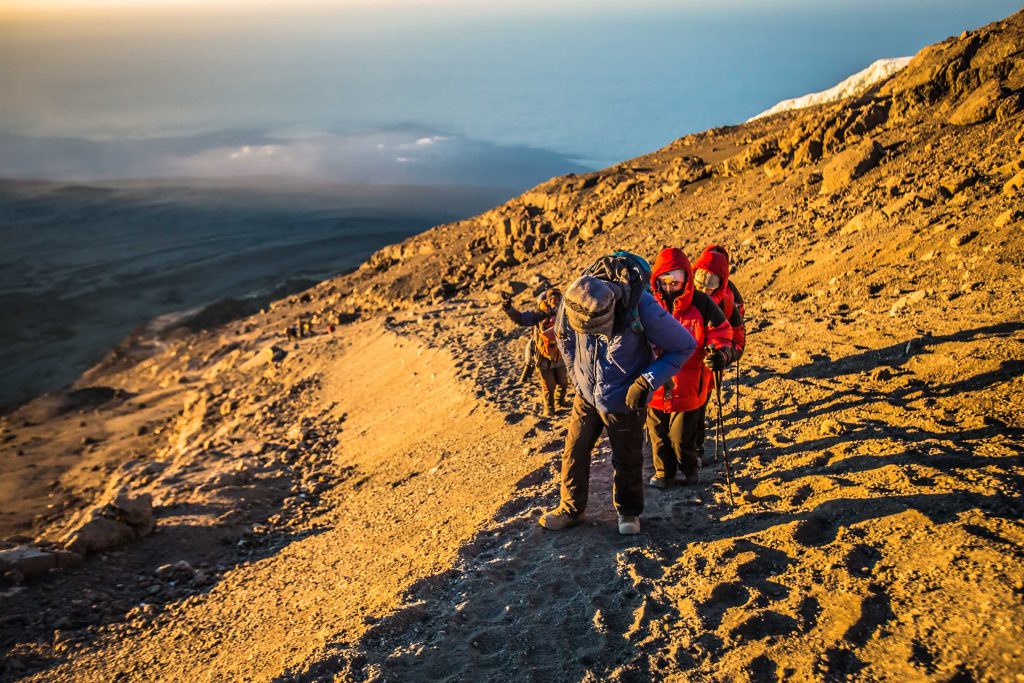
You’ll get up at 12 a.m. for the last push to Uhuru Peak, which will be done on a trackway lighted only by your headlights. This is the steepest and most difficult section of your journey, so keep your wits about yourself. On your ascent, the silent darkness, chilling night air, blackness on all sides, and the sole indication of companionship, the bobbing firefly lights of your colleagues’ head torches, will provide you with a distinct sensation of serenity and silence. Uhuru Peak awaits you as the sky gradually lightens with the approaching morning, and you’ll arrive just as the sun begins to gleam on the horizon.

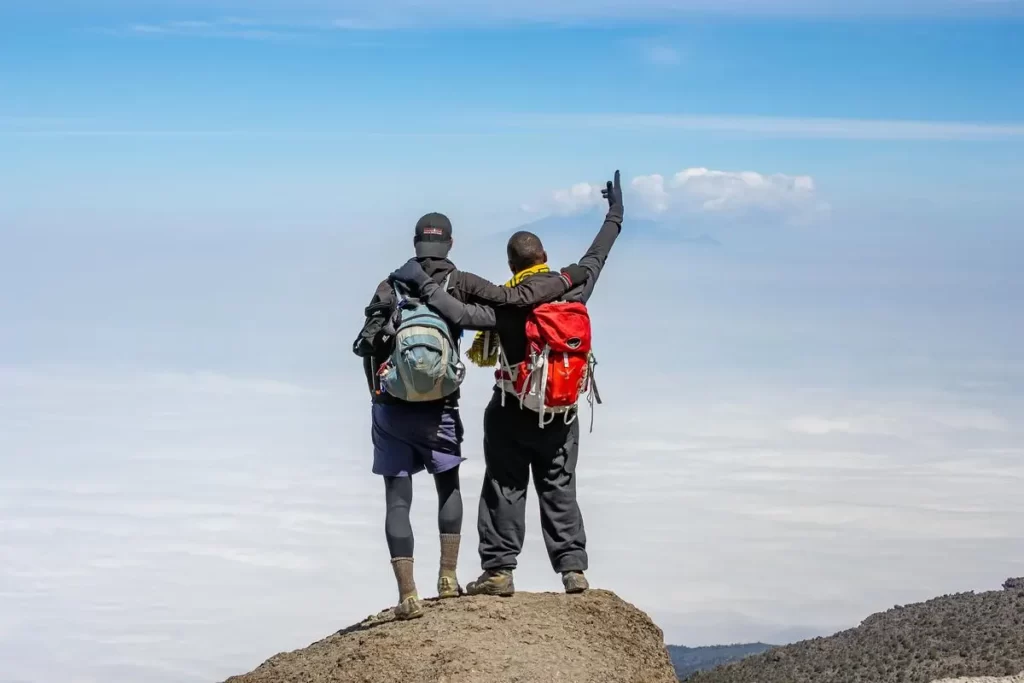
You’re standing on Africa’s rooftop, looking down at the whirling cloudscape and glinting ice fields, and you realize how far you’ve traveled. Before returning to Barafu Camp for a delicious, substantial breakfast and shared stories of effort and amazement, celebrate with your team and take up the ambiance. The day comes to a close when you arrive to Mweka Camp, where you’ll spend the night under the stars, resting your exhausted but happy body after a big meal.

Day 12

Mweka Camp (3,100m/10,170ft) to Mweka Gate (1,500m/4,920ft)

You’ve just climbed Mount Kilimanjaro, so wake up relaxed and triumphant on your final day on the summit! After a leisurely breakfast, take a stroll towards Mweka Gate amid beautiful clouds and mist-draped woodland landscapes. A Tranquil Kilimanjaro car will be waiting to drive you back to Moshi, where you will find a hot shower, a comfortable bed, and a clean set of clothing.

Day 13

Moshi

While in Moshi you can take a short day trip to the many options around the town or a stroll to the local market as you prepare to depart after your lovely Mount Meru and Mount Kilimanjaro climbing combo!

Day 14

Moshi to Kilimanjaro Airport

We will take you to the airport today to connect with your trip back home. If you’ve opted on a safari, that’s a whole new adventure for you, and we’ll take care of it as well!

The cost for the whole 14 Days Mount Meru climb and Kilimanjaro includes and excludes the following items

14 Days Mount Meru & Kilimanjaro Price includes

All accommodations as per itinerary

Pickup from airport or hotel in Arusha / Kilimanjaro

Professional Mountain and Safari guide

Quality, waterproof, four-season mountain sleeping tents

Sleeping Mattress

All meals while on the Mountain

Quality Mess tents with table and chairs

Large portions of fresh, healthy, nutritious food

Clean, purified drinking water

Conservation fees (part of park fees)

Camping or Hut fees (part of park fees)

Rescue fees (part of park fees)

VAT (18% charged by the Government)

Surcharge for online payment of deposit (5%)

Price Excludes

Airport transfers

Accommodation in Arusha

Tanzania Visa

Gratuity

Personal Expenses (e.g. laundry, telephone, beverages, etc.)

Meals not listed above

Optional Tours (short safari after your climb etc)

Mount Meru, Kilimanjaro Trek
Mount Meru and Kilimanjaro trek