
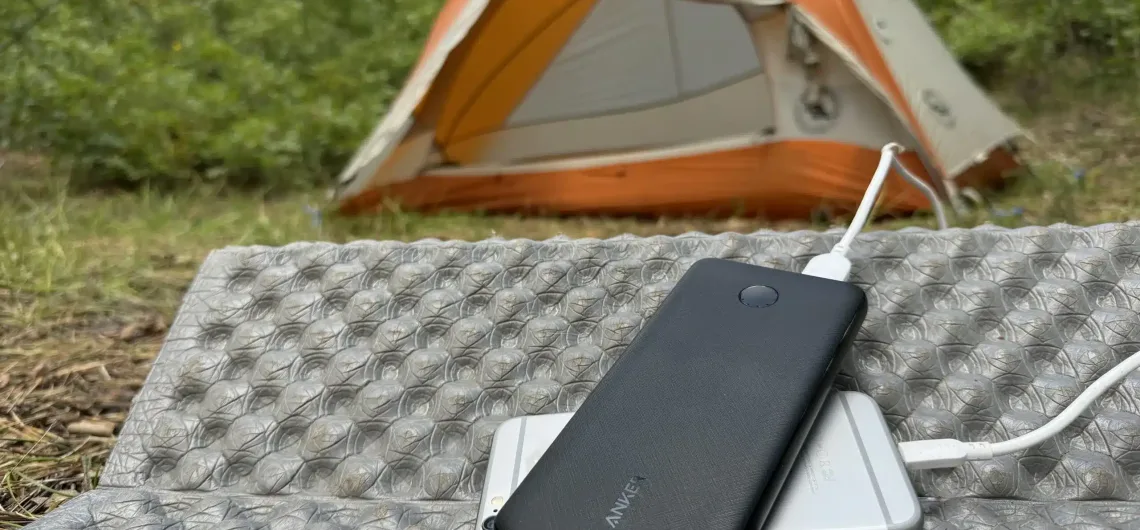
There is no electricity on the mountain, so we recommend charging your devices fully, especially your power banks, before leaving your hotel or Lodge in Moshi or Arusha the day before your trek. If you are from the United States of America, Japan or any other country that does not use UK sockets and plugs, consider carrying UK or European adapters for use in Tanzania. You’re heading to the Roof of Africa for an 8-day Kilimanjaro trek in September—the start of the dry season with crisp days and freezing nights. Phone for photos and emergency contact, camera for those golden-hour summit shots, Garmin watch (from our previous chat), and maybe a headlamp. The big question: How do you keep everything charged when you’re sleeping in tents or basic huts at 3,000–4,700 m? Short answer: There is effectively no reliable electricity on the mountain.
Power outlets are almost nonexistent, and any “charging services” are sporadic, slow, and never guaranteed. The only dependable solution is a high-capacity power bank (or two)—and the right one will easily last your entire trek. Here’s the no-BS expert breakdown.
The Reality of Electricity on Kilimanjaro (2026 Update)
There is no national grid power anywhere above the park gate. Campsites and huts run on solar panels or small generators at best—and even those are rare.
- Most routes (Machame, Lemosho, Northern Circuit, Rongai, Umbwe): Pure tent camping. Zero outlets. No charging stations.
- Marangu Route (hut-based): A few lower huts (Mandara, Horombo) sometimes have limited solar power or plugs, but it’s unreliable and often restricted to staff or emergencies.
- High camps (Barafu, Kibo, Lava Tower): Occasional paid charging via solar/generator ($5–10 per device, left for hours). Not guaranteed—weather, generator fuel, or crowds can kill it. Some camps have solar lights only.
- 2025–2026 news: A national grid connection was announced in 2025, but every current packing list and operator site still says “no electricity on the mountain.” It hasn’t reached the trek routes yet.
Bottom line from forums: “There are no charging sockets available on Kilimanjaro.” Trekkers who relied on huts were disappointed. Porters/guides occasionally offer to charge for a tip, but don’t count on it—some even ask to use your bank.
Real Trekker Experiences (Reddit, TripAdvisor, Facebook, 2024–2026).
Hundreds of recent reports confirm the same story:
- “I took three 20,000 mAh banks on Machame and didn’t finish one.” (2023–2025 threads)
- “One 20k Anker lasted 9 days for phone + Garmin + headlamp. 30% left.” (Northern Circuit)
- “Marangu had plugs in lower huts but nothing higher up. Power banks only.”
- Cold kills batteries fast: “After day 4, the cold drained my 15k + 10k combo.” Solution? Sleep with them in your bag.
- Solar fans: “Worked on sunny lower slopes but useless in clouds or at high camps.”
Consensus: One good 20,000 mAh bank is enough for most people. Two if you’re a heavy photographer or run your phone’s GPS all day.
Power Bank Math for an 8-Day Kili Trek.
Real-world drain (airplane mode, minimal use):
- Smartphone: 10–15% per day (photos, quick checks) → needs ~3–4 full charges total.
- Camera (if rechargeable): 1–2 charges.
- Garmin watch + headlamp: Negligible (Garmin lasts 10–20+ days).
- Efficiency: ~75–80% (cables + conversion loss).
20,000 mAh = 4–6 full phone charges in ideal conditions. Factor in cold drain (lithium loses 10–30% capacity below freezing—common at night on Kili) and you’re still covered with margin. Airline rule: ≤100 Wh (~27,000 mAh at 3.7V). Stick to 20,000 mAh to fly worry-free.
Best Power Banks for Kilimanjaro 2026 (Tested for Cold, Altitude & Durability)
Here are the top picks proven on high-altitude treks. All rugged, cold-tolerant, and multi-device capable.
These power banks have been tested and recommended for use during the challenging conditions of a Kilimanjaro trek. With their durability and cold-weather resistance, you can rely on these power banks to keep your devices charged throughout your journey. Their multi-device capability ensures you can keep all your electronics powered up, no matter how long your trek is.
- Anker PowerCore (20,000–27,000 mAh) – Best Overall & Most Recommended
Rugged, 4–6 phone charges, dual ports, proven on Kili for years. Lightweight (~350 g), holds charge in cold when kept warm. Real trekkers: “Perfect for entire climb.” ~$40–60. This power bank is a top choice among experienced climbers and hikers due to its reliability and durability. With the ability to charge multiple devices multiple times, it is perfect for long treks where access to electricity is limited. Its lightweight design makes it easy to carry in a backpack, and its ability to hold a charge in cold temperatures is a crucial feature for outdoor adventurers. - Goal Zero Flip 24 or Venture Series – Best for Extreme Cold
Actually performs better in freezing temps than most (minimal efficiency drop). Rugged, waterproof options, lightweight. Ideal if nights hit –15°C. ~$30–130 depending on size. - Nitecore NB10000/20000 Gen 3 – Ultralight Rugged Pick
Compact, high cold-weather efficiency, built for backpacking. Great if weight is your priority. ~$80–100.
Budget/Backup: Miady or UGREEN 10–20k—excellent cold performance, cheap, but less rugged.
Avoid: Cheap no-name banks (fail in cold), anything over 27k mAh (flight risk), and pure solar-only (too slow/unreliable).
Solar Panels: Great Backup, Not Your Main Plan.
A foldable solar panel (mounted on your pack) can top up your power bank on sunny days. Great for September’s clearer skies lower down—but at high camps, clouds, shade, and cold nights reduce output dramatically. Use as insurance, not primary.
Many trekkers say, “Solar was useless when I needed it most.”
Pro Tips to Make Your Batteries Last the Full 8-9 Days or Less
- Airplane mode 24/7 + low brightness + offline maps downloaded.
- Sleep with everything—phone, power bank, camera batteries—in your sleeping bag. Cold is the #1 killer.
- Fully charge the power banks the night before you start. Use them sparingly.
- Keep spare camera batteries in inner pockets.
- Turn off Bluetooth/Wi-Fi/, and GPS except when needed.
- Test your setup on a cold night hike beforehand.
- Weight hack: One 20k + small 10k backup = peace of mind (~500 g total).
Final Recommendation for Your Trek
Bring one (or two for camera-heavy use) 20,000 mAh Anker PowerCore or Goal Zero Flip. That’s it. You’ll finish with battery to spare, no mid-trek panic, and zero reliance on unreliable hut power. Pair it with your Garmin (which barely drains), and you’re golden. September weather is forgiving, but the cold nights aren’t—warm storage is your secret weapon. Pole pole, charge smart, and enjoy every step to Uhuru Peak. You’ve got this!
- Getting a sim card in Tanzania and accessing the internet for Kilimanjaro and Safari
- Tanzania Installs High Speed internet on Mount Kilimanjaro
- How to charge your devices (phones, camera) for Kilimanjaro
- Is there phone signal or network coverage on Mount Kilimanjaro?
- Can I fly a drone on Mount Kilimanjaro?

