
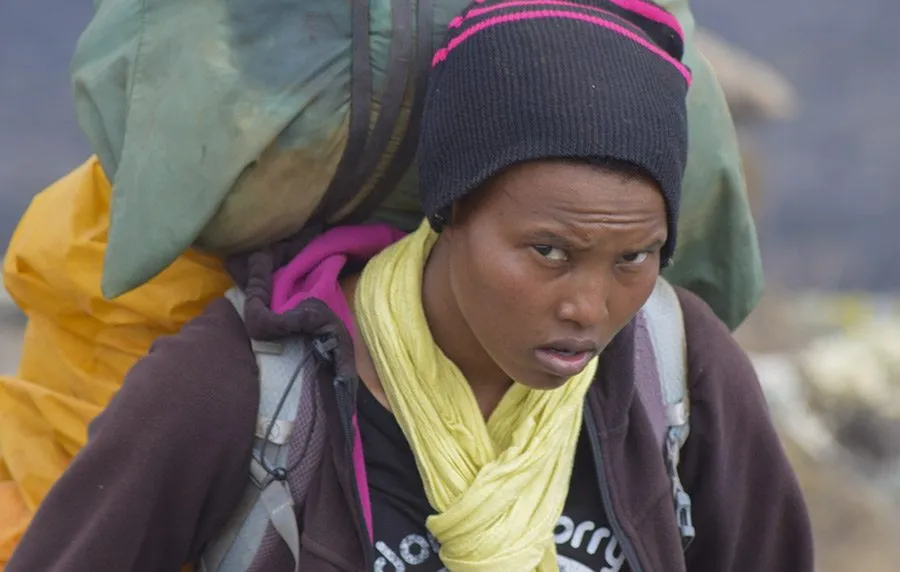
Yes, there are female porters on Mount Kilimanjaro, though they remain a small minority in a heavily male-dominated workforce. Estimates suggest women make up only a few percent of the total porters (hundreds out of ~20,000+ active porters), but their numbers are slowly growing thanks to empowerment initiatives.
Not only on Kilimanjaro but on Mount Meru and Mount Kenya, women make up a lesser percentage of porters. They suffer the same difficulties as males, but they also have to deal with sexual harassment. Unfortunately, for female porters, this is still the case. Climbing Kilimanjaro would be a pipe dream for many, if not for the devotion and strength of these crew members. Kilimanjaro porters are hardworking men and women whose duty it is to assist visitors in carrying their luggage to the top. The majority of the porters are local males aged 18 to 40. They are employed as part of a team of highly skilled experts. Tourists can navigate their way up the mountain thanks to these.
What to Know
- They exist and work — Female porters carry the same loads, hike the same routes, and perform the same duties as their male counterparts (gear, food, tents, etc.). Many are strong, experienced, and highly respected.
- Challenges they face — Cultural barriers, safety concerns (e.g., harassment or lack of privacy in mixed camps), and sometimes unequal pay or opportunities. Some specialized women-led or women-focused operators actively recruit and support them with better conditions.
- You might or might not see them — On a typical climb, your crew is mostly male. However, if you book with certain ethical or women-empowering companies (e.g., those highlighting female porterage), you’re more likely to have women on your team.
Mount Kilimanjaro female guides and porters, the unsung heroines
Positive Trends
- Pasang Lhamu Sherpa Akita: The First Female Nepali Mountaineering Guide
- Remembering Sue Fear, the first Australian-born female to summit Mt Everest, 1963-2006
- How Lenka Poláčková, the First Slovak Woman to Climb K2 and Everest Without Oxygen, Conquered Kilimanjaro with Tranquil Kilimanjaro
- Remembering Julie Tullis, world’s first female high-altitude mountaineering filmmaker
Several operators and projects are working to increase female participation, providing training, fair wages, and safer working environments. Some treks even feature all-female or majority-female support crews. If having female porters (or a female guide) matters to you, mention it when booking—some companies can accommodate or recommend options. Overall, the presence of women porters highlights the evolving and inclusive side of Kilimanjaro’s trekking community.

