
If you want greater comfort, upgrading to a walk-in tent and sleeping cot for your Kilimanjaro trek may be beneficial. For some folks, crawling in and out of normal-sized tents for Kilimanjaro numerous times a day might get tiresome. It’s possible that the area will feel cramped, with little room to lay out your gear or change, especially if it’s shared by two climbers. A bigger tent will give you more area to walk about and will seem roomier. Larger tents, on the other hand, will seem cooler since they do not trap as much heat. It’s a personal preference whether you like sleeping on a cot or the basic foam sleeping mats used on the mountain.
For some individuals, cots are more pleasant to sleep on since they are softer and resemble a traditional frame bed. Others, on the other hand, may find beds less comfortable than sleeping closer to the ground, where they may easily lay their arms or legs on the floor if they need more room.
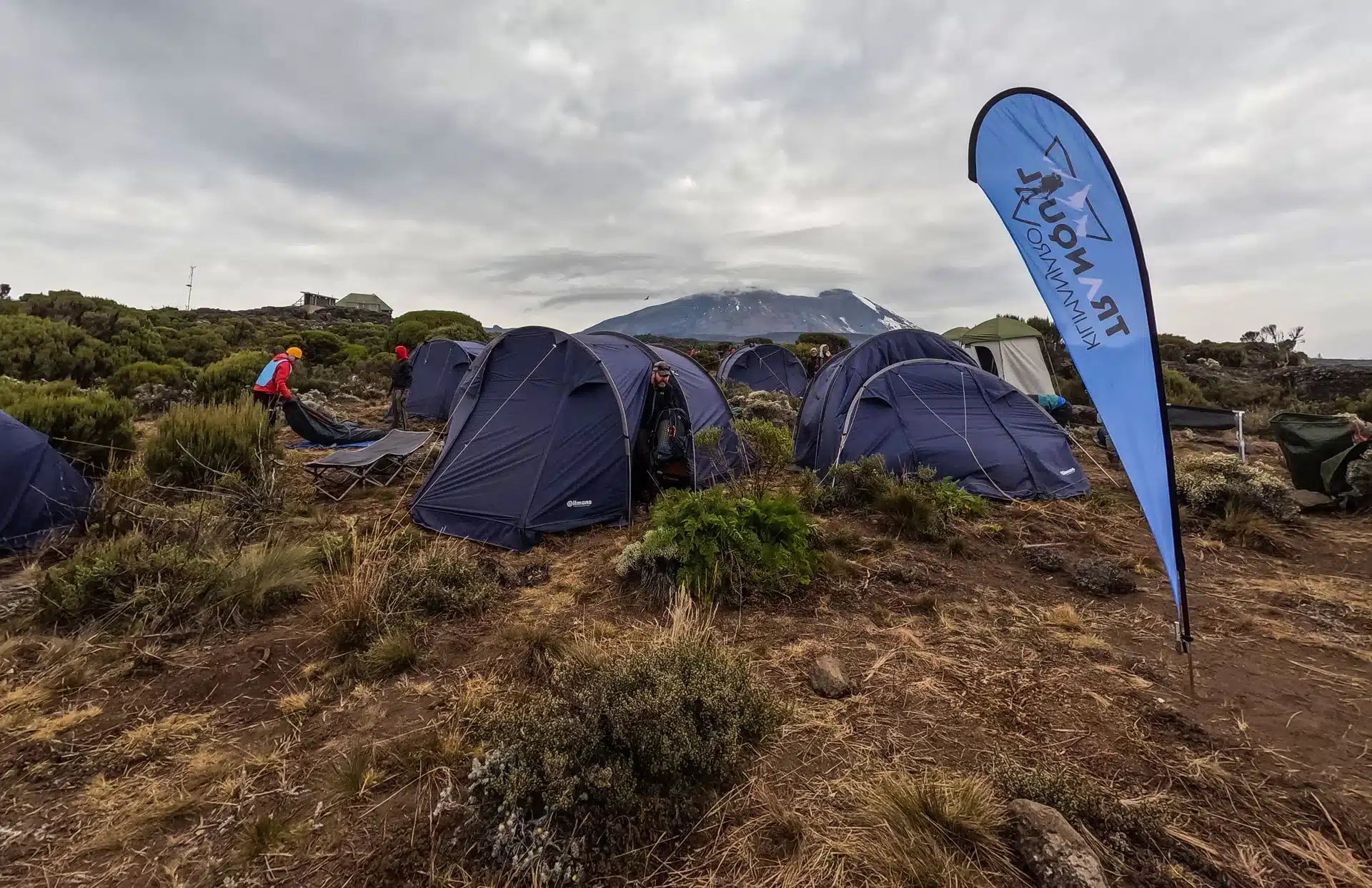
It depends on your budget, priorities, and tolerance for discomfort, but many climbers find a walk-in tent and cot worthwhile for better sleep and recovery—especially on longer routes.
Standard Setup (Included in Most Packages)
- Dome tents (usually 2–3 person tents for 1–2 people): Low-profile, sturdy, and wind-resistant. You crawl in/out and sleep on a basic foam sleeping pad on the ground.
- This is perfectly adequate for most people and keeps costs down. Porters set everything up daily.
Walk-In Tent + Cot Upgrade (Luxury Option)
- Walk-in (or “standing”) tents are much taller and roomier — you can stand up and move around easily.
- Cots (foldable camp beds with thicker mattresses) get you off the cold, rocky ground for better sleep posture and insulation.
Pros:
- Significantly more comfortable, especially after 6–9 hours of hiking daily.
- Easier to change clothes, organize gear, and rest without feeling cramped.
- Better for taller people or anyone with back/joint issues.
- Many say it helps with recovery at altitude, leading to better performance on summit day.
Cons:
- Extra cost — Often $100–300+ per person (varies by operator).
- Slightly heavier for porters (though negligible).
- Some argue it feels less “authentic” or adds unnecessary luxury to a challenging adventure.
Is it worth it or not?
- Worth it if: You value sleep highly, have a higher budget, are older, or want a smoother experience (solo travelers or those with luxury operators often love it).
- Skip if: You’re on a tight budget, very fit/young, or embracing the full “roughing it” spirit—standard tents are reliable and widely used successfully.
Many mid-to-luxury operators like Tranquil Kilimanjaro offer this as an upgrade (sometimes including private toilet tents). Ask your company for details and reviews from past clients. A good night’s sleep can make a real difference on a multi-day high-altitude trek!
Mountain Tents, Sleeping Tents for Mount Kilimanjaro & Mount Kenya

