
Yes, Kilimanjaro is a walkable mountain that can be easily climbed on foot. Many visitors, whether novice or skilled climbers, attempt to ascend the famed peak. There are numerous options available, and you may pick the one that best suits your needs. The climb is normally not too difficult, and acclimatization is the most common issue that prevents a successful summit attempt.
It is a non-technical trek, meaning you walk the entire way without needing ropes, ice axes, crampons, or any mountaineering equipment.
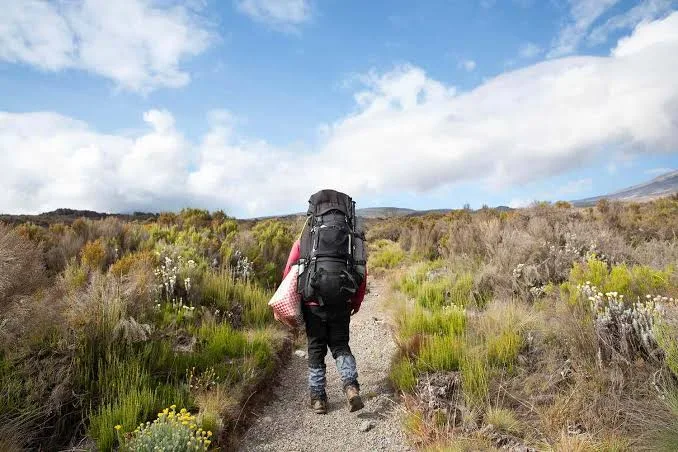
Why It’s Climbable by Foot
- There are no sheer cliffs or technical sections that require rock climbing skills.
- The routes consist of hiking trails, scree slopes, and some simple scrambling (e.g., Barranco Wall on the Machame/Lemosho routes).
- You only need good hiking boots, trekking poles (recommended), and proper fitness.
What You Do Need
- Good physical endurance — You’ll hike 5–8+ hours per day for 6–9 days.
- Proper acclimatization — This is why longer routes (7–9 days) are strongly recommended.
- A licensed guide — By law, you cannot climb without one (and a support crew).
Routes Summary (All Done on Foot)
- Lemosho & Northern Circuit — 7–9 days, most scenic and highest success rates.
- Machame — 6–7 days, very popular and beautiful.
- Rongai — 6–7 days, drier and quieter.
- Marangu — 5–6 days, uses huts instead of tents.
Can you climb Kilimanjaro on foot and descend by helicopter?
It is not always possible (or straightforward) to climb Mount Kilimanjaro by foot and descend by helicopter, even though the option exists in emergencies. While you can hike the entire ascent on foot, helicopter evacuation on the descent is heavily dependent on weather conditions, visibility, and suitable landing zones. Strong winds, clouds, fog, or rain — which are common on the mountain — can ground helicopters for hours or days. There are only a few designated landing areas (such as near Kosovo or Barafu Camp), so climbers usually still need to descend on foot from the summit to a pick-up point. Additionally, helicopter rescue is expensive ($3,000–$8,000+), requires valid high-altitude travel insurance, and is reserved for serious medical emergencies rather than general fatigue. In many cases, guides and porters will first attempt an assisted walk-down or stretcher evacuation because it is faster to start and does not rely on external factors. Therefore, while a helicopter descent is sometimes used successfully, it is never guaranteed and should not be relied upon as a standard plan.
Kilimanjaro on Foot:
Kilimanjaro is one of the most accessible high mountains in the world for fit hikers. Thousands of ordinary people (not professional climbers) summit it every year purely by walking. If you’re reasonably fit, train well, and choose a good 7–9 day route with a reputable operator, you have an excellent chance of reaching Uhuru Peak on foot.
Kilimanjaro for beginners guide: I want to climb Kilimanjaro, where do I start?

