
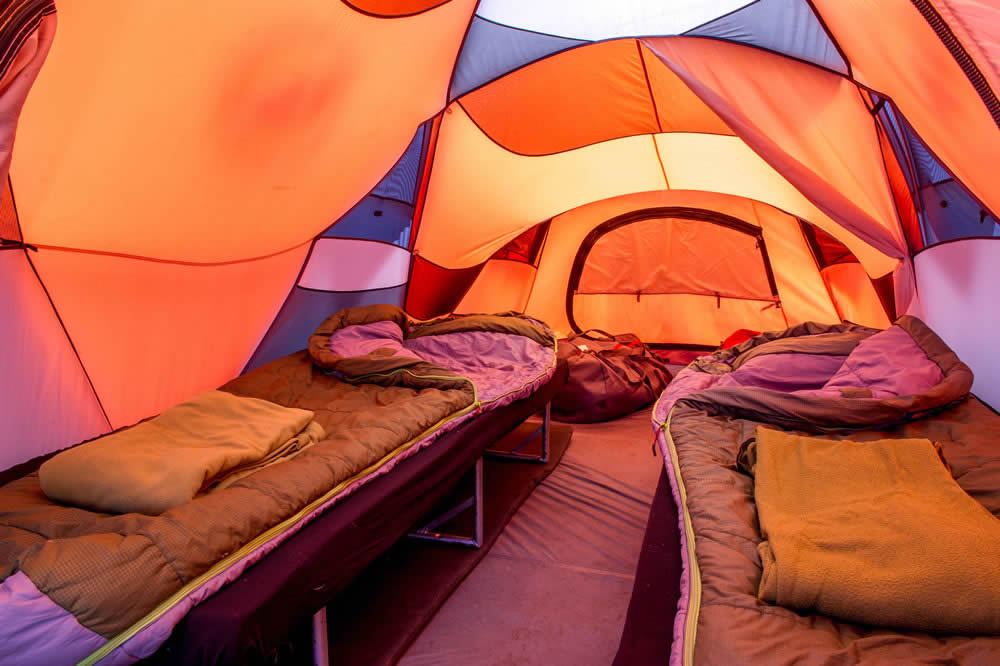
We use strong, waterproof, and durable tents on Mt Kilimanjaro. Mountain Hardwear Trango tents that are capable of housing 3 people and are made to withstand tough mountain conditions. These are the same tents used for climbing Mount Everest in the Himalayas. They are very spacious, and to create even more room to store your luggage, we allow two people to sleep in the tents instead of three. For dinner, lunch, and breakfast, we use strong mess tents, have good head height, are warm, and are extremely tough. Along with comfy camp chairs, they make for a relaxing mealtime.
Read more about Tranquil Kilimanjaro mountaineering tents
Most reputable operators, just like us, use similar setups. Here’s what to expect:
Typical Tent Features
- Size — Usually 3-person tents shared by 2 climbers (more space for gear) or sometimes 4-person for larger groups. You’ll have room to sit up and store your daypack and duffel.
- Design — Double-wall (inner tent + rainfly) for better weather protection and condensation control. Strong aluminum poles and sturdy fabric to handle wind and rain.
- Weight & Durability — Lightweight enough for porters to carry but robust for mountain use. Many are brands like Mountain Hardwear, The North Face, or similar expedition-grade models.
- Floor — Thick, waterproof groundsheet.
What You’ll Experience
- Space — Comfortable for sleeping and changing, but not luxurious. You can sit upright in the middle.
- Ventilation — Good airflow to reduce condensation (common at altitude).
- Setup — Porters pitch the tents before you arrive at camp each day and take them down after you leave.
- Conditions — Tents handle rain, wind, and cold well, but it can still get chilly at night (especially above 4,000 m). Bring a warm sleeping bag.
Variations by Operator
- Budget operators may use simpler, older tents.
- Mid-range/premium operators often provide higher-quality, well-maintained tents with thicker floors and better rainflies.
- Some offer private toilet tents or dining tents as upgrades.
Tips for Comfort
- Bring a good sleeping mat or inflatable pad (many operators provide basic foam mats).
- Use a sleeping bag liner for hygiene and extra warmth.
- Keep wet gear outside or in the vestibule to avoid condensation inside.
The tents are basic mountain camping—nothing fancy, but they keep you dry and protected. Most climbers adapt quickly and focus more on rest than luxury. If tent quality matters to you, ask your operator for details or photos before booking. Safe climbing!

