
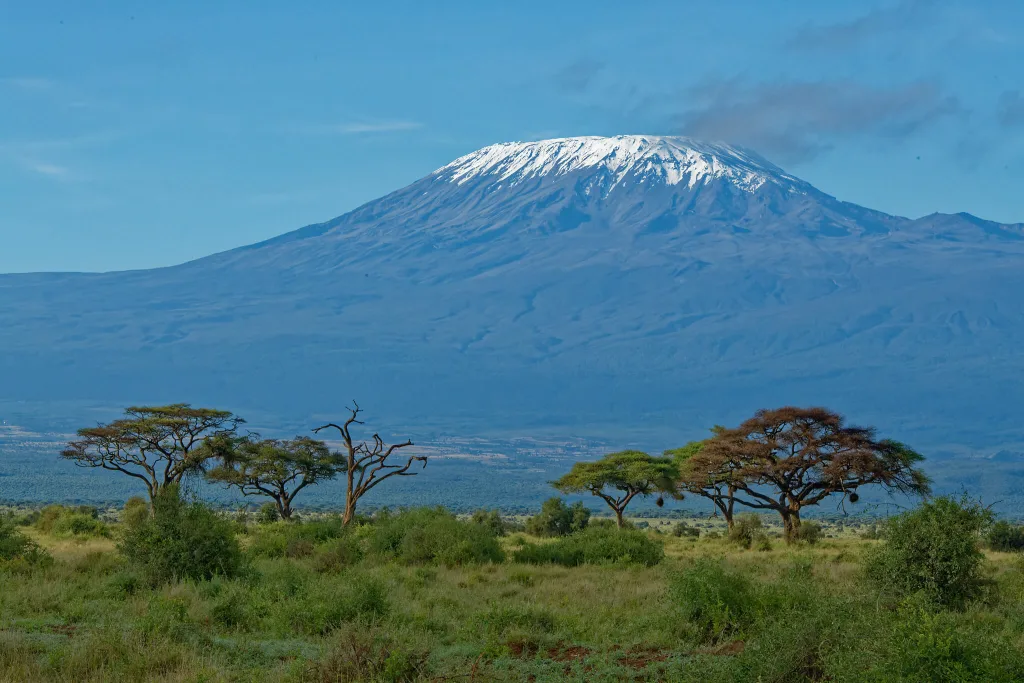
Mount Kilimanjaro has a large prominence because it is in the middle of the vast African Savanna. From afar, Kilimanjaro looks almost table-like at the top with gradual slopes from either side. The summit of Kilimanjaro is always ice-capped. It is like this giant volcanic ash-coloured rock that is capped with snow at roughly 10% of its top part. If a gigantic table mountain and Mount Fuji had a baby, that would be Mount Kilimanjaro’s appearance. To see Mount Kilimanjaro is not a very common occurrence; sometimes it is covered in clouds, sometimes you can clearly see it from top to bottom, weather permitting. The best months to see what Kilimanjaro looks like with the naked eye are during the dry months of January to mid-March and June to October. As you know, it’s not guaranteed, because this mountain has its own climate and weather, and clouds just form randomly. Mount Kilimanjaro looks better from Amboseli in Kenya because you get the best angle and without distractions, as there are no buildings in this park. If you are in Tanzania, here are some of the best locations to see Kilimanjaro in all its glory.
Top places in Tanzania where you can see Kilimanjaro clearly
Classic View from Below
From a distance (especially from Amboseli National Park in Kenya or the lower slopes near Moshi), Kilimanjaro appears as a huge, symmetrical, snow-capped giant rising out of the savanna. Its broad base and two main peaks (Kibo and Mawenzi) give it a majestic, almost floating appearance when the clouds part.
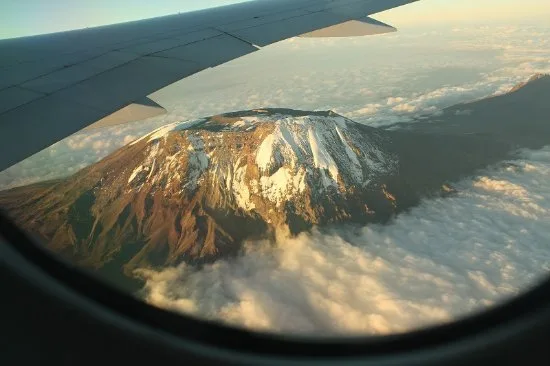
Aerial / Satellite View
From above, you can clearly see its volcanic structure: a large caldera at the summit with glaciers and ice fields clinging to the rim. The mountain has three cones: Kibo (the highest and main summit), Mawenzi (the jagged, rocky peak), and Shira (the oldest and lowest).
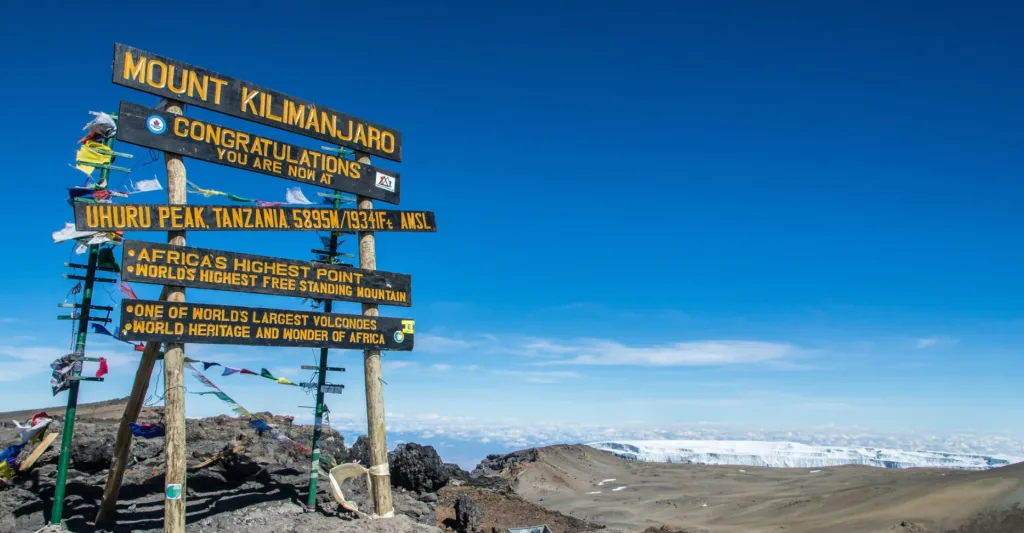
The Summit (Uhuru Peak)
At the top, Uhuru Peak features a large, flat crater with remaining glaciers and ice cliffs. The famous summit sign stands on a snowy ridge at 5,895 m (19,341 ft).
Ecological Zones (The “Layered” Look)
View this post on Instagram
Kilimanjaro is famous for its distinct climate zones stacked on top of each other:
- Lush green rainforest at the bottom
- Heath and moorland with giant lobelias
- Barren alpine desert
- Snow and ice at the top

