
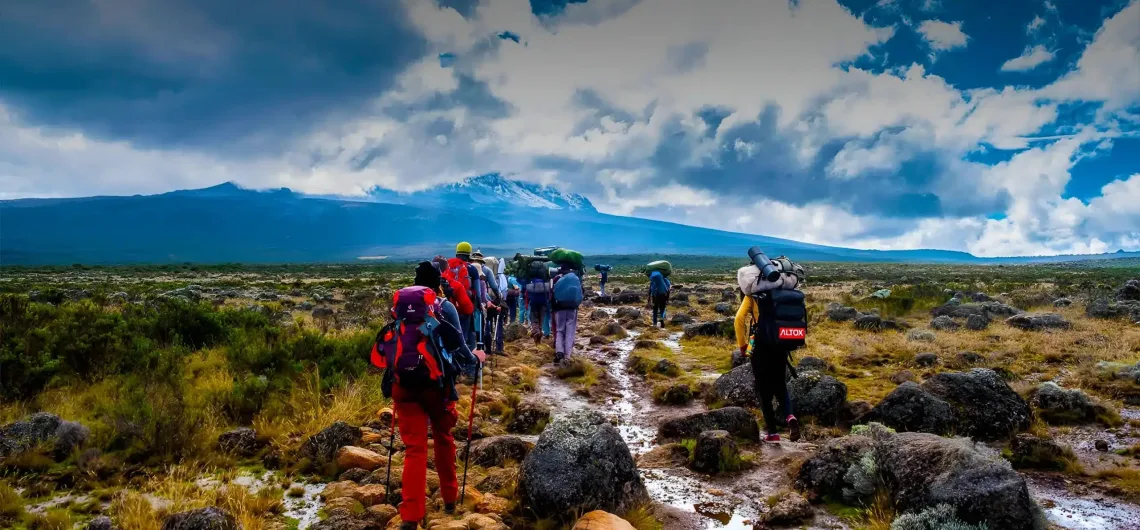
The longer the route and the more the number of days you spend on Mount Kilimanjaro, the better your chances of summiting due to your body getting accustomed and acclimatising better. We usually emphasise, especially with elderly/senior climbers, children and first timers in the mountaineering world, to go for the longer routes for obvious reasons. With these long routes, hiking days are evenly distributed, you trek at a slower pace without rushing, and you get yourself just enough time to deal with high altitude sickness-related symptoms. While the “fastest” route might sound like a badge of honour, the true magic of the Roof of Africa is found in the slow burn. Opting for an 8- or 9-day itinerary isn’t just about playing it safe with altitude—it’s about trading the frantic, crowded “express” paths for a 360-degree immersion into one of the world’s most diverse ecosystems. From the quiet solitude of the Shira Plateau to the near-guaranteed success of a well-acclimatised summit night, taking the long way isn’t just a strategy; it’s the ultimate way to actually experience the mountain rather than just surviving it.
While shorter treks (5–7 days) are popular for their speed and lower cost, the longer routes of 8 days and 9 days stand out for those prioritising safety, enjoyment, and summit success. These extended itineraries allow better acclimatisation to the thin air, reducing the risk of altitude sickness and boosting your chances of reaching Uhuru Peak. If you want to strike a balance between costs, success and time, maybe the 7-day Kilimanjaro treks are for you and worth checking out.
Why Choose the Longer Routes?
Opting for an 8-day or 9-day trek gives your body more time to adjust to increasing altitude. Kilimanjaro’s main challenge isn’t technical difficulty—it’s acute mountain sickness (AMS), which affects many climbers due to rapid ascent. Shorter routes push elevation gains quickly, leading to higher failure rates (often 40–60% overall on the mountain). Longer ones follow the “climb high, sleep low” principle more effectively, with gradual daily gains and rest days built in. This results in less fatigue, better recovery, and a more enjoyable experience overall. You’ll also avoid the crowds on popular shorter paths, enjoy more solitude, and take in diverse ecosystems—from rainforests to alpine deserts—without rushing.
Choosing the Best Kilimanjaro Route
The High Success Rates That Come with Long Routes
Statistics from reputable operators show a clear trend: the longer the trek, the higher the summit success rate. Shorter itineraries (5–6 days) often hover around 60–70% success, while 7-day options improve to 65–85%. In contrast, 8-day and 9-day routes frequently exceed 90%, with some operators reporting 95–98%. This is largely due to superior acclimatisation, which minimises severe AMS and exhaustion on summit day. For example, routes with extra days at mid-altitudes allow your body to produce more red blood cells and adapt physiologically, making the final push to the summit far more achievable.
Kilimanjaro Success Rates by Route
Spending More Time on the Mountain and Its Advantages
Extra days aren’t just about success—they enhance the entire journey. You’ll have more opportunities for side hikes, photography, wildlife spotting (especially on western routes), and bonding with your group and guides. The slower pace reduces physical strain, letting you savor transitions through Kilimanjaro’s five distinct climate zones. You’ll feel less rushed during meals, rest, and recovery, which improves morale and energy levels. Many climbers report that the extended time creates a deeper, more transformative experience, turning the trek into a true immersion rather than a race to the top.
The 8-Day Lemosho Route is the Best All-Round Route
The 8-day Lemosho route is widely regarded as one of the top choices for most climbers. Starting from the west, it offers stunning scenery, including the lush Shira Plateau, dramatic moorlands, and panoramic views rarely seen on other paths. It balances beauty, moderate difficulty, and excellent acclimatisation with a good “climb high, sleep low” profile. Success rates are consistently high—often 90–95% according to operator data—with many groups achieving near-perfect results using strategic high camps like Kosovo. It’s less crowded than Machame, more scenic than Rongai, and provides an ideal mix of adventure and safety. If you’re fit, want variety, and seek a rewarding yet achievable trek, the 8-day Lemosho is hard to beat as an all-rounder.
The Long 9-Day Northern Circuit Route Is Better for Summit Success
For the absolute highest odds of summiting, the 9-day Northern Circuit stands out as the premier option. This route begins along Lemosho but then circles the quieter northern slopes, creating the longest circuit around the mountain. The extended time (often 7+ days of gradual ascent) provides unmatched acclimatisation, with short daily hikes and minimal elevation jumps. Over the years at tranquil Kilimanjaro, we have frequently reported success rates of 95–98%, making it statistically the safest and most reliable path. It’s ideal for those prioritising summit chances over everything else, including older climbers, beginners at high altitude, or anyone who’s had prior issues with elevation. The trade-off is higher cost and more days, but the payoff in confidence and views (including 360-degree perspectives) is immense.
The 9-Day Crater Camp Route
A variation that adds a unique twist is the 9-day route incorporating an overnight at Crater Camp (around 5,800m/19,000ft on the crater rim or floor). Often combined with Lemosho or Northern Circuit approaches, this itinerary lets you summit Uhuru Peak and then descend into the crater for a night amid glaciers, the Ash Pit, and Furtwängler Glacier—a surreal, lunar-like landscape few experience. The extra acclimatisation from the longer build-up supports sleeping at this extreme height, and success rates remain very high (often over 95%). It’s perfect for those wanting a rare inner-crater adventure with stunning sunrises over Africa, though it requires strong fitness for the steep final ascent to the camp.
The 11-Day Western Breach Route Has Everything but Is Risky
The 11-day Western Breach route offers an epic package: incredible scenery, extended acclimatisation (often via Lemosho start), and the thrill of ascending the dramatic Western Breach—a steep, rocky gully directly to the crater rim. It includes diverse views, potential crater time, and high success potential due to its length. However, it’s widely considered the most dangerous route on Kilimanjaro. Rockfall risks (exacerbated by melting glaciers and climate change) have led to past fatalities, and sections require careful timing (often pre-dawn to avoid sun-thawed loose rocks). Many operators avoid or heavily caution against it, recommending only very experienced climbers with strong guides. It delivers “everything”—scenery, challenge, uniqueness—but the added hazards make it unsuitable for most. If summit success and enjoyment are your goals, invest in an 8- or 9-day route. The 8-day Lemosho offers the best overall balance, while the 9-day Northern Circuit maximises your odds. Whichever you choose, proper preparation, a reputable operator, and listening to your body will make your Kilimanjaro trek unforgettable. Pole pole (slowly, slowly)—that’s the key to the roof of Africa!
More about the Western Breach Route.

