
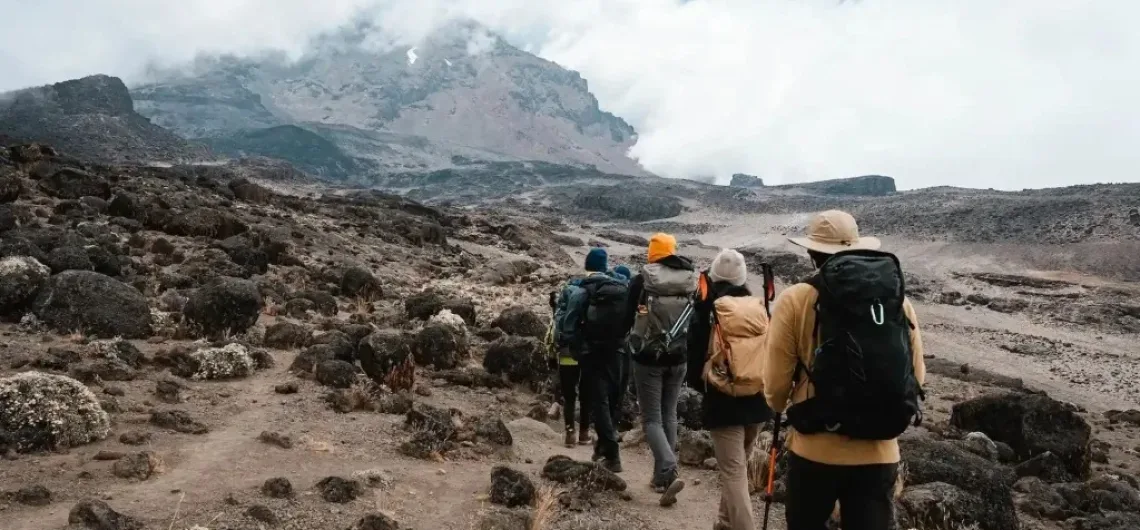
The ideal trekking pace on Mount Kilimanjaro is deliberately slow and measured—roughly half your normal walking speed. Guides will frequently remind you to go “pole pole” (Swahili for “slowly, slowly”) to conserve your energy and allow your body to gradually acclimatize to the dropping oxygen levels. You’ve probably heard this from us countless times: Kilimanjaro is like a marathon, not a 100 m dash. It is a test of your perseverance, mental and physical stamina; slow and steady wins.
Pole Pole: The Most Important Swahili Phrase You’ll Hear on Kilimanjaro
If you’re planning to trek Mount Kilimanjaro, one of the first practical questions that comes up is: “How much ground will I actually cover each day?” The answer isn’t a single number because it depends on your route, the specific day, and the emphasis on slow, steady progress for acclimatization. But here’s the realistic picture based on standard itineraries from experienced operators and climbers.
Elevation gain on your Kilimanjaro trek for Lemosho, Machame and Marangu routes
Daily Hiking Breakdown
- Standard Trek: Expect to hike for 4 to 7 hours on most days, covering roughly 5 to 10 miles depending on your route.
- Summit Night: The pace drops to its absolute slowest, sometimes moving at less than 1.6 km/h (1 mph). Moving this slowly prevents exhaustion and altitude sickness during the final steep push.
- Duration: Treks generally take 5 to 9 days, with 7- to 8-day routes offering the best success rates.
Why the Slow Pace Matters
- Avoiding Altitude Sickness: Moving too quickly at altitude does not give your body enough time to adjust, significantly increasing the risk of severe symptoms.
- Saving Energy: Climbing Kilimanjaro is a test of endurance rather than speed. Maintaining an easy, conversational pace preserves energy for consecutive days of hiking.
- Success Rate: Tours taking 7+ days (such as the Lemosho or Machame routes) boast much higher summit success rates because they enforce a longer, more gradual climb.
Distances Vary, But Averages Are Manageable
Most Kilimanjaro routes total between 60–88 km (37–55 miles) from gate to gate, including the descent. Popular options like the Machame (around 62–64 km over 6–7 days) or Lemosho (around 70 km over 7–8 days) are common choices.
On a typical day, you’ll cover 5–12 km (3–7.5 miles). Some days are shorter (especially early forest sections or acclimatization hikes), while others stretch longer. The overall average across a full trek often lands around 7–10 km per day.
Hiking time is usually 4–7 hours on normal days. The real challenge isn’t raw distance—it’s the combination of elevation gain, thinning air, and the “pole pole” (Swahili for “slowly, slowly”) approach that guides enforce.
New Acclimatization strategies for summit night to Uhuru Peak in 2026,2027
A Sample Day-by-Day Feel (Using the Popular Lemosho Route)
Here’s a realistic breakdown from a standard 8-day Lemosho itinerary (distances and times are approximate averages from multiple operator reports):
- Day 1 (Rainforest): ~6 km / 3–4 hours. Gentle to moderate uphill through lush forest.
- Day 2: ~8 km / 5–7 hours. Steeper sections as you reach the Shira Plateau.
- Day 3 (Acclimatization focus): ~10 km / 4–5 hours, often with an optional side hike higher.
- Day 4 (Lava Tower day): ~10–11 km / 6–7 hours, with significant up-and-down for acclimatization.
- Day 5 (Barranco Wall): ~5–6 km / 4–6 hours. Short but steep and exposed.
- Day 6: ~5 km / 3–5 hours. Steady climb to high camp.
- Day 7 (Summit day): 10–18 km effective / 12–15 hours. The big one.
- Day 8 (Descent): ~9 km / 4–6 hours. Faster going downhill.
Machame is similar but slightly shorter overall and joins similar terrain mid-route. Longer routes like the Northern Circuit spread the effort over more days, keeping daily distances even more comfortable.
Time on Your Feet vs. Pure Distance
Don’t fixate only on kilometers. Most days you’ll be walking at a deliberate, steady pace of roughly 2–4 km per hour (1–2.5 mph), depending on terrain and altitude. At higher elevations, that speed drops naturally.
Guides set the rhythm so everyone stays together and conserves energy. You’ll have plenty of breaks for water, snacks, photos, and rest. It feels more like a long, mindful walk than a forced march.
How fit do I need to be to climb Kilimanjaro?
Summit Day Pace: The Clear Slower Exception
This is where the numbers jump. From high camp (usually Barafu or similar, around 4,600–4,800 m), you start around midnight or 1 a.m. The push to Uhuru Peak (5,895 m) and back down to camp or lower can take 12–15 hours total. You might cover 10–18 km in that window, but it’s slow going in the dark, cold, and thin air—often at a crawl near the top.
Many people describe it as one of the hardest but most rewarding nights of their lives.
Descent Days: Surprisingly Demanding on the Knees
Coming down is often faster in terms of time per kilometer, but the trails can be steep, rocky, and slippery (especially in the rainforest). Some descent days cover 8–13+ km and still take 4–6 hours because of the terrain and the need to protect your joints.
What Affects Your Personal Pace?
- Fitness and preparation: Strong legs and good cardio help, but altitude affects everyone differently.
- Route choice: Longer routes (7–9 days) generally mean gentler daily efforts and higher success rates.
- Weather and group dynamics: Rain, mud, or a slower group member can stretch times.
- Acclimatization strategy: Days with “climb high, sleep low” (like the Lava Tower or Barranco Wall hikes) add extra elevation gain/loss but improve your chances dramatically.
Bottom Line for Planning
On a well-paced Kilimanjaro trek, expect to average around 6–10 km (4–6 miles) and 4–7 hours of walking per day on regular days. The summit push is the outlier. It’s very doable for reasonably fit people who train with long hikes, hills, and some altitude simulation if possible.
Planning and Preparation for Kilimanjaro
The key isn’t speed—it’s consistency and listening to your body (and your guides). Many successful climbers say the “pole pole” mindset is what gets them to the top when faster, more aggressive approaches fail due to altitude sickness.
If you’re training, focus on building endurance for 5–8 hour days with a pack rather than trying to hit high speeds. Hydration, nutrition, and rest between days matter just as much as the daily distance.
Kilimanjaro rewards patience far more than pace. Take it slow, enjoy the changing landscapes from rainforest to alpine desert to arctic summit, and you’ll have a much better shot at standing on the Roof of Africa.
Safe travels and happy trekking! If you have a specific route in mind, feel free to share more details for tailored advice.
When joining a Kilimanjaro group climb, can I go my own pace?

