Acclimatization for summit night on Uhuru Peak (5,895 m / 19,341 ft) has evolved in meaningful ways by 2026–2027, driven by a combination of climber feedback, operator innovations, updated high-altitude medical guidelines, and accessible pre-trip tools. While the core physiological challenge remains the same—your body must rapidly adapt to roughly half the oxygen available at sea level during the final 1,000–1,200 m push from high camps like Barafu, Kosovo, or Stella Point—the strategies now emphasize proactive, personalized preparation before you even reach Tanzania, smarter route engineering on the mountain, and precise management during the 5–8 hour night ascent itself. These approaches have quietly boosted individual success rates on longer itineraries to 85–95% for well-prepared climbers, compared to the historical 60–65% industry average on shorter routes. The traditional “climb high, sleep low” principle is still foundational, but it’s now layered with pre-acclimatization protocols, real-time physiological monitoring, refined nutrition timing, and selective pharmacological support tailored to the summit-night bottleneck. Climate patterns have also introduced subtle shifts—slightly warmer nights in some seasons and more variable snow/ice conditions—which make energy conservation and hydration management even more critical during the dark, cold push that typically starts between midnight and 2 a.m. to catch sunrise at the crater rim. More about Uhuru Peak, the highest point on Mount Kilimanjaro Pre-Trip Hypoxic Pre-Acclimatization: The Biggest Practical Advance One of the most accessible “new” tools for 2026–2027 climbers is normobaric hypoxic training at home or in specialized gyms. This involves sleeping in a hypoxic tent (or using a generator that reduces oxygen to simulate 3,000–4,500 m) and/or performing intermittent hypoxic exposure (IHE) sessions—short cycles of breathing low-oxygen air (15–18% O₂) through a mask while resting or exercising. Protocols typically run 4–6 weeks, gradually increasing simulated altitude and combining passive sleep exposure with moderate cardio (treadmill or cycling) in
Acclimatization for summit night on Uhuru Peak (5,895 m / 19,341 ft) has evolved in meaningful ways by 2026–2027, driven by a combination of climber feedback, operator innovations, updated high-altitude medical guidelines, and accessible pre-trip tools. While the core physiological challenge remains the same—your body must rapidly adapt to roughly half the oxygen available at
For older climbers (50s, 60s, 70s and beyond), the best Kilimanjaro routes prioritize longer itineraries with gradual elevation gain. This maximizes acclimatization, reduces altitude sickness risk (the number 1 reason people turn back), and improves summit success rates—often 85–95%+ versus under 60% on shorter routes. Age alone is not a barrier (people in their 70s and 80s summit regularly), but extra days make the trek far more enjoyable and safer. After all age is just a number so this advise suits our senoir hikers that age has worn them out a little bit. Do not worry though, we have the expertise to handle every situation on the mountain, having taken many older folks to the summit. Longer, higher: Why an 8-9 Day Kilimanjaro Trek is the Ultimate Success Secret View this post on Instagram A post shared by Climb Mount Kilimanjaro (@tranquilkilimanjaro) Top Recommended Routes for Older Climbers (2026 Data) Here’s a clear ranking based on recent guides, operator stats, and climber reports from 2025–2026: Lemosho Route (8 days – the #1 overall pick for most 50–60+ climbers) Why it’s ideal: Starts on the remote western slopes with stunning scenery (rainforest → moorland → Shira Plateau). Excellent “walk high, sleep low” acclimatization profile. High success rate (85–95% for 8 days; some operators report 90%+). Not overly steep early on, with a manageable summit push from Kosovo or Barafu Camp. Pros for older climbers: a balanced pace and varied landscapes keep it motivating, and there's plenty of time to adjust. Popular with seniors—recent trip reports (e.g., 60-year-old groups) praise it for being scenic without being punishing. Cons: Can feel more strenuous than Rongai on some days; busier than Northern Circuit. Best for: Fit-to-moderately-fit older climbers who want beauty + high odds. Many operators call the 8-day version the “sweet
For older climbers (50s, 60s, 70s and beyond), the best Kilimanjaro routes prioritize longer itineraries with gradual elevation gain. This maximizes acclimatization, reduces altitude sickness risk (the number 1 reason people turn back), and improves summit success rates—often 85–95%+ versus under 60% on shorter routes. Age alone is not a barrier (people in their 70s
No, a 50- or 60-year-old does not need a porter just for a daypack on Kilimanjaro. It's completely optional and depends far more on your personal fitness, how you handle altitude, and how much you want to carry than on age alone. Many climbers in their 50s, 60s (and even 70s+) carry their own daypack successfully and summit without one. However it is a matter of personal choice, more so, how much of a burden it is to your trekking experience. Our porters will assit you out of courtesy but also we can organize an extra porter that will be assisiting you all the way along your trekking days upon request. If you are worried that your backpack may hinder your summit success, please contact us anytime and we will give you the best advise and support. Standard Setup (What Most People Do) Porters already handle the heavy lifting: Your main duffel bag (up to 15 kg / ~33 lbs with sleeping bag, extra clothes, etc.) is carried by the regular porters. You carry only a daypack: This is usually 20–40 L and weighs just 5–7 kg (11–15 lbs) when packed with essentials like water (1–3 L), rain gear, snacks, sunscreen, layers, camera, and meds. Most people manage this fine, even at altitude. This is the default on almost every reputable operator’s trek—no extra cost. More about the recommended daypacks here. Best daypacks for men and women climbing Kilimanjaro, Mount Meru, Mount Kenya, Ruwenzori and Ol Doinyo Lengai hikes The Optional “Personal Porter” for Your Daypack Some operators let you hire an extra personal/daypack porter who walks right beside you and carries your daypack the whole day (so you carry basically nothing except maybe a water bottle). More about Kilimanjaro porters here. Cost: Roughly $10–20 per day + tip ($5–10/day
No, a 50- or 60-year-old does not need a porter just for a daypack on Kilimanjaro. It’s completely optional and depends far more on your personal fitness, how you handle altitude, and how much you want to carry than on age alone. Many climbers in their 50s, 60s (and even 70s+) carry their own daypack
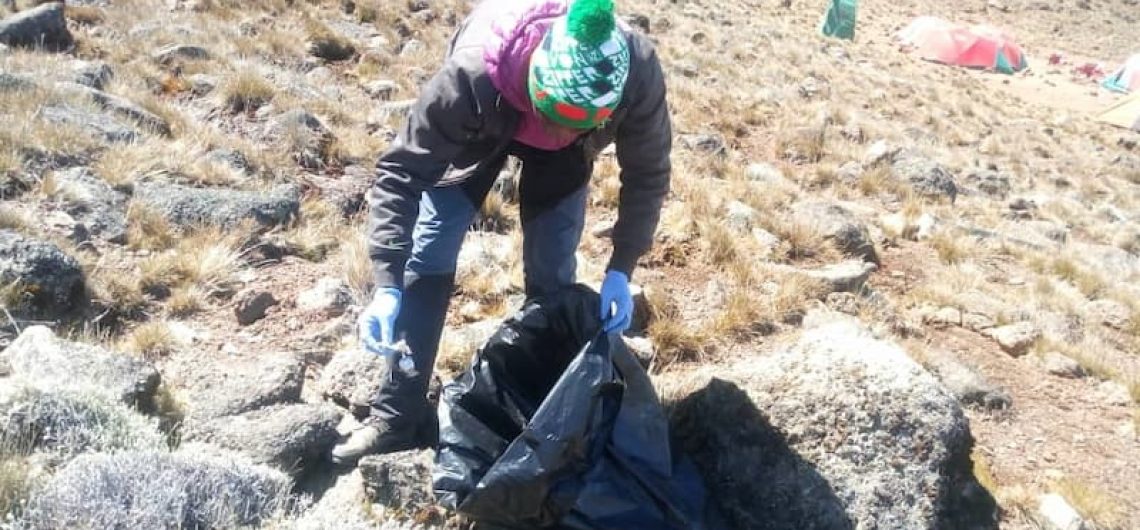
As we head into 2027, this year 2026, climbing Mount Kilimanjaro feels different — cleaner, more intentional, and undeniably more rewarding. Gone are the days when plastic bottles and wrappers dotted the trails or piled up at camps. TANAPA (Tanzania National Parks Authority) has doubled down on its long-standing “Pack In, Pack Out” and Leave No Trace principles, turning what was once a voluntary ideal into a strictly enforced reality. The result? A mountain that looks and feels pristine, even as 50,000+ trekkers ascend each year. But these “new” 2026 rules — actually a sharpened enforcement of the 2019 national plastic bag ban combined with intensified zero-waste protocols — demand real changes in how you prepare and what you bring. This exhaustive guide breaks down exactly what changed, why it matters, and the battle-tested zero-waste packing list that keeps you compliant, comfortable, and part of the solution. Ice cover on Kilimanjaro increases steadily to 5.92 square kilometres, almost triple the past size The Waste Problem That Sparked the Rules For decades, Kilimanjaro’s popularity created a hidden cost: tons of non-biodegradable waste. Thousands of trekkers and porters carried up plastic bottles, food wrappers, batteries, and packaging, but not always carried down. Microplastics were even detected in summit snow. Human waste mismanagement and trail litter threatened the fragile ecosystems across five vegetation zones.TANAPA responded decisively. The nationwide ban on all plastic carrier bags (effective June 2019) was the first major strike. It prohibits the import, manufacture, sale, storage, supply, or use of any plastic bags — regardless of thickness — in mainland Tanzania, including inside the park. By 2025–2026, enforcement escalated. A high-level stakeholder meeting in Moshi in April 2026 renewed commitments to eliminate solid and liquid waste. Operators must now prove proper waste disposal to receive permits. Many sources describe a
As we head into 2027, this year 2026, climbing Mount Kilimanjaro feels different — cleaner, more intentional, and undeniably more rewarding. Gone are the days when plastic bottles and wrappers dotted the trails or piled up at camps. TANAPA (Tanzania National Parks Authority) has doubled down on its long-standing “Pack In, Pack Out” and Leave
The cost of climbing Mount Kilimanjaro is a question that pops up in one way or another. Actually, it is the deciding factor in most cases, but we feel like safety is always the priority, because after all, the mountain will always be there, but your health and safety come first, and we take it seriously. At the time of writing this cost breakdown, we are almost midway through the year 2026. If you’re scrolling through Kilimanjaro trip ideas right now, you’ve probably noticed the glacier news blowing up. The ice fields have nearly tripled since 2010, tourism is smashing records (almost 69,000 climbers last season alone), and the mountain feels more alive than ever. But one question keeps popping up in every forum and inbox: How much does it actually cost in 2026? After comparison between tranquil Kilimanjaro prices and other operator quotes, TANAPA/KINAPA fee schedules, and real climber reports from early 2026 treks, to give you the most transparent, no-fluff breakdown possible. Spoiler: there’s no single “right” price, but a safe, ethical climb usually lands between $4,000 and $7,000 per person when you add everything up. Let’s walk through exactly where that money goes—so you can budget smart, avoid rookie traps, and choose a trek that matches your goals. Contact us to discuss your budget and which route would suit you. Our 24/7 customer service WhatsApp number +255747541280 is always online. 1. The Non-Negotiable: Kilimanjaro National Park Fees (2026 Rates) TANAPA sets these fees for every single climber, and they make up roughly 25–35% of your total package cost. Here’s the current 2026 structure for foreign adults (16+): Fee Type Amount (USD) How It’s Charged Example for 7-Day Trek (6 nights) Conservation/Entry Fee $70 per person/day Daily $490 Camping Fee $50 per person/night Per night (most routes) $300
The cost of climbing Mount Kilimanjaro is a question that pops up in one way or another. Actually, it is the deciding factor in most cases, but we feel like safety is always the priority, because after all, the mountain will always be there, but your health and safety come first, and we take it