
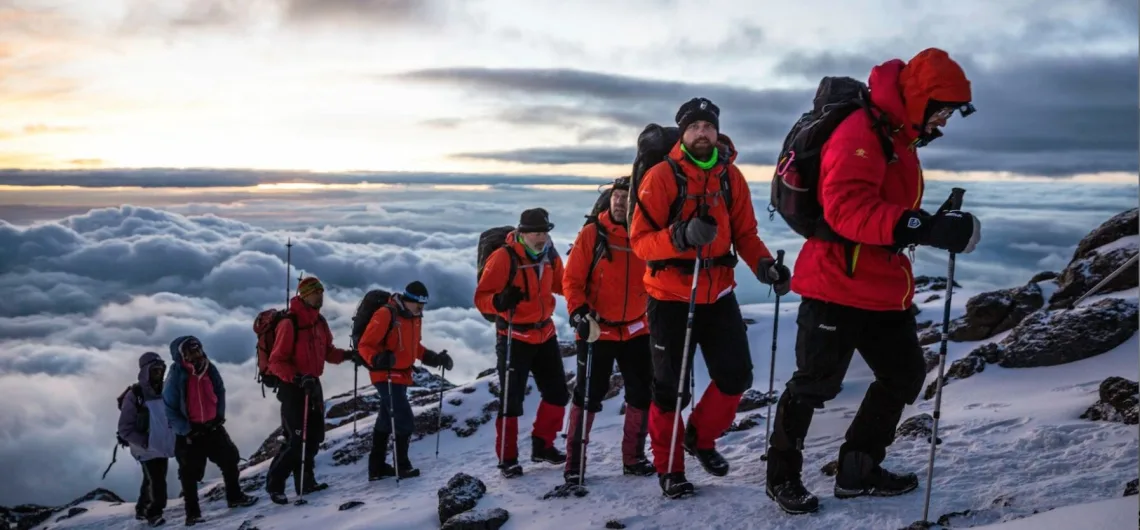
Mount Kilimanjaro’s temperatures are defined primarily by altitude rather than season, creating a dramatic range from tropical heat at the base to arctic conditions at the summit. As you ascend roughly 1,000 meters per ecological zone, temperatures typically drop by about 6–7°C (11–12.5°F) due to the environmental lapse rate. But you will be fine if you pack well for your trek. Our recommended packing list can be found and downloaded here.
The mountain sits near the equator, so seasonal variations are milder than in temperate regions. The warmest and driest months are typically January–February and August–September, while June–July can feel slightly cooler. The long rains (March–May) and short rains (November) bring more precipitation, but temperatures stay altitude-driven. Daytime warmth contrasts sharply with cold nights, especially higher up, and wind chill can make summit conditions feel far colder.
You’ll experience everything from beach-like warmth at the start to genuine arctic conditions at the top — often within just a few days. Proper layering (base layers, insulating mid-layers, waterproof shell, down jacket, balaclava, gloves, etc.) is essential, especially for the summit push.
What is the temperature at each of Kilimanjaro’s Ecological Zones?
Here are the five main climate zones with realistic average temperature ranges (daytime highs and nighttime lows). These are compiled from trekking operators and climate data. Actual conditions vary with weather, wind, cloud cover, and time of day.
1. Cultivation / Lower Slopes Zone (800–1,800 m / ~2,600–6,000 ft)
- Daytime: 21–30°C (70–86°F), sometimes up to 32°C
- Nighttime: 15–20°C (59–68°F)
- Characteristics: Warm, humid, agricultural land with banana plantations and villages. This is the starting area near Moshi or the park gates. Feels tropical and comfortable most of the year.
2. Rainforest / Montane Forest Zone (1,800–3,000 m / ~5,900–9,800 ft)
- Daytime: 15–27°C (59–80°F)
- Nighttime: 7–12°C (44–54°F)
- Characteristics: Lush, misty, and humid with frequent rain (especially in wet seasons). Dense vegetation keeps it cooler and damper. Mornings can feel warm, but afternoons often bring clouds or showers. This zone feels pleasantly mild during the day but noticeably cooler at night.
3. Heath & Moorland Zone (3,000–4,000 m / ~9,800–13,100 ft)
- Daytime: 10–20°C (50–68°F), often 10–15°C
- Nighttime: 0–5°C (32–41°F), can dip below freezing
- Characteristics: Open landscape with giant senecios and lobelias. Days are comfortable for hiking, but nights bring the first risk of frost. Wind increases exposure. Many climbers find this one of the more pleasant zones temperature-wise.
4. Alpine Desert Zone (4,000–5,000 m / ~13,100–16,400 ft)
- Daytime: -2 to 18°C (28–65°F), with intense sun often pushing higher (up to 20–25°C in direct sun)
- Nighttime: -7 to 3°C (20–37°F), frequently below freezing
- Characteristics: Dry, barren, rocky terrain with extreme temperature swings (hot days, freezing nights) due to thin air and low humidity. Strong UV radiation and wind are common. This is where the cold really starts to bite, especially after sunset.
5. Arctic / Summit Zone (5,000–5,895 m / ~16,400–19,341 ft), including Uhuru Peak
- Daytime (clear, low wind): -7 to 5°C (20–40°F), often around -1 to -7°C near the summit
- Nighttime / Pre-dawn summit push: -7 to -20°C (20 to -4°F), occasionally down to -25°C to -29°C (-13 to -20°F) with windchill
- Characteristics: Extreme cold, low oxygen (~50% of sea level), possible snow/ice, and strong winds. Summit temperatures are always below freezing. Most climbers reach Uhuru Peak around sunrise, so expect conditions in the -10°C to -15°C range (with wind chill making it feel colder). Daytime warming after sunrise can make it slightly more bearable on descent.
Key Takeaways on Summit Cold (Uhuru Peak)
- Nighttime summit attempts are the coldest part of the climb.
- Windchill is a major factor — a -10°C reading can feel like -20°C or lower.
- January–February and August–September tend to be slightly milder and drier at the summit, while wet-season months can bring more snow and harsher wind.
- Temperatures can swing dramatically within hours due to solar radiation and clear skies.
How to combat the cold and stay warm on summit night climbs
Climbing Kilimanjaro is a challenging and rewarding endeavor, but it requires proper preparation and a thorough understanding of the extreme weather conditions that await at the summit. By being equipped with the right clothing and gear, as well as following the guidance of experienced guides, climbers can safely navigate the cold temperatures and achieve their goal of reaching the majestic summit of Mount Kilimanjaro.
Here are some tips on how to stay warm at Uhuru Peak:
- Dress in layers. This will allow you to adjust your clothing as needed to stay warm.
- Wear a hat, gloves, and a down jacket. These will help to keep your head, hands, and torso warm.
- Drink plenty of fluids. This will help to prevent dehydration, which can make you feel cold.
- Move around. This will help to generate heat.
- Take breaks. If you start to feel cold, take a break to rest and warm up.
- Be aware of the signs of hypothermia. These include shivering, slurred speech, and confusion. If you experience any of these symptoms, seek medical attention immediately.
Here are some additional tips that may help you stay warm at Uhuru Peak:
- Eat a high-calorie meal before you summit. This will help to give you energy and keep you warm.
- Bring a sleeping bag or blanket to sit on. This will help to insulate you from the cold ground.
- Bring a thermos of hot water or soup. This will help to warm you up from the inside out.
- If you are feeling cold, do not hesitate to ask your guide for help. They will be able to provide you with additional clothing or assistance.
By following these tips, you can increase your chances of staying warm at Uhuru Peak and enjoying your summit experience.
Here are some additional things to consider when preparing for the cold temperatures at Uhuru Peak:
- The wind chill factor can make the temperature feel even colder.
- The sun’s rays are less powerful at high altitudes, so it is important to wear sunscreen even on cloudy days.
- The cold can dry out your skin and lips, so it is important to moisturize regularly.
- It is important to listen to your body and take breaks as needed. If you start to feel cold, take a break to rest and warm up.
How Cold is Uhuru Peak at the Summit of Kilimanjaro?
During the summit night, when climbers make their final push to reach Uhuru Peak, the temperatures can drop even further, often reaching below -25°C (-13°F) or colder. Coupled with the strong winds that are common at higher elevations, the wind chill factor can make it feel even colder and more challenging.
It is important to note that these are average temperatures, and there can be significant variations depending on the specific climbing season and weather patterns. The key to dealing with the extreme cold at the summit of Kilimanjaro is to be well-prepared with appropriate clothing and equipment.
Climbers are advised to dress in layers, including a base layer, insulating layers, and a waterproof and windproof outer shell. Additionally, wearing a warm hat, gloves, and insulated footwear is crucial to protect extremities from the cold. It is also recommended to have hand warmers and foot warmers available for added comfort.
Understanding the Cold Challenge
As the darkness blankets the mountain and you ascend towards the summit, the temperatures can plummet to freezing levels. It’s not uncommon for the mercury to dip below zero degrees Fahrenheit (-18 degrees Celsius) or even colder. However, the average temperatures you can expect range from 20°F to 30°F (-6°C to -1°C). These figures may vary depending on the mountain and specific weather conditions, so it’s crucial to consult with your experienced guide for accurate forecasts.
Dressing for Success: Layering is Key
To combat the frigid temperatures, your guide will provide invaluable advice on what to wear during your ascent. Dressing in layers is the secret to staying warm while allowing for flexibility and adaptability as the weather changes. Here’s a recommended layering system for both your upper and lower body:
Upper Body Layering:
- Base Layer: Start with a moisture-wicking base layer that sits closest to your skin. This layer will keep you dry by moving perspiration away from your body.
- Soft Shell: The soft shell layer acts as insulation and provides additional breathability. It helps to regulate body temperature while shielding you from wind and light precipitation.
- Insulated Jacket: This layer adds substantial warmth and insulation. Choose a jacket with excellent insulation properties to retain your body heat effectively.
- Hard Shell: The outermost layer, the hard shell, serves as your shield against harsh winds, heavy snowfall, or rain. It should be waterproof and breathable, allowing moisture to escape while keeping you protected.
Lower Body Layering:
- Tights: Start with a snug-fitting pair of moisture-wicking tights to keep your legs dry and provide a comfortable base layer.
- Fleece Pants: The fleece pants act as an insulating layer to retain heat while allowing for freedom of movement.
- Rain Pants: Your outermost layer on the lower body, the rain pants, should be waterproof and windproof. They will protect you from snow, rain, and any moisture on the trail.
Protective Accessories: Hat and Gloves
Never underestimate the importance of protecting your extremities from the biting cold. A warm hat and gloves are essential to prevent heat loss and keep your head and hands comfortably warm. Opt for high-quality, insulating materials that are suitable for the extreme conditions you’ll encounter.
Temperature Shifts
As the sun makes its grand appearance on the horizon, the mountain landscape transforms, and so do the temperatures. During the morning hours, you may experience a rapid temperature rise, even as much as 30°F to 40°F (-1°C to 4°C). This substantial increase can catch you off guard if you’re not prepared.
To adapt to the changing weather, remember to shed layers as needed. Remove around two layers from your upper body and one layer from your lower body during the ascent. By adjusting your clothing, you’ll avoid overheating and excessive sweating, which can lead to discomfort and even hypothermia during the descent.
The Recommended Base Layers & Hiking Shirts for Climbing Kilimanjaro
Hydration
It’s easy to overlook the importance of staying hydrated while focused on the challenges of a mountain climb. However, maintaining proper hydration is absolutely crucial for your overall well-being and performance. As you ascend towards the summit, remember to drink water consistently throughout the journey.
High-altitude climbing can increase the risk of dehydration due to factors such as increased respiration and the dry mountain air. Dehydration can lead to fatigue, dizziness, and decreased cognitive function, all of which can hinder your progress and put your safety at risk.
Carry an adequate supply of water and make a conscious effort to drink regularly, even if you don’t feel particularly thirsty. Hydration packs or water bottles designed for outdoor activities are practical options. It’s advisable to drink small amounts frequently rather than large quantities infrequently.
Why driking water on Mount Kilimanjaro, Mount Kenya, Rwenzori and Mount Meru is so important
Conquering the Fear of Cold
It’s natural to feel a sense of trepidation when contemplating the extreme cold temperatures you may encounter during a mountain climb. However, it’s essential to address any irrational fears and equip yourself with the proper knowledge and gear to overcome them.
By following the layering system outlined above, you can effectively insulate your body against the cold and maintain a comfortable temperature. Each layer serves a specific purpose, from moisture-wicking to insulation and protection against the elements. Trust in the expertise of your guide and the effectiveness of the recommended clothing system.
Remember that with the right preparation and gear, the cold becomes a conquerable element rather than an insurmountable obstacle. Embrace the challenge, focus on your goal, and let the stunning beauty of the mountain landscape inspire you to reach new heights.
- Sun Protection Guide for Kilimanjaro – Sunscreen, Lip Balm, Snow Blindness Prevention, and More
- Key symptoms of HAPE and HACE. Life-threatening, advanced forms of AMS can occur on Mount Kilimanjaro.
- What is the Temperature at Uhuru Peak?
- How to stay warm at Uhuru Peak
- The 3 jackets that you need on Kilimanjaro
- The Best Gloves for Climbing Kilimanjaro, Mount Kenya, Mount Meru, Rwenzori, Ol Doinyo Lengai
- Why you need mittens and gloves to summit Kilimanjaro’s Uhuru Peak
- 5 Essential Pants to Pack for Climbing Kilimanjaro, Mount Kenya, Mount Meru

