
HAPE (High-Altitude Pulmonary Edema) and HACE (High-Altitude Cerebral Edema) are the two life-threatening advanced forms of altitude sickness that can strike on Mount Kilimanjaro, most commonly during or after the summit night push from high camps like Barafu, Kosovo, Kibo Hut, or School Hut. They represent the body’s failure to acclimatize properly to the extreme hypoxia (oxygen levels roughly half of sea level at 5,895 m / 19,341 ft on Uhuru Peak). While mild Acute Mountain Sickness (AMS) is common and usually manageable, HAPE and HACE develop when fluid leaks into the lungs (HAPE) or brain swelling occurs (HACE). They can progress rapidly—sometimes within 6–24 hours—and have caused fatalities on Kilimanjaro despite the mountain’s non-technical nature. The good news is they are almost always preventable with the longer itineraries (Northern Circuit, extended Lemosho or Rongai), proactive hydration/electrolytes, natural remedies like Rhodiola and ginger, and immediate recognition of early symptoms. These conditions rarely appear out of nowhere; they usually follow ignored or worsening mild AMS (headache, nausea, fatigue). On Kilimanjaro, risk peaks above 4,500–5,000 m during the cold, dark summit night or the first 24–48 hours at high camps. Tranquil Kilimanjaro guides are trained to spot them, but you must know the key signs yourself—your life may depend on it.
HAPE – High-Altitude Pulmonary Edema (Fluid in the Lungs)
HAPE is the more frequent life-threatening form on Kilimanjaro (roughly 0.5–1% incidence overall, higher on rushed ascents). It happens when low oxygen causes blood vessels in the lungs to constrict unevenly, raising pressure and forcing fluid into the air sacs. It can kill within hours if untreated, but descent of even 500–1,000 m often reverses it dramatically.
Key symptoms (appear at rest, not just during exertion):
- Severe shortness of breath even when sitting or lying still (you feel like you can’t catch your breath).
- Persistent dry cough that progresses to a wet, rattling cough producing pink, frothy, or blood-tinged sputum (the classic “drowning from inside” sign).
- Extreme fatigue or weakness out of proportion to the day’s effort—feeling like you’re “running out of air.”
- Tightness or pain in the chest.
- Rapid heartbeat (pulse >100–120 even at rest).
- Bluish tint to lips, tongue, or fingernails (cyanosis) due to poor oxygenation.
- Gurgling or crackling sounds in the lungs (rales) that your guide or a stethoscope can hear.
On summit night or descent, these can hit suddenly after 5,000 m. Climbers sometimes mistake early HAPE for “just being tired and cold,” but the at-rest breathlessness is the red flag that demands immediate descent.
HACE – High-Altitude Cerebral Edema (Brain Swelling)
HACE is rarer (about 0.1–0.5% incidence) but equally deadly. Low oxygen causes blood vessels in the brain to leak, leading to swelling that raises intracranial pressure. It often develops from untreated severe AMS and can progress to coma or death within 12–24 hours without descent.
Key symptoms (neurological and behavioral changes are the hallmark):
- Severe, unrelenting headache that does not improve with rest, hydration, or usual painkillers (stronger than typical AMS headache).
- Ataxia (loss of coordination): stumbling, wide-based gait, inability to walk a straight line heel-to-toe, or perform simple tasks like touching a finger to nose accurately.
- Altered mental status: confusion, disorientation, forgetfulness, hallucinations, or irrational behavior (e.g., refusing to descend or acting “drunk”).
- Persistent vomiting (often projectile and not relieved by anti-nausea aids).
- Extreme drowsiness, lethargy, or difficulty staying awake—progressing to unconsciousness.
- Changes in vision, speech, or personality (irritability turning to apathy).
A quick field test your guide may use: ask the climber to walk a straight line or perform the finger-nose test. Failure is a strong indicator of HACE.
Critical Overlaps and What to Do Immediately
HAPE and HACE can occur together (sometimes called “high-altitude cerebral and pulmonary edema”) and may overlap with severe AMS. On Kilimanjaro, both are most likely during the final 1,000 m push or at high camps if acclimatization was rushed. Descent is the only definitive cure—drop at least 500–1,000 m as fast as safely possible, even in darkness with headlamps and guide support. Supplemental oxygen (if your operator carries it), dexamethasone (for HACE), and nifedipine or sildenafil (for HAPE) can buy time but do not replace descent. Evacuation by stretcher or helicopter is sometimes needed from lower camps.
Never try to “push through”—these are not conditions where rest at altitude helps. The climbers who survive are the ones who treat every worsening symptom as potentially HAPE or HACE and descend immediately.
Prevention Ties Directly to Your Preparation
Everything we’ve covered in your planning directly lowers the risk:
- Longer non-touristic routes (Northern Circuit, extended Rongai) with built-in “climb high, sleep low” days give your body time to adapt.
- Consistent 4–5 liters of hydration with electrolytes prevents the dehydration that worsens fluid shifts.
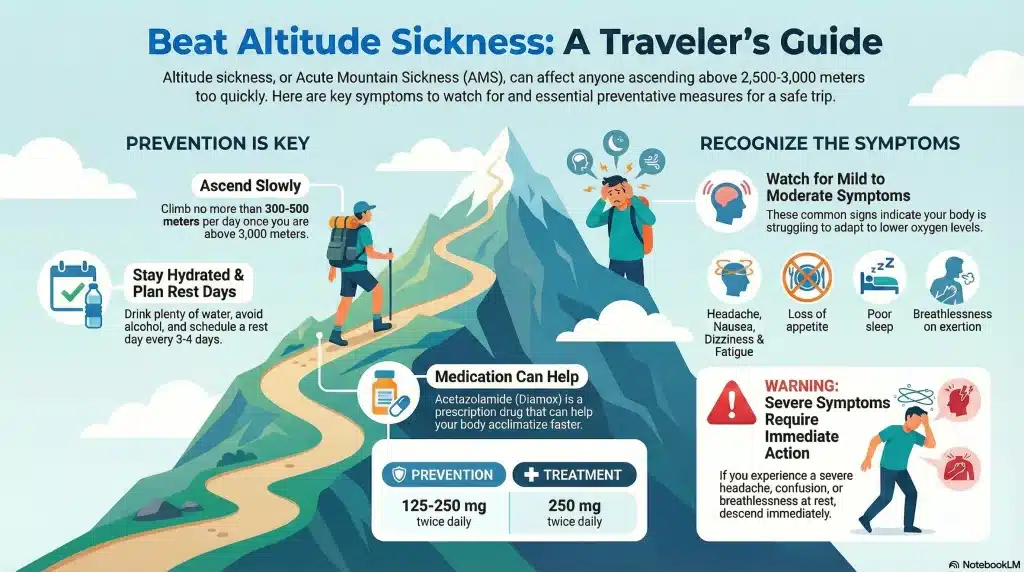
- Natural remedies (Rhodiola for oxygen efficiency, ginger for nausea) plus acetazolamide (if prescribed) support acclimatization.
- Monitoring with a pulse oximeter (SpO₂ dropping below 80% at rest with symptoms is a warning) and “pole pole” pacing.
- Knowing the high camps (Barafu, Kosovo, Kibo, School Hut, Crater Camp) and their specific demands.
Guides carry oxygen and medications, but the best protection is recognizing the key symptoms early and acting decisively. HAPE and HACE have claimed lives on Kilimanjaro, yet they are almost entirely avoidable when you respect the mountain’s rules. With the layered strategies you’re building—acclimatization, gear, hydration, cultural context, and now this knowledge—you’re stacking the odds heavily in your favor for a safe, successful summit on Uhuru Peak. Listen to your body, trust your guide, and descend if anything feels off. The Roof of Africa is magnificent precisely because it demands this level of respect.

