
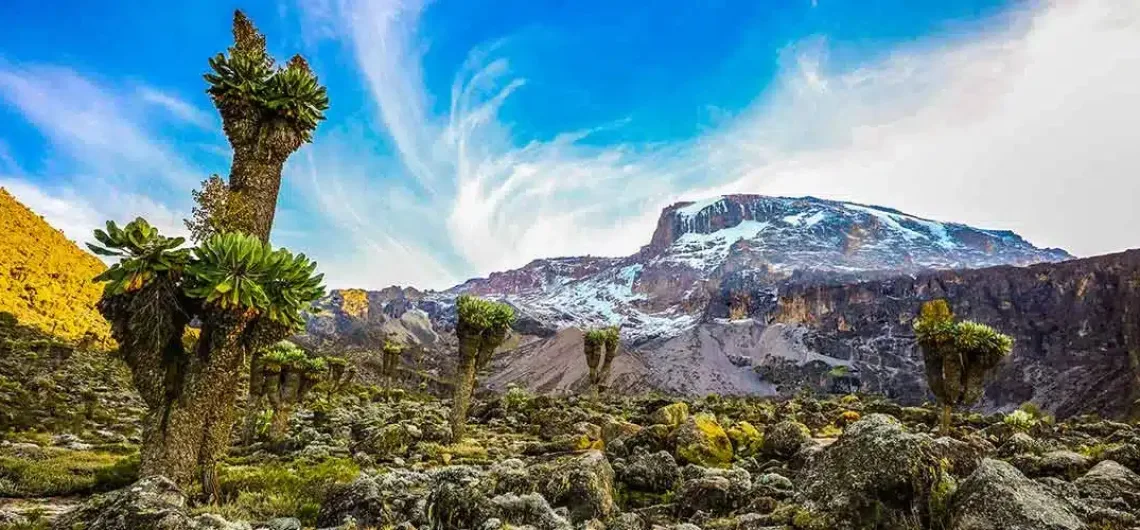
Choosing the best 7 day Kilimanjaro treks should not be a challenge. Most climbers love to spare a week for tackling this mountain in Tanzania, but sometimes struggle to get the most appropriate route and itinerary for their liking and purpose. We usually advise our clients to choose a route that offers ample time for acclimatisation, and the day-to-day trekking hours are evenly spread out. The 7 day Lemosho Route is not the same as the 7 day Machame Route. The determining factors that we usually ask are what is your age, what fitness level are you in? Do you have any previous climbing experience in high-altitude mountaineering? Are you comfortable scaling over high walls and rocks? If we take two routes here, for example, the 7 day Machame Route and the 7 day Rongai Route, you realise that they are both within the recommended timeframe for offering ample acclimatisation, they both last seven days, they are both scenic, but what is the main difference? Now, here we have to take into consideration a few factors. If you love soaking in the scenery and you are up for a challenging climb, we can recommend the popular Machame Route. But if you prefer a less challenging trek and you want to climb Mount Kilimanjaro when the weather is unpredictable, like around May, nearing April during the rains or October nearing November, we would recommend the Rongai Route 7 days, which takes its course in the northern leeward slopes with receive minimal to no precipitation all year round. While treks can vary in length, 7-day itineraries strike a popular balance, offering enough time for acclimatisation while fitting into a standard vacation schedule. This article explores the ins and outs of these one-week adventures, from route options to essential tips.
Why Choose One Week Treks
Opting for a 7-day trek on Mount Kilimanjaro provides an ideal mix of challenge, scenery, and feasibility for most climbers. Shorter routes, like 5 or 6 days, often rush the ascent, increasing the risk of altitude sickness due to inadequate acclimatisation. Longer treks, spanning 8 or more days, demand more time off work or away from home, which isn’t always practical. A 7-day itinerary allows for a “climb high, sleep low” approach on many routes, improving oxygen adaptation and summit success rates, which hover around 80-90% for well-prepared groups. These treks also immerse you in diverse ecosystems—from lush rainforests to alpine deserts—without overwhelming fatigue. For busy professionals or families, it’s a compact yet rewarding way to tick off a bucket-list achievement, with costs typically ranging from $1,500 to $3,000 per person, including guides, porters, and permits.
Popular 7 Day Routes
Several routes cater to 7-day treks, each with unique landscapes, difficulty levels, and appeal. Here’s an overview of the most favoured ones.
7 Days Machame Route – Book Now
Known as the “Whiskey Route” for its challenging terrain, the 7-day Machame starts at Machame Gate (1,800m) and winds through dense rainforest, moorland, and barren lava fields. Day 1 ascends to Machame Camp (3,000m), followed by Shira Camp (3,800m) on Day 2. The route includes the dramatic Barranco Wall climb on Day 4, leading to Barafu Camp (4,600m) for the summit push on Day 6. Descent occurs via the Mweka Route. It’s scenic and popular, with good acclimatisation thanks to varied elevations, but expect steep sections and crowds.
7 Days Rongai Route – Book Now
The Rongai Route approaches from the northern Kenyan border, making it the only northern ascent. This 7-day version begins at Nale Moru Gate (2,000m), passing through pine forests and open moorlands. Camps include Simba (2,600m), Kikelewa (3,600m), and Mawenzi Tarn (4,300m), with a summit attempt from Kibo Hut (4,700m). It’s less crowded and drier than southern routes, ideal for spotting wildlife like colobus monkeys. The descent follows the Marangu Route, adding variety.
7 Days Lemosho Route – Book Now
The Lemosho is a scenic, less-travelled path starting at Lemosho Gate (2,100m) in the west. Over 7 days, it traverses rainforest teeming with wildlife, then the vast Shira Plateau. Key camps are Mti Mkubwa (2,800m), Shira 1 (3,500m), and Barranco (3,900m), merging with Machame for the final ascent from Barafu Camp. It offers excellent acclimatisation with gradual gains and panoramic views, but the remote start means longer transfers.
7 Days Shira Route – Book Now
Similar to Lemosho but abbreviated, the 7-day Shira begins at a higher altitude via Shira Gate (3,600m), skipping lower forests. It quickly reaches Shira Camp, then follows a path akin to Lemosho, including Lava Tower (4,600m) for acclimatisation. Summit via Barafu Camp. It’s efficient for experienced hikers but starts high, potentially causing early altitude issues. Views of the Shira Plateau are stunning, though it’s less biodiverse.
Which Is the Best 7 Day Itinerary?
Among the 7-day options, the Machame Route stands out as the best itinerary. Its diverse terrain keeps the trek engaging, from misty forests to stark alpine zones, providing a full Kilimanjaro experience. The route’s design emphasizes acclimatization with ups and downs, boosting success rates to about 85%. It’s moderately challenging, suitable for fit beginners, and offers iconic features like the Barranco Wall for memorable photos. While busier than remote paths, the social atmosphere enhances the adventure, and porters handle logistics seamlessly. For a balanced, rewarding climb, Machame delivers unmatched value.
Which Is the Worst 7 Day Kilimanjaro Itinerary?
The 7-day Shira Route ranks as the worst option for most climbers. Starting at a high elevation (3,600m) without a gradual buildup exposes trekkers to altitude sickness early, with symptoms like headaches or nausea hitting sooner than on lower-starting routes. This can derail the entire trip, especially for those without prior high-altitude experience. The abbreviated path misses the rich lower ecosystems, feeling rushed and less immersive. While it suits seasoned mountaineers seeking efficiency, for average adventurers, it increases risks without proportional rewards, leading to lower success rates of around 70%.
What You Need to Pack for 7 Days
Packing smart is crucial for a 7-day Kilimanjaro trek, where weather shifts from tropical to arctic. Essentials include:
- Clothing: Layered system with moisture-wicking base layers, insulating mid-layers (fleece), waterproof jacket and pants, thermal underwear, gloves, hat, and balaclava. Pack 4-5 pairs of socks, sturdy hiking boots, and camp shoes. See the recommended gear list for Mount Kilimanjaro.
- Gear: 20-30L daypack, 70-90L duffel (carried by porters), sleeping bag rated to -10°C, trekking poles, headlamp with extra batteries, and sunglasses.
- Personal Items: Sunscreen (SPF 50+), lip balm, toiletries, wet wipes, personal medications (including altitude sickness pills like Diamox), and a first-aid kit with blister plasters.
- Miscellaneous: Water bottle or hydration system (3L capacity), snacks like energy bars, camera, power bank, and cash for tips. Avoid cotton; opt for synthetics or wool for warmth and quick drying.
Porters carry most weight (up to 15kg per person), so focus on essentials.
Preparation Tip
Preparation is key to enjoying your 7-day trek. Start training 3-6 months in advance with cardio (running, cycling) and strength exercises (squats, lunges) to build endurance—aim for 5-10km hikes with elevation weekly. Simulate conditions by hiking with a weighted pack. Get a medical check-up, vaccinate against yellow fever and hepatitis, and consult on altitude meds. Acclimatise by arriving in Tanzania early. Research your operator for safety records, and mentally prepare for variable weather and group dynamics. Hydrate well pre-trek and pace yourself with the Swahili mantra “pole pole” (slowly slowly).
See how to train and prepare for Mount Kilimanjaro here.
Differences Between the 7-Day Kilimanjaro Itineraries
The four main 7-day routes on Mount Kilimanjaro—Machame, Rongai, Lemosho, and Shira—differ primarily in their starting points, terrain, scenery, crowd levels, acclimatisation profiles, and overall difficulty. These variations stem from the mountain’s geography: southern and western approaches tend to be wetter and more biodiverse, while the northern side is drier. Click here to know more about the different Mount Kilimanjaro Routes.
- Starting Points and Approach: The Machame Route begins on the southern slopes at Machame Gate (around 1,800m), passing through dense rainforests. The Rongai Route is unique as the only northern approach, starting near the Kenyan border at Nale Moru Gate (2,000m), with pine forests and open moorlands. The Lemosho Route starts on the western side at Londorossi Gate (2,100m), offering a remote entry through lush wilderness. The Shira Route, often considered a variant of Lemosho, begins higher at Shira Gate (3,600m), bypassing lower elevations and jumping straight to the Shira Plateau.
- Terrain and Difficulty: Machame is known as the “Whiskey Route” for its steep sections, including the Barranco Wall, making it more challenging but with a “climb high, sleep low” strategy for better acclimatisation.Rongai features a gentler ascent with fewer steep climbs, ideal for a steadier pace.Lemosho is gradual and scenic, with a longer traverse across the Shira Plateau, merging with Machame later.
Shira’s high start means quicker exposure to altitude, which can be tougher for acclimatisation but efficient for experienced hikers.
- Scenery and Biodiversity: Lemosho and Machame offer the most diverse landscapes, from rainforests teeming with wildlife to alpine deserts and glaciers.Rongai is drier, with opportunities to spot animals like colobus monkeys but less dramatic views.Shira Route provides stunning plateau vistas but skips the lower forest zones, reducing biodiversity.
- Crowds and Logistics: Machame is the most popular and crowded, especially in peak seasons.Rongai is the least crowded, offering a more private experience.Lemosho starts remote, so it’s less busy initially, but joins busier paths later. Shira is similar to Lemosho in crowds but requires longer transfers due to its western access.
- Success Rates and Acclimatisation: All 7-day versions prioritize acclimatization, but Lemosho edges out with rates around 85%, followed by Machame at 85%, Rongai at 80%, and Shira potentially lower due to the abrupt high start.Success depends on fitness, but these routes generally achieve 80-90% summits with proper preparation.
These differences allow climbers to choose based on priorities like scenery (favour Lemosho/Machame), solitude (Rongai), or efficiency (Shira).
Pros and Cons Table
| Route | Pros | Cons |
|---|---|---|
| Machame | Diverse scenery (rainforests to glaciers); good acclimatisation with “climb high, sleep low”; challenging but rewarding; high success rate (~85%); affordable. | Crowded in high season; steeper terrain and more physically demanding; wetter southern approach. |
| Rongai | Less crowded; drier conditions year-round; gentle ascent; good wildlife sightings; steady pace with ~80% success. | Less dramatic scenery; northern descent via Marangu adds variety but no return to start; potentially fewer panoramic views. |
| Lemosho | Most scenic and biodiverse; excellent gradual acclimatisation; low crowds initially; highest success (~85-92%); remote wilderness feel. | Longer transfers to start; slightly more expensive due to remoteness; merges with busier routes later. |
| Shira | Stunning Shira Plateau views; efficient for experienced climbers; good acclimatisation if extended; scenic high-altitude start. | High starting elevation increases early altitude sickness risk; skips lower ecosystems, less immersive; potentially lower success if not acclimatised well. |
Is One Week Enough to Climb Kilimanjaro?
Yes, one week (7 days) is generally enough to climb Kilimanjaro for fit individuals, as it’s a common duration with success rates often exceeding 80% on well-designed routes like Machame or Lemosho.
However, longer itineraries (8-9 days) are recommended for optimal acclimatisation, reducing altitude sickness risks and boosting summit chances to 90% or higher.
Shorter climbs (5-6 days) have lower success (around 60-70%), while 7 days strikes a balance between time constraints and safety.
Factors like prior fitness training, route choice, and pacing (“pole pole” or slowly) play key roles—many climbers summit successfully in 7 days, but if you have flexibility, adding a day enhances the experience and recovery.
Find out how long it takes to climb Mount Kilimanjaro.
How much do the 7-day Mount Kilimanjaro Treks cost?
All prices are in USD per person, include taxes, park fees, guides, porters, meals, transfers, accommodation (pre/post-climb where applicable), tents/mattresses, and other standard inclusions like rescue fees and VAT. Prices decrease with larger group sizes due to shared costs; smaller groups pay more, and some require custom quotes for 5+ or 7+ people. Exclusions typically include visa, tips/gratuities, personal expenses, optional tours, and personal gear. Prices are starting/from rates (often for larger groups) or tiered, as detailed. Note that exact costs can vary by season, exact group size, or custom requests—contact the operator for quotes. See a breakdown of Mount Kilimanjaro fees and how much it costs to climb.
| Route | Starting/From Price (USD per person) | Tiered Pricing Examples (per person) | Notes |
|---|---|---|---|
| Machame Route (7 days) | From $1,985 (for a group of 6) |
| Most detailed tiering available; popular route with good acclimatisation. |
| Rongai Route (7 days) | From $1,675 (for group of 10+) |
| Northern route, often drier; best value for larger groups. |
| Lemosho Route (7 days) | From ~$2,165 (for group of 6) |
| Scenic western route; slightly higher cost due to remoteness and transfers. |
| Shira Route (7 days) | ~$2,413 (listed in packages) | Price on request | High-start route variant; pricing appears in overviews but is less prominently listed—may align closer to Lemosho costs. |
These figures reflect per-person rates for private or small-group climbs (not fixed group join dates, which may have different pricing for full-moon or scheduled departures). Larger groups benefit from significant savings.
What to Expect
Expect a transformative journey blending physical exertion with awe-inspiring views. Days start early (6-7am) with 6-8 hours of hiking, gaining 500-1,000m elevation. Weather varies: warm and humid lowlands (20-30°C), freezing summits (-10°C with wind). Altitude effects like mild headaches are common but manageable. Camps offer tents, meals (porridge, pasta, fresh produce), and camaraderie around campfires. The summit night is gruelling—midnight start, 6-8 hours to Uhuru Peak in darkness—but the sunrise vista is euphoric. Wildlife sightings, starry skies, and cultural interactions with Chagga guides add depth. Post-summit descent is quicker, with fatigue setting in, but the sense of accomplishment lingers.
Why You Can Climb Any Week of the Year with the Rongai Route
The Rongai Route’s northern approach makes it viable year-round, unlike rain-prone southern routes. Kilimanjaro has two wet seasons (March-May, November-December), but Rongai’s leeward position receives far less precipitation, keeping trails drier and safer. This reduces mudslides and hypothermia risks, allowing climbs even in “off” months when other paths are slippery or closed. Its lower traffic means consistent availability, and the stable weather supports better visibility of Mount Meru and wildlife. While peaks like July-September are ideal overall, Rongai’s resilience lets you schedule flexibly, avoiding seasonal crowds. See the best time to climb Mount Kilimanjaro here.

