
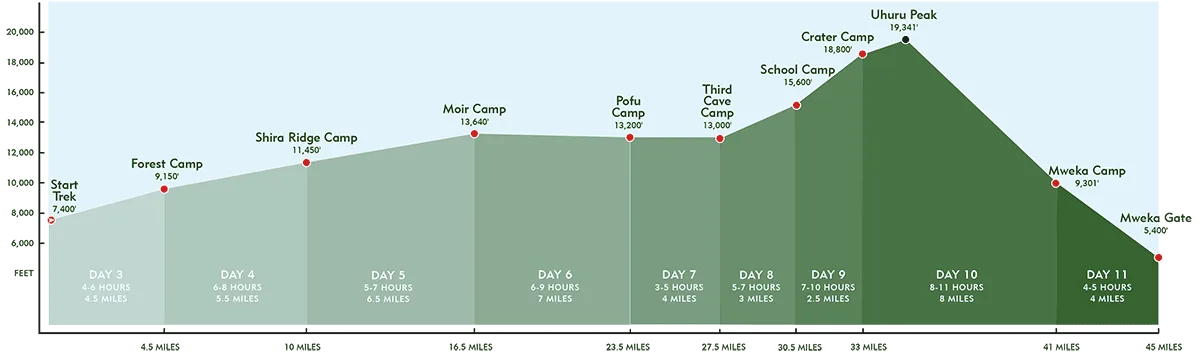
We usually recommend the two routes originating from the western side of Kilimanjaro as the best when it comes to elevation gain and gradual slope profiles, which means a better summit success rate and fewer altitude sickness symptoms. These two routes, Lemosho and Northern Circuit, are newer introduced routes on the mountain compared to the other older routes like Marangu and Machame, to make it easier for climbers to reach Uhuru Peak. For a while, Marangu used to be the “easiest route,” but things have changed ever since these two routes were introduced. When climbers ask about “elevation gain” on Mount Kilimanjaro, they’re usually thinking beyond the raw net gain (roughly 3,500–4,300 m / 11,500–14,100 ft from any starting gate to Uhuru Peak at 5,895 m). What really matters is the daily elevation profile — how steep the daily climbs are, how much “climb high, sleep low” acclimatization is built in, and how gradually your body is exposed to altitude. A favourable profile means smaller daily gains (ideally 500–800 m), extra acclimatization days, and sleeping lower than the day’s highest point. This dramatically improves summit success rates and reduces altitude sickness risk. A poor profile means big daily jumps (often 1,000 m+), rapid ascents, and minimal recovery time at lower elevations. Here is the clear ranking based on current 2025–2026 operator data, GPS-tracked itineraries, and success-rate statistics:
See all the routes we offer | Mount Kilimanjaro Tour Packages
 See all the routes we offer | Mount Kilimanjaro Tour Packages
Best / Most Favourable Elevation Gain: Northern Circuit (8–9 days)
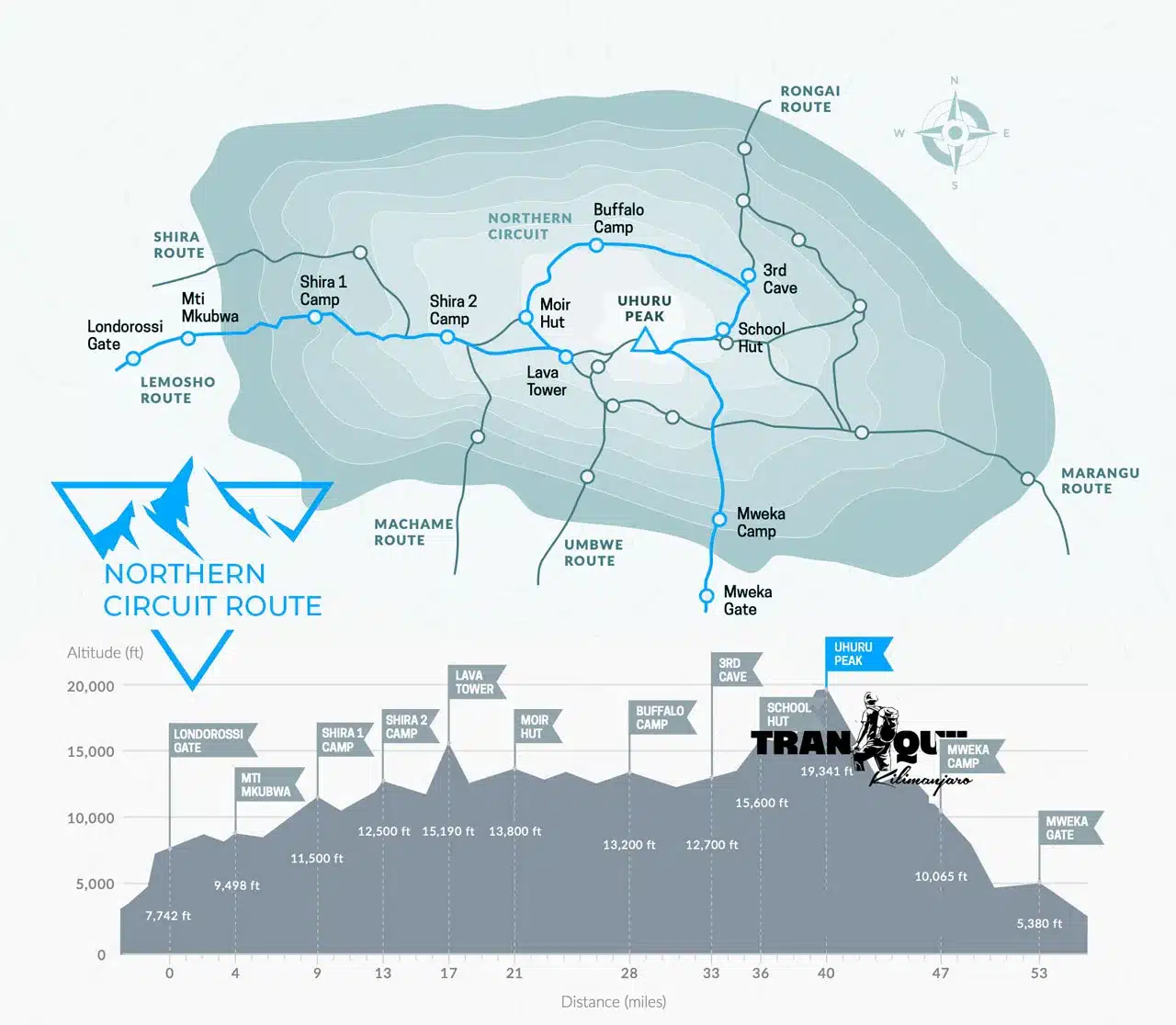
- Why it wins: Longest route on the mountain with the most gradual daily gains and multiple built-in “climb high, sleep low” days. It starts like Lemosho on the western side but circles the entire mountain, giving your body maximum time to adapt.
- Net gain to summit: ~3,795 m (12,541 ft)
- Total cumulative ascent: ~4,800–5,200 m (15,700–17,000 ft)
- Average daily gain: Among the lowest on the mountain (~500–700 m on most trekking days)
- Success rate: 90–95%+ (highest of all routes on the 9-day itinerary)
- Key advantage: Superior acclimatization profile — many operators report near-98% success on premium 9-day versions.
Runner-up (extremely close): Lemosho Route (8 days)

Often called the best practical choice for most climbers. It offers the same gentle western approach and excellent acclimatization with average daily gains of around 598 m. Success rate ~90% on the recommended 8-day schedule.
Worst Elevation Gain Profile: Umbwe Route (5–7 days)

- Net gain to summit: ~4,095 m (13,435 ft)
- Total cumulative ascent: ~4,500 m
- Standout issue: One of the steepest single-day gains on the mountain (often 1,000–1,200 m+ early on) and the most physically taxing profile overall.
- Success rate: 60–70% (significantly lower than longer routes)
- Who it suits: Only very fit, experienced climbers who specifically want the hardest, most direct challenge.
Close second for worst: Marangu Route (5–6 days)

Elevation gain on your Kilimanjaro trek for Lemosho, Machame and Marangu routes
Quick Comparison Table (Major Routes)
| Route | Days (Recommended) | Avg. Daily Gain | Acclimatization Quality | Success Rate | Verdict on Elevation Gain |
|---|---|---|---|---|---|
| Northern Circuit | 8–9 | ~500–700 m | Excellent | 90–95%+ | Best |
| Lemosho | 8 | ~598 m | Excellent | ~90% | Best runner-up |
| Machame | 7 | 700–900 m | Good | 85%+ | Strong |
| Rongai | 7 | 600–800 m | Good | ~80% | Solid |
| Marangu | 6 | 800–1,000 m+ | Poor | 50–65% | Poor |
| Umbwe | 6–7 | 800–1,200 m+ | Very Poor | 60–70% | Worst |
- The Northern Circuit (or Lemosho 8-day) has the most favourable elevation gain profile — it gives your body the best chance to acclimatize safely and successfully.
- The Umbwe Route has the worst — steep, rapid, and unforgiving, with the highest risk of altitude problems.
If you’re planning your climb (especially with the Tranquil Kilimanjaro gear list and Lemosho focus we’ve covered earlier), choose a longer route with a proven gradual profile. Your body will thank you on summit night. Pole pole — the mountain rewards patience with elevation more than anything else.
- Longer, higher: Why an 8-9 Day Kilimanjaro Trek is the Ultimate Success Secret
- Where is Moshi Town located, and what is the elevation of Moshi?
- Kilimanjaro hike length in miles and kilometres for each route, trekking distance, and daily elevation gained
- All the high camps of Kilimanjaro: Journey from base camps to Uhuru Peak from each route
- Why Trail Runners and Record Breakers Love the Umbwe Route for Climbing Kilimanjaro

