
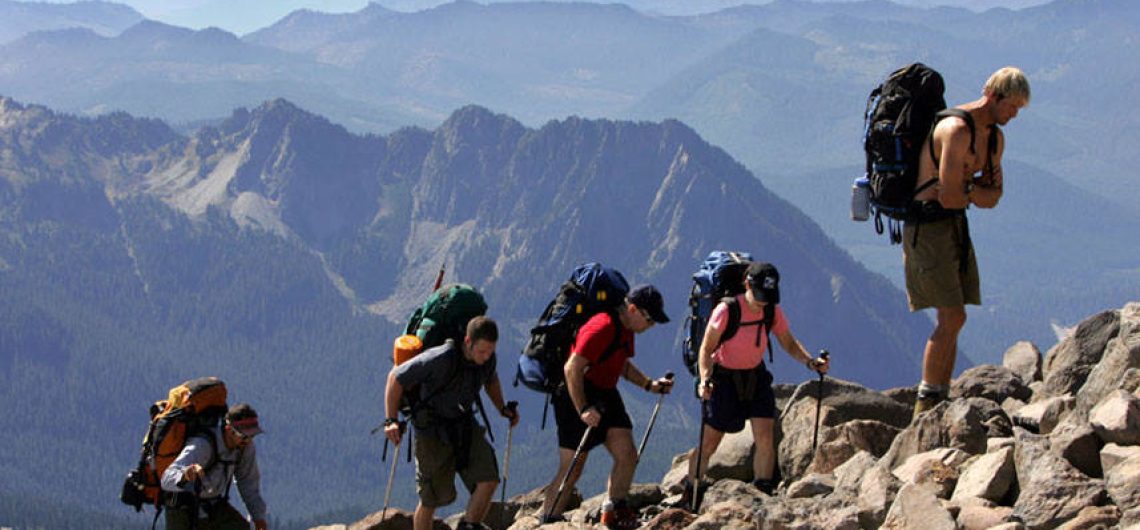
Acute Mountain Sickness (AMS) is the most common reason people fail to reach the summit of Kilimanjaro. It affects a large percentage of climbers, especially on shorter routes. The good news is that AMS is largely preventable if you follow the right strategies.
At 5,895 metres (19,341 ft), Uhuru Peak on Mount Kilimanjaro is the highest point in Africa — and one of the most accessible high-altitude summits in the world. However, reaching it comes with a significant physiological challenge that many climbers underestimate: high altitude illnesses.
Know the high altitude illnesses
These conditions occur when the body struggles to adapt to the reduced oxygen levels at elevation. The three main high altitude illnesses are:
- Acute Mountain Sickness (AMS) — the most common and usually the mildest form
- High Altitude Cerebral Edema (HACE) — a severe, life-threatening swelling of the brain
- High Altitude Pulmonary Edema (HAPE) — a dangerous buildup of fluid in the lungs
On Kilimanjaro, AMS is by far the most frequently encountered issue. Research and operator data consistently show that a large percentage of climbers experience some degree of altitude-related symptoms. Studies indicate that over 50% of climbers on Kilimanjaro suffer from AMS at some point during their ascent, with incidence rates climbing significantly above 4,000 metres. On shorter itineraries (5–6 days), the risk is notably higher due to faster rates of ascent. The impact is clearly visible in summit success rates. While overall success rates across all routes average between 65–75%, these figures vary dramatically depending on the itinerary. On well-acclimatised routes such as the 8-day Lemosho or the 8–9 day Northern Circuit, success rates often exceed 90%. In contrast, shorter or more aggressive routes see noticeably lower completion rates, with AMS being one of the leading causes of climbers turning back. What makes Kilimanjaro particularly challenging is that it is a non-technical mountain. Many people arrive fit and well-prepared for the physical demands of hiking, yet still struggle because their bodies have not been given enough time to adjust to the altitude. Unlike technical climbs where skill and experience play a larger role, success on Kilimanjaro is heavily influenced by how well a climber manages the physiological stress of high altitude. The encouraging reality is that high altitude illnesses on Kilimanjaro are largely preventable. The rate at which you ascend, the length of your itinerary, your pacing, hydration, nutrition, and in some cases, the use of medication, all play critical roles in determining whether you stay healthy or become a statistic. Understanding these illnesses — and more importantly, how to minimise the risk — is one of the most important aspects of preparing for a successful Kilimanjaro climb.
Here’s a clear, practical guide based on what actually works on the mountain.
1. Choose the Right Route and Itinerary (Most Important Factor)
Read about choosing the right route for you.
This is the single biggest decision you’ll make.
- Best for AMS prevention: Northern Circuit (8–9 days) and Lemosho (8 days)
- Good: Machame (7 days)
- Higher risk: Marangu (5–6 days), Rongai (6–7 days), and especially Umbwe
Why longer routes work better:
More about the Longer route on Mount Kilimanjaro
- They give your body more time to produce extra red blood cells and adjust to lower oxygen levels.
- They include proper “climb high, sleep low” days (you ascend during the day but sleep at a lower altitude).
- Northern Circuit and 8-day Lemosho currently have the highest success rates (often 90–95%) largely because of better acclimatization.
Rule of thumb: Never choose a route shorter than 7 days if AMS prevention is your priority.
2. Go Slow – “Pole Pole” is Not Just Advice
Why pole pole is not just a term, it is a way of life on the mountain.
This is the second most important prevention method.
- Walk much slower than you think you need to.
- Take small, steady steps.
- Never try to “power through” or keep up with faster people in your group.
- Take micro-breaks every 10–15 minutes if needed.
Guides constantly say “pole pole” because rushing is one of the fastest ways to trigger AMS. Many strong hikers get sick simply because they walk too fast in the first few days.
3. Hydrate Aggressively
More about water and hydration on Kilimanjaro
Dehydration makes altitude sickness much worse.
- Aim for 3–4 litres of water per day (more on summit night).
- Drink even when you’re not thirsty.
- Avoid alcohol completely (it dehydrates you and worsens AMS).
- Consider electrolyte drinks (oral rehydration salts) — many climbers use them daily.
4. Eat Properly (Even When You Don’t Feel Like It)
See our sample meal plan for Kilimanjaro treks
Your body needs energy to acclimatise.
- Force yourself to eat regular meals and snacks.
- Carbohydrates are easier to digest at altitude.
- Many people lose their appetite above 4,000 m — eat anyway.
5. Consider Diamox (Acetazolamide)
Diamox is the most commonly used medication to help prevent AMS.
Read more about the proper use of Diamox.
How it helps:
- Speeds up acclimatization by making you breathe faster and deeper.
- Reduces the severity of symptoms.
Typical dosage: See the CDC recommendation and consult your doctor if you should use Diamox.
- 125 mg twice a day (some doctors prescribe 250 mg twice a day).
- Start 1–2 days before arriving at altitude and continue while on the mountain.
Important notes:
- It is not a substitute for proper acclimatization or slow pacing.
- Common side effects: tingling fingers/toes, frequent urination, and a metallic taste in your mouth.
- Get a prescription from your doctor and test it at home first (some people have allergic reactions).
- It does not mask serious symptoms — if you feel bad, you still need to descend.
6. Other Helpful Prevention Tips
- Sleep well — Rest as much as possible at camps. Good sleep helps your body adjust.
- Avoid sedatives and sleeping pills — They can slow your breathing.
- Don’t smoke — It reduces oxygen uptake.
- Listen to your body — If you feel symptoms (headache, nausea, fatigue, dizziness), slow down immediately and tell your guide.
- Descend if symptoms worsen — This is the only real cure for moderate to severe AMS.
Recognising AMS Symptoms Early
Mild AMS (common and manageable):
- Headache
- Nausea or loss of appetite
- Fatigue
- Dizziness
- Disturbed sleep
Action: Slow down, hydrate, eat, rest. Most cases improve within 24 hours.
Severe AMS / High Altitude Cerebral Edema (HACE) – Medical emergency:
- Severe headache not relieved by painkillers
- Vomiting
- Confusion or loss of coordination
- Hallucinations
Action: Descend immediately (even at night). Do not wait.
Route Recommendation Summary for AMS Prevention
| Route | Days | Acclimatization Quality | AMS Risk | Recommendation |
|---|---|---|---|---|
| Northern Circuit | 8–9 | Excellent | Lowest | Best choice |
| Lemosho | 8 | Excellent | Very Low | Highly recommended |
| Machame | 7 | Very Good | Low–Medium | Good option |
| Rongai | 6–7 | Good | Medium | Acceptable |
| Marangu | 5–6 | Average | Higher | Not ideal |
| Umbwe | 6–7 | Poor | Highest | Avoid if possible |
Expert advice
You cannot completely eliminate the risk of AMS on Kilimanjaro, but you can dramatically reduce it by:
- Choosing a longer route (especially 8+ days)
- Walking very slowly (“pole pole”)
- Drinking and eating consistently
- Considering Diamox (after medical advice)
- Listening to your guides and your body
The climbers who reach the summit most reliably are not always the fittest — they’re usually the ones who acclimatised properly and didn’t rush. Would you like a day-by-day acclimatization plan for a specific route (e.g., 8-day Lemosho), or advice on how to combine Diamox with natural prevention methods?
- Debunking the Popular Myths About Altitude
- Organic Natural & Traditional Remedies for altitude symptoms
- Training with an Altitude Mask: Does it Help in Climbing Kilimanjaro?
- How to overcome the fear of heights if you are afraid of high altitudes
- 5 Medications that Help in Acclimatization & Combat Altitude Sickness
- Diabetes can’t stop you from climbing Mount Kilimanjaro
- Is it possible to climb Mt. Kilimanjaro with bad knees?
- Should I have a medical checkup before climbing Kilimanjaro?
- Can you climb Kilimanjaro with asthma?
- Warning signs why you should NOT Climb Kilimanjaro
- Vaccinations needed for Kilimanjaro Climbs, Tanzania
- Key symptoms of HAPE and HACE. Life-threatening, advanced forms of AMS that can occur on Mount Kilimanjaro.

