
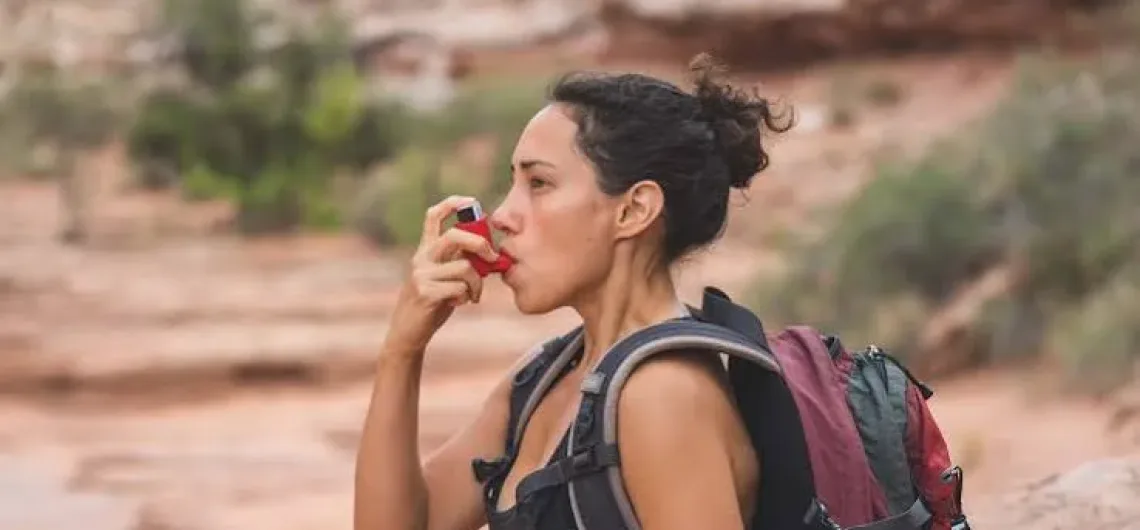
Yes, you can climb Mount Kilimanjaro with asthma. Many people with mild-to-moderate, well-controlled asthma successfully reach Uhuru Peak every year. It’s important to understand that breathing becomes harder for everyone at high altitude, not just asthmatics. Above roughly 1,500 m (5,000 ft), the oxygen percentage in the air stays at 21%, but lower barometric pressure forces your body to work harder to absorb it. On Kilimanjaro, asthma symptoms are triggered more by the cold, dry air and big temperature swings than by altitude itself. Lungs prefer warm, moist air, and the higher you go, the colder and drier the air becomes, which can irritate airways. That said, not everyone with asthma has issues on the mountain — many actually enjoy the cleaner, pollen-free air compared to city environments.
Success depends on solid preparation. Get full medical clearance from a doctor or pulmonologist well in advance, including any necessary lung function tests. Make sure your asthma is stable and well-controlled before the trip. Bring plenty of medication: always carry your short-acting rescue inhaler (like albuterol) in your daypack with a spare in your main bag, and continue your daily controller inhaler without skipping doses. Many climbers find that a few puffs of their rescue inhaler during cold summit nights or steep sections makes a big difference.
Should I have a medical checkup before climbing Kilimanjaro?
Training is equally important. Focus on building strong cardiovascular endurance with long, steady hikes, stair climbing, and pack-carrying sessions over 4–6 months. Improved fitness significantly reduces breathlessness and the chance of bronchospasm. On the mountain, hike slowly (“pole pole”), stay well hydrated, and use a buff, balaclava, or face mask over your mouth and nose during cold or windy sections to warm and humidify the air you breathe. Choose a longer route, such as the 7- to 9-day Lemosho or Northern Circuit, for better acclimatization and a gentler pace.
Inform your guides about your asthma so they can monitor you closely and have oxygen ready if needed. With proper medical advice, the right medication strategy, good fitness, and sensible pacing, asthma does not have to stop you from summiting Kilimanjaro. Many asthmatics not only complete the climb but describe it as one of the most rewarding experiences of their lives.
Why Asthma Can Be Challenging on Kilimanjaro
- Cold, dry air at higher altitudes irritates airways and can trigger bronchoconstriction.
- High exertion combined with lower oxygen availability (due to reduced barometric pressure) makes breathing harder.
- Dust, wind, and rapid temperature swings increase the chance of flare-ups.
- Risk of confusion between severe asthma attacks and High Altitude Pulmonary Edema (HAPE) — a serious, potentially life-threatening condition.
Well-controlled mild-to-moderate asthma often fares better at altitude than at sea level in some cases (fewer allergens), but poor control or severe asthma significantly raises risks.
Real-World Evidence
- Many asthmatics have summited successfully. Trekking companies and climbers report positive outcomes with proper management.
- A study on bronchial asthma on Kilimanjaro found no significant disadvantage in physiological parameters for well-managed asthmatics.
- Personal accounts (Reddit, blogs, operator reports) frequently mention successful climbs, especially on longer routes with slow pacing (“pole pole”).
Essential Requirements for Climbing with Asthma
- Medical Clearance — See your doctor (ideally a pulmonologist or travel medicine specialist) well in advance. Disclose your full history, even childhood asthma. They may recommend lung function tests and adjustments to your medication plan.
- Asthma Must Be Well-Controlled — Stable for months, with minimal symptoms on daily meds. Uncontrolled or exercise-induced asthma that frequently requires rescue inhalers is a red flag.
- Medication Strategy
- Bring plenty of rescue inhalers (e.g., albuterol) — at least two, kept accessible (one in daypack, one with guide).
- Continue preventer/controller meds as usual.
- Consider a short course of oral steroids if your doctor recommends for the trip.
- Inform your guides — reputable operators carry oxygen and are trained in altitude issues.
- Route and Acclimatization
- Choose longer routes (7–9+ days): Lemosho, Northern Circuit, or Machame — better acclimatization and higher success rates. Here are the longer routes on Kilimanjaro.
- Avoid short 5–6 day routes. Here are the shorter routes to avoid.
- Training and Preparation | Click here to get our training plan.
- Build strong cardiovascular fitness and leg strength 4–6 months in advance.
- Practice hiking with your pack and using inhalers during exercise.
- Stay well-hydrated and layer properly to avoid cold triggers.
- On the Mountain
- Hike slowly to avoid breathlessness.
- Use a buff or mask for dust/cold air on summit night.
- Monitor symptoms closely and descend if needed.
When It Might Not Be Advisable
- Severe or poorly controlled asthma.
- History of frequent hospitalizations or recent exacerbations.
- Co-existing conditions like heart disease or COPD.
Warning Signs Why You Should NOT Climb Kilimanjaro
In these cases, doctors often advise against it due to limited medical facilities on the mountain.
If your asthma is mild-to-moderate and well-managed, yes, you can climb Kilimanjaro — thousands of people with similar conditions do it every year. The key is honest medical assessment, choosing a quality operator, and meticulous preparation. Many describe it as life-changing and manageable with the right approach.
Would you like specific route recommendations, a sample training plan for asthmatics, packing tips for meds/gear, or help finding reputable operators who handle clients with respiratory conditions?

