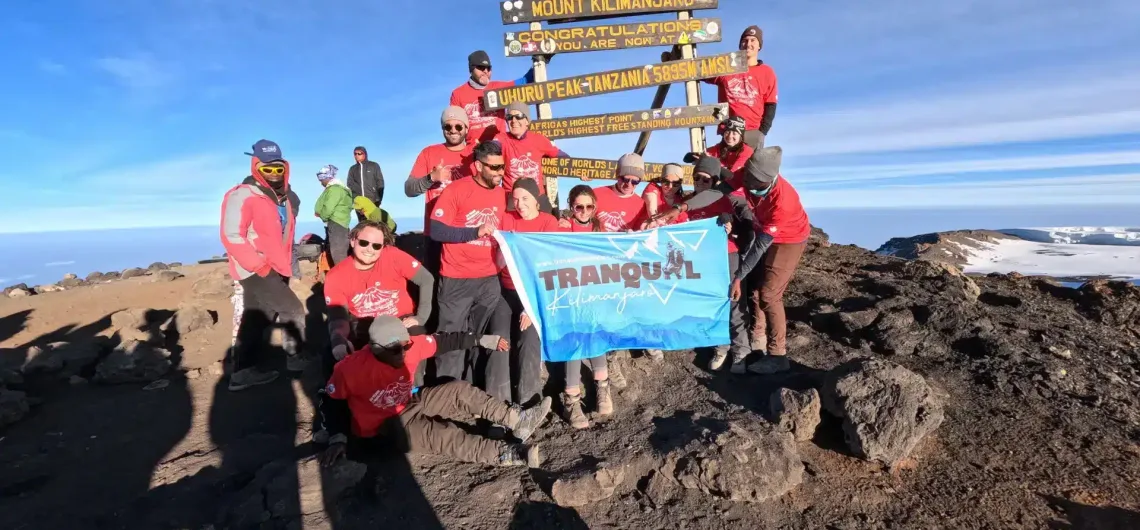
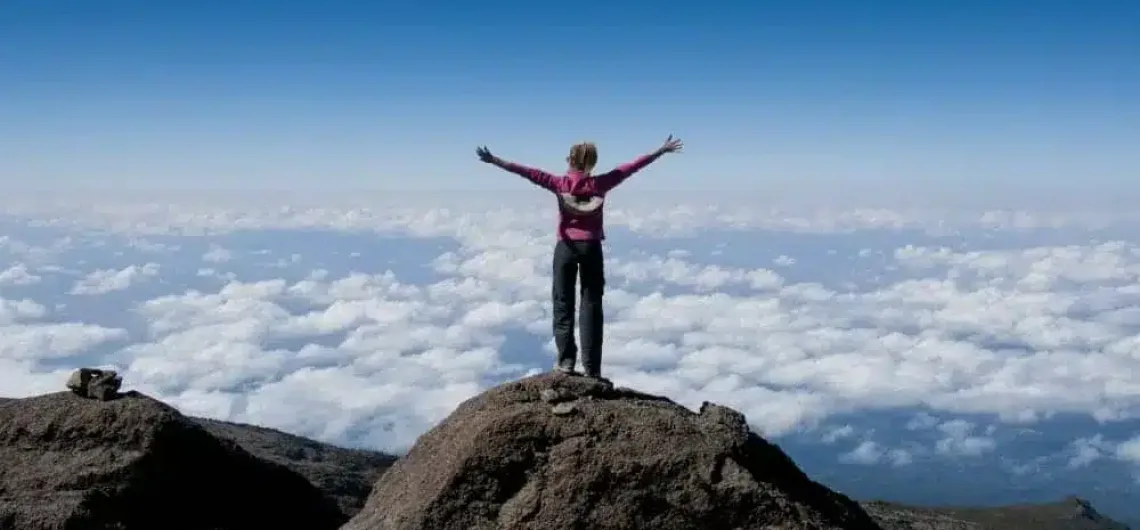
If you are wondering, I am British from England, Wales, Scotland, or Northern Ireland, and I want to climb Mount Kilimanjaro. How many quids do I have to pay? Well, we got you, mate. Envision yourself at 5,895 metres on Uhuru Peak, the early-morning sun turning the glaciers a brilliant gold while a seemingly endless sea of clouds lies far beneath your feet. For plenty of walkers across the UK, ascending Mount Kilimanjaro is much more than a hike — it’s a memorable test of endurance, a chance to build strong friendships and an experience that leaves you with views you’ll never forget. Whether you’re based in London, Manchester, Birmingham, or anywhere else in Britain, the question that usually comes first is simple: what will it actually cost in pounds? We’ve taken the full 2026 group pricing from Tranquil Kilimanjaro — a highly regarded Tanzanian operator recognised for fair treatment of its crew, outstanding safety practices, and one of the best summit success rates on the mountain — and converted every detail into clear British pounds. From the spectacular 8-day Lemosho Route to the straightforward Marangu hut trek and the excellent 9-day Northern Circuit for superior acclimatisation, you’ll find fully inclusive prices for every group size. No hidden extras, no surprises — just honest figures to help you plan your adventure with complete confidence. Ready to turn that Kilimanjaro ambition into reality? Here’s precisely what you can expect to pay in 2026 and 2027. See all our Mount Kilimanjaro trekking packages Exchange Rates (Mid-Market, as of June 2026) 1 USD = 0.78 GBP Rates change daily, so it’s worth checking Xe.com or your bank for the exact figure when you book. 1. Kilimanjaro National Park Fees (2026 Rates – the Same for Every Licensed Operator) These compulsory charges represent 25–35
If you are wondering, I am British from England, Wales, Scotland, or Northern Ireland, and I want to climb Mount Kilimanjaro. How many quids do I have to pay? Well, we got you, mate. Envision yourself at 5,895 metres on Uhuru Peak, the early-morning sun turning the glaciers a brilliant gold while a seemingly endless
For thousands of adventurers from China, India, Japan, and beyond, climbing Mount Kilimanjaro is more than a trek — it’s a life-changing journey of resilience, friendship, and breathtaking beauty. Here are the same 2026 package prices converted into Chinese Yuan (CNY), Indian Rupees (INR), and Japanese Yen (JPY). Whether you’re planning your adventure from Shanghai, Delhi, or Tokyo, the first practical question is always the same: How much does it really cost in my currency? That’s why we’ve taken the complete 2026 group pricing straight from Tranquil Kilimanjaro—a trusted local Tanzanian operator known for fair porter wages, exceptional safety standards, and one of the highest summit success rates on the mountain — and converted every detail into Chinese Yuan (CNY), Indian Rupees (INR), and Japanese Yen (JPY). From the scenic 8-day Lemosho Route to the classic Marangu hut trek and the ultimate acclimatisation challenge on the 9-day Northern Circuit, you’ll find transparent, all-inclusive prices for every group size. No hidden fees, no middlemen — just clear, honest numbers so you can budget with confidence and focus on the adventure of a lifetime. How to fly from China, Japan, Hong Kong, Korea, Russia & India to Kilimanjaro All prices are based directly on Tranquil Kilimanjaro’s current 2026 rates. Park fees are fixed by Kilimanjaro National Park Authority (KINAPA) and apply to every licensed operator. Exchange Rates (Mid-Market, as of 6 June 2026) 1 USD = 6.77 CNY 1 USD = 94.96 INR 1 USD = 160.33 JPY Rates are live and fluctuate daily. Check Xe.com or your bank on booking day for the exact rate. 1. Kilimanjaro National Park Fees (2026 Rates – Same for All Operators) These make up 25–35 % of your total and are paid through your operator. Fee Type USD (approx.) CNY (approx.) INR (approx.) JPY (approx.)
For thousands of adventurers from China, India, Japan, and beyond, climbing Mount Kilimanjaro is more than a trek — it’s a life-changing journey of resilience, friendship, and breathtaking beauty. Here are the same 2026 package prices converted into Chinese Yuan (CNY), Indian Rupees (INR), and Japanese Yen (JPY). Whether you’re planning your adventure from Shanghai,
Mount Kilimanjaro can only be accessed from Tanzania; that is a fact because there are no established routes to climb Kilimanjaro from the Kenyan side to the north of Kilimanjaro. The only route near the Kenyan border is the Rongai Route, but it remains within Tanzania's borders. So to climb Mount Kilimanjaro from Kenya, you have to go through the borders of Kenya, e.g., Namanga, Holili, etc., then enter Tanzania to begin your climb. Mount Kilimanjaro, Africa’s highest peak at 5,895 meters (19,341 feet), is one of the most iconic mountains on the planet. It draws tens of thousands of climbers every year who dream of standing on Uhuru Peak, the summit of the Kibo cone. Yet a persistent question arises among travelers: why can you only climb it from Tanzania? Why not from neighboring Kenya, especially since the mountain is clearly visible from Kenyan soil? The short answer is simple and unambiguous: the entire mountain lies within Tanzania’s borders. There are no legal, geographical, or practical routes that begin on Kenyan territory. All official climbing permits, gates, and infrastructure belong exclusively to Tanzania’s Kilimanjaro National Park. But the full story is richer—rooted in geography, colonial history, international treaties, and modern park management. Let’s unpack it fact by fact. Where is Mount Kilimanjaro? The Geographical Reality: Kilimanjaro Is 100% Tanzanian Mount Kilimanjaro is a massive dormant volcano in northeastern Tanzania, approximately 20 kilometers (12.4 miles) south of the Kenya-Tanzania border. It rises dramatically from the surrounding plains as a free-standing massif made up of three distinct volcanic cones: Kibo (the highest and central summit), Mawenzi (the jagged eastern peak), and the eroded Shira plateau to the west. The Kenya-Tanzania border runs along the northern base of the mountain. Official boundary descriptions from the late 19th century explicitly state that the
Mount Kilimanjaro can only be accessed from Tanzania; that is a fact because there are no established routes to climb Kilimanjaro from the Kenyan side to the north of Kilimanjaro. The only route near the Kenyan border is the Rongai Route, but it remains within Tanzania’s borders. So to climb Mount Kilimanjaro from Kenya, you
Climbing Mount Kilimanjaro for the United States Americans, Australians, and Canadians who use the dollar currency of their respective countries is a bucket-list adventure, but one of the first questions every climber asks is: “How much will it actually cost in US dollars, Australian dollars, or Canadian Dollars?”Using the latest transparent pricing and 2026 fee data straight from Tranquil Kilimanjaro (a reputable Tanzanian operator known for ethical climbs and fair porter treatment), here’s the honest, up-to-date breakdown. Park fees are set by Kilimanjaro National Park Authority (KINAPA) and are the same for every licensed operator. Package prices below reflect Tranquil Kilimanjaro’s 2026 rates, which also serve as the baseline for 2027 and 2028 group and private climbs (subject to minor government fee adjustments—always confirm directly for the latest quotes). https://www.youtube.com/watch?v=FUYehFpZ9Uk Contact Us to secure your Kilimanjaro booking 1. The Non-Negotiable: Kilimanjaro National Park Fees (2026 Rates) These compulsory fees make up 25–35% of your total package and are paid through your operator. They are charged per person (foreign adult 16+) and include 18% VAT. Fee Type Rate (USD) How Charged Example: 7-Day Trek (6 nights) Conservation / Entry Fee $70 per person / day Daily $490 Camping Fee $50 per person / night Per night (most routes) $300 Hut Fee (Marangu only) $60 per person / night Per night $360 Rescue Fee $20 one-time Once per trip $20 Forest Fee (Lemosho/Rongai) $10–20 one-time Once $15 VAT (18%) Applied to most fees On subtotal ~$148 Total Park Fees ~$820 – $1,000 Per climber ~$973 Longer routes (8–9 days, e.g. Lemosho or Northern Circuit) push park fees to ~$1,100–$1,200 per person because you spend more days/nights in the park.The Marangu route uses huts instead of camping, so the fee structure changes slightly. Crew entry fees (~$2 per porter/guide) are paid by the
Climbing Mount Kilimanjaro for the United States Americans, Australians, and Canadians who use the dollar currency of their respective countries is a bucket-list adventure, but one of the first questions every climber asks is: “How much will it actually cost in US dollars, Australian dollars, or Canadian Dollars?”Using the latest transparent pricing and 2026 fee
Choosing the right Kilimanjaro operator can feel overwhelming — especially when every company promises “the best experience.” At Tranquil Kilimanjaro, we believe in total transparency. We want you to know exactly what you’re paying for before you book your dream trek to Uhuru Peak. Below is a clear, no-surprises breakdown of what is included and what is excluded in our standard private and group-join trekking packages (valid for 2026–2027). These packages cover all the major routes — Marangu, Machame, Lemosho, Rongai, Northern Circuit, and more. See all our Mount Kilimanjaro climbing packages here. What’s Included in Every Tranquil Kilimanjaro Package We take care of absolutely everything from the moment you land until you return to your hotel after the climb. Here’s exactly what you receive: Pre- and Post-Trek Services Airport Pickup & Drop-off Transfers in a private car or van (Kilimanjaro International Airport to your hotel in Arusha/Moshi and back). Accommodation before and after your hike — two nights in a comfortable hotel in Moshi or Arusha (bed & breakfast). All transfers to the mountain and back to your Arusha/Moshi hotel. Professional Mountain Team Professional, experienced, mountain guides (licensed, first-aid trained, with excellent English). Guides, porters, and cooks' salaries — fair wages paid directly to our crew. Private toilet — a dedicated, clean, portable toilet tent at every camp (a huge comfort on the mountain). Fees & Permits (All Covered) All park fees, conservation fees, and camping or hut fees. Rescue fees (included as part of park fees). VAT (18% charged by the Government). On-Mountain Equipment & Comfort Quality, waterproof, four-season mountain sleeping tents (one tent per two climbers). Sleeping mattress (thick, comfortable foam mattresses provided). Quality mess tents with tables and chairs for meals and relaxation. Food & Hydration All meals while on the mountain — freshly prepared, hearty
Choosing the right Kilimanjaro operator can feel overwhelming — especially when every company promises “the best experience.” At Tranquil Kilimanjaro, we believe in total transparency. We want you to know exactly what you’re paying for before you book your dream trek to Uhuru Peak. Below is a clear, no-surprises breakdown of what is included and