
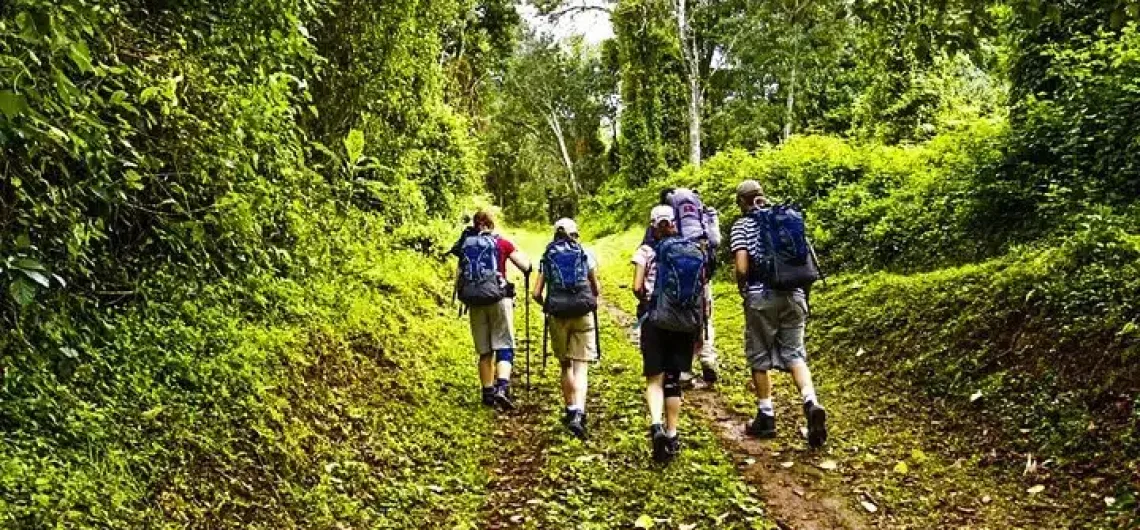
Short multi day treks are doable on Mount Kilimanjaro. Apart from one-day hiking tours that we offer, you can climb Kilimanjaro in 2-5 days. Although the short 2 days, 3-day and 4-day treks might not be enough to take you to the summit, the 5 day Kilimanjaro trek via the Marangu Route is the shortest itinerary offered for taking you to the summit of the mountain at Uhuru Peak (5,895m). While longer routes dominate for acclimatisation and success, shorter 2 to 5-day treks provide accessible adventures for those with limited time, focusing on lower elevations, scenic hikes, and partial ascents. These multi-day excursions immerse you in the mountain’s diverse zones without the intense summit push, making them ideal for beginners or casual explorers. You might have heard about the record breakers, taking hours or even shorter days to get to the peak and back. These are special cases, but the truth is, they require special permits, and to reach the summit, you need to pay for at least 5 days. So this means that 5 days is the shortest full Kilimanjaro trekking package, and it can only be done using the Marangu Route. Anything less than 5 days is limited to lower, non-summit hikes.
Why Choose Short Multi-Day Treks
Short 2 to 5-day treks on Kilimanjaro appeal to travellers seeking a taste of the mountain’s magic without committing to a week-long expedition. These hikes emphasise enjoyment over conquest, traversing rainforests, moorlands, and offering glimpses of wildlife like monkeys and birds, all while avoiding the severe altitude challenges of full climbs. They’re more affordable treks, often costing $500 to $1,200, and fit into tight schedules, such as weekend getaways or add-ons to safaris. Success rates aren’t summit-focused; instead, the goal is safe exploration, with lower risks of altitude sickness due to modest elevations (up to 3,700m on some). For families, novices, or fitness enthusiasts testing the waters, these treks build confidence and deliver stunning views of Kibo and Mawenzi peaks without exhaustion.
Popular short non-summit hikes
While full summits typically require more days, shorter treks use established routes for partial hikes, often on Marangu or adaptations of others. These are non-summit focused, prioritising scenery and moderate effort. For a shorter, non-summit Kili experience, a 1-day trek to Mandara Hut is available here.
2-Day Marangu Trek
The 2-day Marangu trek starts at Marangu Gate (1,800m) and ascends through lush rainforest to Mandara Hut (2,700m) on Day 1, a 3-4 hour hike spanning 8km. Overnight in huts, then Day 2 involves a partial push toward Horombo Hut (up to around 3,000-3,500m) for views before descending. It’s easy, with well-maintained paths and hut accommodations, ideal for beginners seeking a quick immersion in tropical flora.
3-Day Marangu Trek
Extending the 2-day version, this adds an acclimatisation day at Horombo Hut (3,720m). Day 1 to Mandara, Day 2 to Horombo (5-6 hours, 11km), and Day 3 for a short exploratory hike (e.g., to Zebra Rocks) before descending. It offers better altitude adaptation, moorland views, and a relaxed pace, suitable for those wanting more time in the mountain environment without rushing.
4-Day Rongai Trek
A rarer but feasible 4-day partial trek on Rongai, starting from the north at Nale Moru Gate (2,000m). Days involve gentle ascents through forests and moorlands to camps like Simba (2,600m) and Second Cave (3,450m), with wildlife sightings. It’s drier and less crowded, providing a wilderness feel, but it focuses on the lower sections rather than the summit, with descent on Day 4.
Which Is the Best Short Multiday Itinerary?
For the best short multiday itinerary, the 5-day Marangu Route excels, offering a complete summit experience with relative ease and unique hut stays, making it accessible for moderately fit climbers.
5-Day Marangu Route mini variation
The classic and mini variation of the Marangu Route is the 5-day Marangu, dubbed the “Coca-Cola Route,” which is the shortest summit option, using huts for comfort. It ascends through varied ecosystems to Uhuru Peak, but with lower success rates (around 50-60%) due to rapid gains.
It’s popular for its amenities, though challenging for acclimatisation. Click here to book our 5-day Marangu Route Itinerary
Its established path and amenities reduce logistical hassles, though success depends on preparation. Here’s a short day-by-day itinerary:
- Day 1: Marangu Gate (1,800m) to Mandara Hut (2,700m) – 3-4 hours, 8km through rainforest. Register, hike amid monkeys and birds, arrive for dinner and rest in huts.
- Day 2: Mandara Hut to Horombo Hut (3,720m) – 5-6 hours, 11km into moorlands with views of Mawenzi. Acclimatise with short walks.
- Day 3: Horombo Hut to Kibo Hut (4,700m) – 5-7 hours, 10km across the saddle, passing the last water point into desert terrain.
- Day 4: Kibo Hut to Uhuru Peak (5,895m) to Horombo Hut – Midnight start, 6-8 hours up 6km to the summit via Gilman’s Point, then descend 15km back.
- Day 5: Horombo Hut to Marangu Gate – 5-6 hours, 20km down through previous zones, certificate collection, and transfer out.
What You Need to Pack for Short Multi-Day Treks
Packing for 2-5 day treks prioritises lightweight essentials, as porters often assist on organised trips. For a short multi-day Kilimanjaro trek, focus on a layered clothing system (synthetic/merino wool), a 30-40L daypack for essentials, and a 4-season (-20°C) sleeping bag. Essential gear includes broken-in waterproof hiking boots, trekking poles, a high-lumen headlamp, 3L water capacity, and a 80-90L waterproof duffel for porters. You can check out our recommended packing list for our multi-day treks. Key items include:
- Clothing: Quick-dry layers, rain jacket/pants, warm fleece, hat, gloves, hiking boots, and 2-3 pairs of socks. Thermal base for cooler nights.
- Gear: Small daypack (20L), water bottle (2L), headlamp, trekking poles, and sunglasses.
- Personal: Sunscreen, insect repellent, basic first-aid (blisters, painkillers), toiletries, and snacks.
- Other: Camera, power bank, cash for tips, and a light sleeping bag liner if huts are basic. Limit to 10kg for porters.
Preparation Tip
Prepare 1-2 months ahead with cardio workouts like walking or stair climbing to build stamina—aim for 5km daily hikes. Get a check-up, vaccinate as needed, and practice with your gear. For altitude, consider shorter treks first; hydrate heavily and learn “pole pole” pacing. Choose a reputable operator like Tranquil Kilimanjaro for safety, and arrive rested to combat jet lag.
Learn how to prepare for your Kilimanjaro trek here
What to Expect
Anticipate a mix of exhilaration and moderate effort on these treks, with daily hikes of 3-7 hours amid changing landscapes—from humid forests to open vistas. Weather shifts quickly: warm days (20°C) to chilly nights (0-10°C). Huts or tents provide basic shelter, with communal meals of local fare like ugali. Guides ensure safety, sharing cultural insights. Altitude may cause mild headaches, but short durations minimise issues. Expect some wildlife, starry skies, and a sense of achievement, even without summiting—perfect for rejuvenation.

