
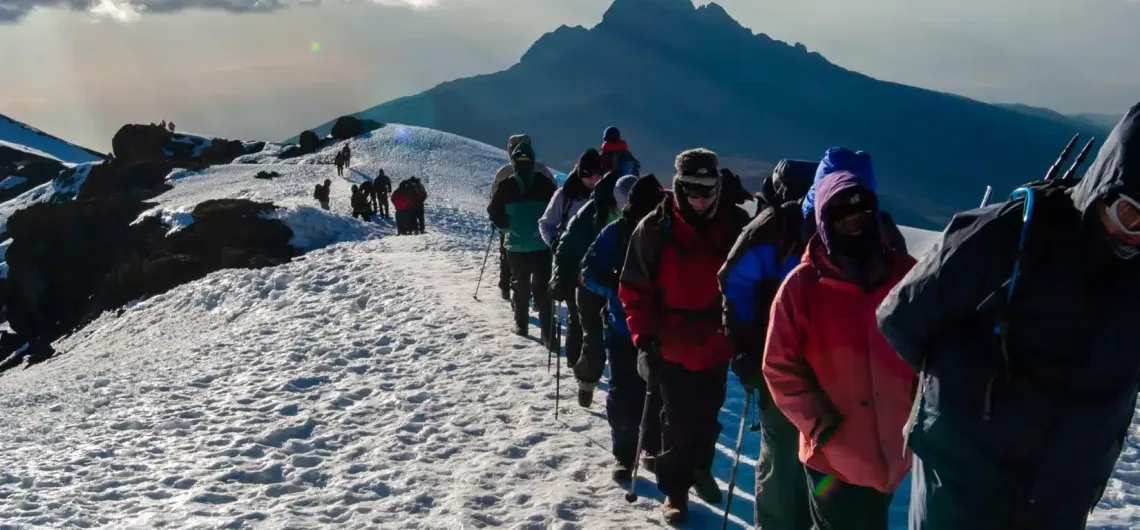
The term “Pole Pole” is thrown around a lot on the mountain. Not just on the mountain, even when we pick you up, it is the most popular word that we will teach you, of course, alongside the ever-popular greeting “Jambo!” Hakuna matata is another word, but it correlates with pole pole; it tells you to take it slow, no worries, take it slow, and everything will just be fine. Do not rush, because climbing Kilimanjaro is not a 100 metre dash; it is like a marathon of some sort, a test of your stamina and endurance. If you’ve ever researched climbing Mount Kilimanjaro, you’ve probably come across the phrase “pole pole”. It’s not just a cute Swahili saying — it’s the golden rule of the mountain, repeated constantly by guides, porters, and fellow climbers. Pole pole (pronounced poh-lay poh-lay) literally means “slowly slowly” in Swahili. On Kilimanjaro, it’s more than advice — it’s a survival strategy.
Why “Pole Pole” Matters So Much
Kilimanjaro is a high-altitude trek, not a technical climb. The biggest challenge isn’t the steepness or distance — it’s altitude. Your body needs time to adjust to the decreasing oxygen levels as you gain elevation. Rushing leads to:
- Acute Mountain Sickness (AMS)
- Headaches, nausea, and fatigue
- Poor sleep
- Higher chance of turning back before the summit
Pole pole forces a steady, sustainable pace that dramatically increases your chances of success. Routes with better “climb high, sleep low” profiles (like the Lemosho and Northern Circuit) naturally support this philosophy — which is why they consistently deliver the highest summit success rates (often 90%+ on the longer itineraries). Below are the longer itineraries we recommend.
- 9 days Northern Circuit Route
- 8 days Lemosho Route Itinerary
- 9 Days Crater Camp Route & Lemosho Kilimanjaro
- 7 days Machame Route Itinerary
- 15 Days Mount Kilimanjaro Northern Circuit & Safari
- 11 days Group Joining via Northern Circuit &; Full moon trek 2026 & 202710 days Lemosho Group Joining & Full moon trek 2026 & 2027
- 13 Days Mount Kilimanjaro Lemosho Route Trek & Safari
- 18 Days Mount Kilimanjaro Lemosho Route Trek, Safari & Zanzibar Beach
Learn Important Swahili phrases to use when climbing Kilimanjaro
How “Pole Pole” Is Used on the Trail
View this post on Instagram
You’ll hear it every single day:
- When you’re powering ahead on Day 1 in the rainforest
- When you want to push faster on the Shira Plateau
- Especially on summit night, when guides will repeatedly say: “Pole pole… pole pole…”
Guides use it to: Meet our guides.
- Prevent you from overexerting yourself early
- Encourage proper breathing and rhythm
- Remind you that this is a marathon, not a sprint
Porters often say it with a smile while effortlessly overtaking you with heavy loads — a humbling reminder that speed isn’t impressive on this mountain.
The Science Behind “Pole Pole”
At altitude, your body needs time to:
- Produce more red blood cells
- Increase breathing rate
- Adjust blood chemistry
Rapid ascent skips these natural adaptations. That’s why shorter routes like the classic 5-day Marangu or steep Umbwe have significantly lower success rates. Longer routes that embrace pole pole give your body the time it needs. On summit night, when you’re climbing from ~4,700m to 5,895m in the dark and cold, going pole pole is the difference between reaching Uhuru Peak and being turned around by your guide for safety.
How to Actually Live “Pole Pole”
Here’s how to embrace it in practice:
- Listen to your guides — They’ve done this hundreds of times. When they say slow down, slow down.
- Use trekking poles — They help maintain rhythm and reduce strain on your knees and legs.
- Take micro-breaks — Even 30 seconds every 10–15 minutes can make a big difference.
- Focus on breathing — In through the nose, out through the mouth. Steady breaths = steady pace.
- Don’t compare yourself — Someone faster than you today might be struggling tomorrow.
- Hydrate and eat consistently — Your body works harder at altitude. Fuel it steadily.
Pole Pole Is a Mindset
Beyond the mountain, pole pole reflects Tanzanian culture — a relaxed, present way of moving through life. On Kilimanjaro, adopting this mindset helps you:
- Enjoy the incredible scenery instead of just enduring it
- Connect with your team and porters
- Arrive at the summit with energy and gratitude instead of exhaustion
Many climbers say the biggest lesson they took home wasn’t reaching the summit — it was learning to slow down.
What Does Kilimanjaro Mean in Swahili?
Take it slow on Mount Kilimanjaro
The mountain doesn’t reward the fastest climber.
It rewards the one who moves pole pole. Whether you’re on the scenic Lemosho, the epic Northern Circuit, or another route, remember:
Pole pole isn’t just something guides say — it’s the key to standing on top of Africa.Karibu Kilimanjaro!
Take it slowly… and enjoy every step.
- Tanzania to set up Kiswahili poster on Uhuru Peak, the summit of Mount Kilimanjaro to celebrate Tanzania’s independence day on December 9th
- Uhuru Peak midnight summit push, against all odds, a personal account.
- What to wear on Kilimanjaro Summit Night and Uhuru Peak Summit Day
- Taking your photos and selfies at Uhuru Peak with your phone, go pro and selfie sticks
- How to stay warm at Uhuru Peak
- What is the Temperature at Uhuru Peak?
- Mzee Yohani Kinyala Lauwo ; The first Tanzanian and African man to climb Kilimanjaro to the Summit, Uhuru Peak in 1889
- Top 4 tips to prepare for Uhuru Peak Summit

