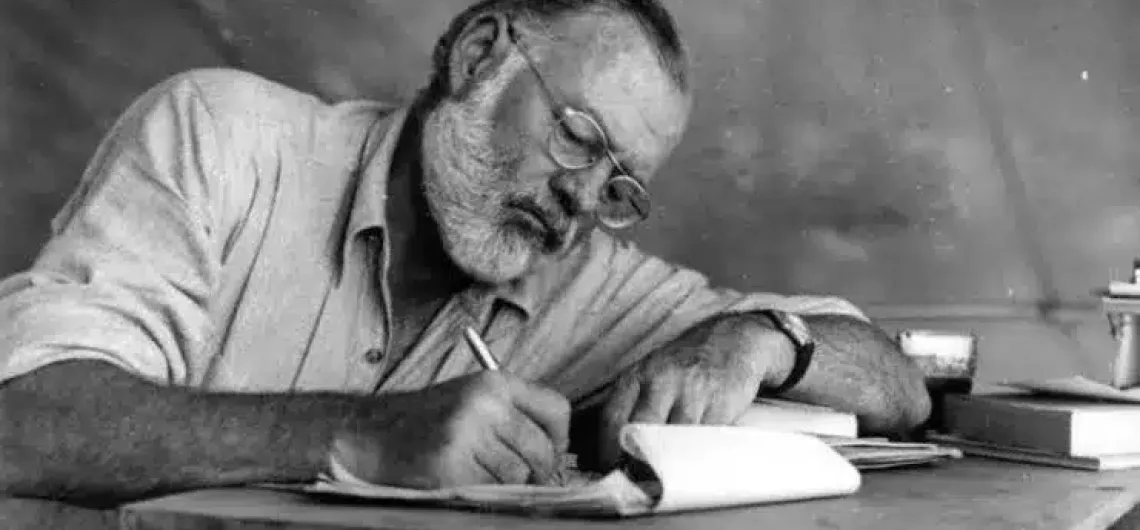
The Snows of Kilimanjaro turns 90, on August 1st, 2026, since it was completed by Ernest Hemingway and published in Esquire Magazine. There is a mountain in East Africa whose western summit the local people call the House of God. Near its frozen peak lies the carcass of a leopard. No one has explained what the animal sought at that impossible height. That single, unexplained fact opens Ernest Hemingway’s 1936 story “The Snows of Kilimanjaro” and shadows everything that follows. You can read about the discovery of the frozen leopard on Kilimanjaro below. The amazing story of Pastor Reusch, a frozen leopard on Kilimanjaro that inspired Ernest Hemingway The story is not about the mountain. It is about Harry, a writer dying of gangrene on the hot African plain below it. The plot and themes A trivial thorn scratch, neglected while photographing a waterbuck, has turned septic. Harry lies on a cot in a broken-down safari camp, waiting for a plane that may arrive too late. His wealthy wife, Helen, tends him; he responds with cruelty. He tells her he never loved her and blames her money for softening him, for letting him abandon the hard work of writing. In truth, he knows the failure is his own. He chose comfort over the discipline his gift required. The flashbacks form the real heart of the story. They arrive without warning, triggered by a sound or a silence. Harry recalls skiing in the Austrian Alps on a bright Christmas morning during the war, a deserter with bloody feet, the poor quarter in Paris where he once wrote well, quarrels with women, a burned hunting cabin, and the night he turned in a simple-minded boy who had shot a thief. These are not nostalgic fragments. They are the precise, unsentimental material of
The Snows of Kilimanjaro turns 90, on August 1st, 2026, since it was completed by Ernest Hemingway and published in Esquire Magazine. There is a mountain in East Africa whose western summit the local people call the House of God. Near its frozen peak lies the carcass of a leopard. No one has explained what
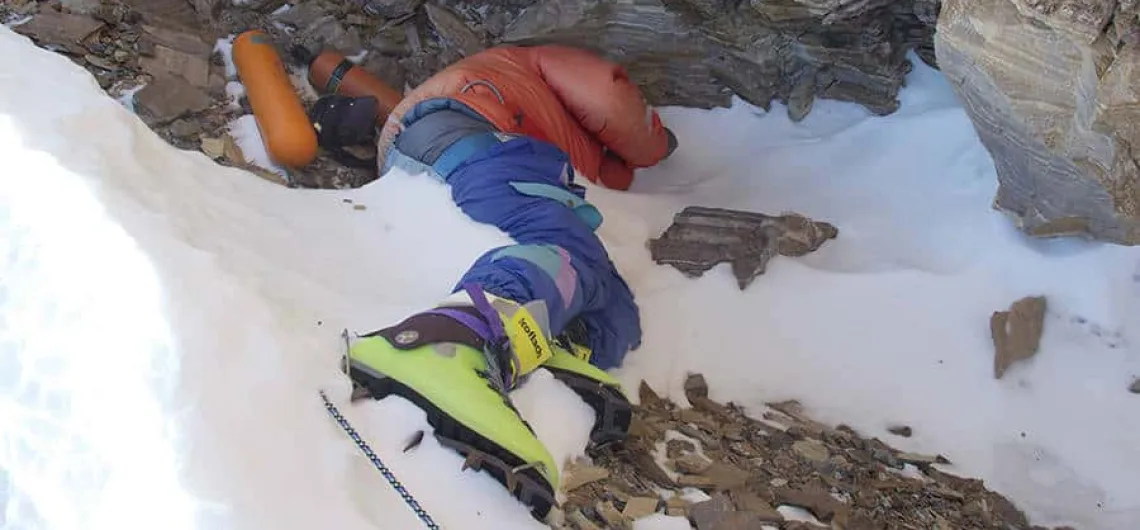
Green Boot's body on Everest has been a controversial issue on Mount Everest for a long time. Finally, it seems like he might be given a befitting sendoff after over 30 years now. Indian authorities are preparing one of the most technically challenging body recovery operations ever attempted on Mount Everest. Mount Everest is filled with many bodies of climbers who were once motivated and determined before their dreams were cut short, either on their way up or descending from the summit. The Indo-Tibetan Border Police (ITBP) has floated a tender seeking bids from specialized high-altitude recovery teams to retrieve the remains of the climber long known only as “Green Boots” from the mountain’s northern (Tibetan) slope. The tender requires the contracted team to bring the body to Delhi by October. Experts describe the mission as extremely dangerous — “double the danger of normal climbing,” according to Tshiring Jangbu Sherpa, founder of Nepal-based Everest Sherpa Expedition, who has led multiple high-altitude recoveries. A 10-person team of highly trained climbers and Sherpas could need up to a week to complete the recovery, a Sherpa confirmed. Who is Green Boots, the famous body on Mount Everest? However, he noted that weather conditions make any attempt before spring highly impractical, raising questions about the tender’s June–October window. The ITBP has not responded to requests for comment. The body, nicknamed “Green Boots” because of the climber’s distinctive bright green Koflach boots, has been a grim landmark for decades at around 8,500 meters (27,900 ft) on the Northeast Ridge route. Climbers ascending from the north side have long used it as a reference point when communicating with base camp. Important clarification on identity: While the body was long widely believed to belong to 28-year-old Head Constable Tsewang Paljor of the ITBP, official tender documents identify
Green Boot’s body on Everest has been a controversial issue on Mount Everest for a long time. Finally, it seems like he might be given a befitting sendoff after over 30 years now. Indian authorities are preparing one of the most technically challenging body recovery operations ever attempted on Mount Everest. Mount Everest is filled
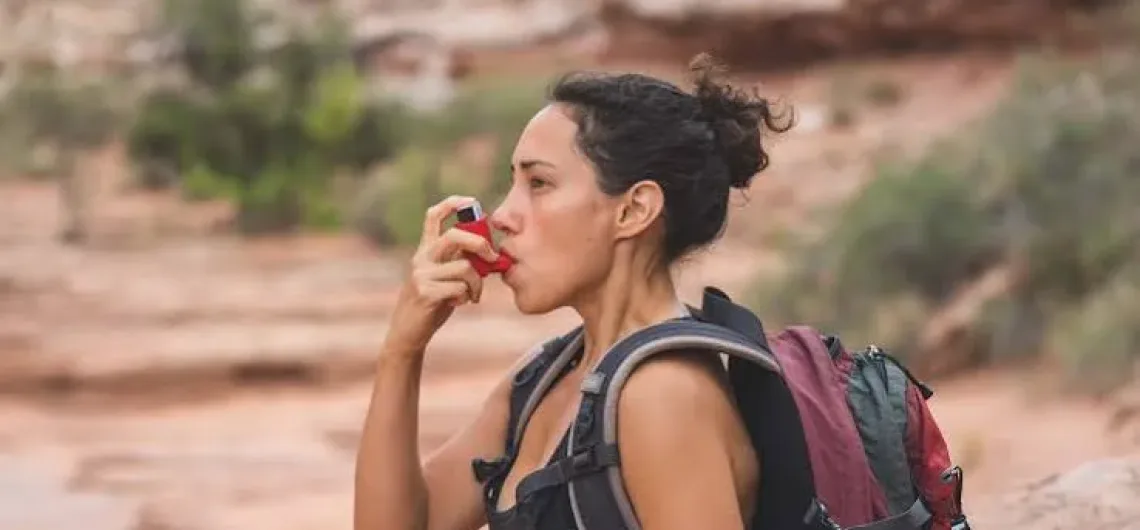
Yes, you can climb Mount Kilimanjaro with asthma. Many people with mild-to-moderate, well-controlled asthma successfully reach Uhuru Peak every year. It’s important to understand that breathing becomes harder for everyone at high altitude, not just asthmatics. Above roughly 1,500 m (5,000 ft), the oxygen percentage in the air stays at 21%, but lower barometric pressure forces your body to work harder to absorb it. On Kilimanjaro, asthma symptoms are triggered more by the cold, dry air and big temperature swings than by altitude itself. Lungs prefer warm, moist air, and the higher you go, the colder and drier the air becomes, which can irritate airways. That said, not everyone with asthma has issues on the mountain — many actually enjoy the cleaner, pollen-free air compared to city environments. Success depends on solid preparation. Get full medical clearance from a doctor or pulmonologist well in advance, including any necessary lung function tests. Make sure your asthma is stable and well-controlled before the trip. Bring plenty of medication: always carry your short-acting rescue inhaler (like albuterol) in your daypack with a spare in your main bag, and continue your daily controller inhaler without skipping doses. Many climbers find that a few puffs of their rescue inhaler during cold summit nights or steep sections makes a big difference. Should I have a medical checkup before climbing Kilimanjaro? Training is equally important. Focus on building strong cardiovascular endurance with long, steady hikes, stair climbing, and pack-carrying sessions over 4–6 months. Improved fitness significantly reduces breathlessness and the chance of bronchospasm. On the mountain, hike slowly (“pole pole”), stay well hydrated, and use a buff, balaclava, or face mask over your mouth and nose during cold or windy sections to warm and humidify the air you breathe. Choose a longer route, such as the 7-
Yes, you can climb Mount Kilimanjaro with asthma. Many people with mild-to-moderate, well-controlled asthma successfully reach Uhuru Peak every year. It’s important to understand that breathing becomes harder for everyone at high altitude, not just asthmatics. Above roughly 1,500 m (5,000 ft), the oxygen percentage in the air stays at 21%, but lower barometric pressure
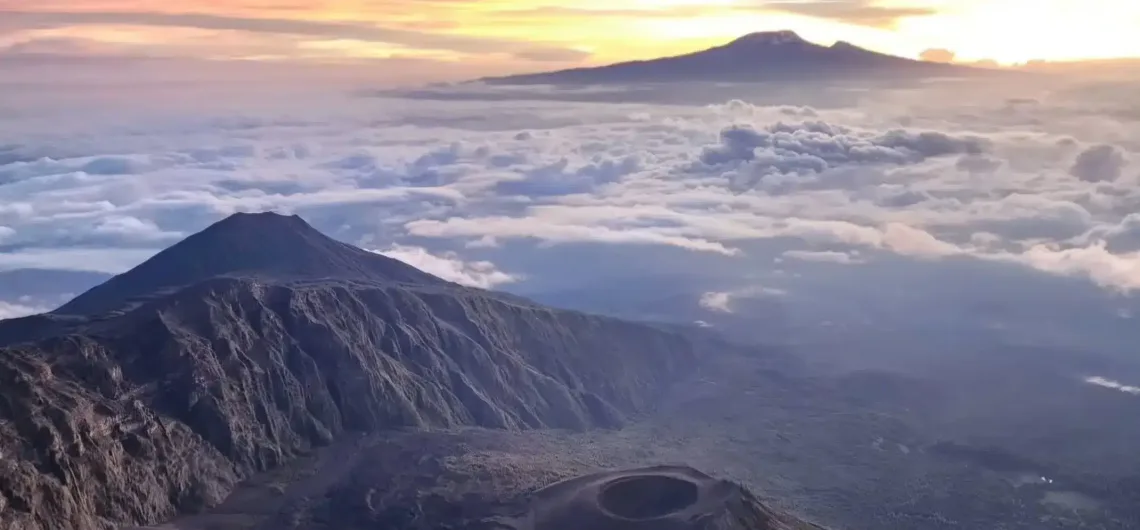
Mount Meru (4,562–4,566 m) and Mount Kilimanjaro (5,895 m) are two separate stratovolcanoes located about 70 km (43 miles) apart in northern Tanzania, even though they are part of the Eastern Arc ranges. The terrain between them consists mostly of savanna plains and lower ground rather than a continuous mountain ridge. There is no traditional mountain pass or col connecting them, as you would find in a mountain range. I based this analysis on SRTM elevation data from CGIAR. I started by creating a map of the region around Mount Meru, Kilimanjaro, and Mount Kenya, using two colours: Green = 1,395 m or lower Purple = higher than 1,395 m This map shows that you can travel from Mount Meru to Mount Kenya while staying entirely in the purple (higher) areas. However, to reach Kilimanjaro from Meru, you must cross green (lower) terrain. The narrow purple connection just north of Mount Meru corresponds to the key col linking Meru to Mount Kenya at 1,395 m. To answer your specific question — what is the highest possible saddle between Meru and Kilimanjaro — I adjusted the elevation cutoff through trial and error until I found the lowest value that still allowed a continuous high-ground (purple) connection between the two mountains. At a cutoff of 1,373 m (green = 1,373 m or lower, purple = higher than 1,373 m), a path finally appears connecting Mount Meru to Kilimanjaro while staying in purple terrain. This represents the highest saddle between the two peaks. The col between Mount Meru and Mount Kilimanjaro is approximately 1,373 metres above sea level (give or take a few metres). This is roughly 20 metres lower than the key col between Mount Meru and Mount Kenya. The approximate location of this col is around 37.0050°E, 3.1382°S. Because the terrain
Mount Meru (4,562–4,566 m) and Mount Kilimanjaro (5,895 m) are two separate stratovolcanoes located about 70 km (43 miles) apart in northern Tanzania, even though they are part of the Eastern Arc ranges. The terrain between them consists mostly of savanna plains and lower ground rather than a continuous mountain ridge. There is no traditional
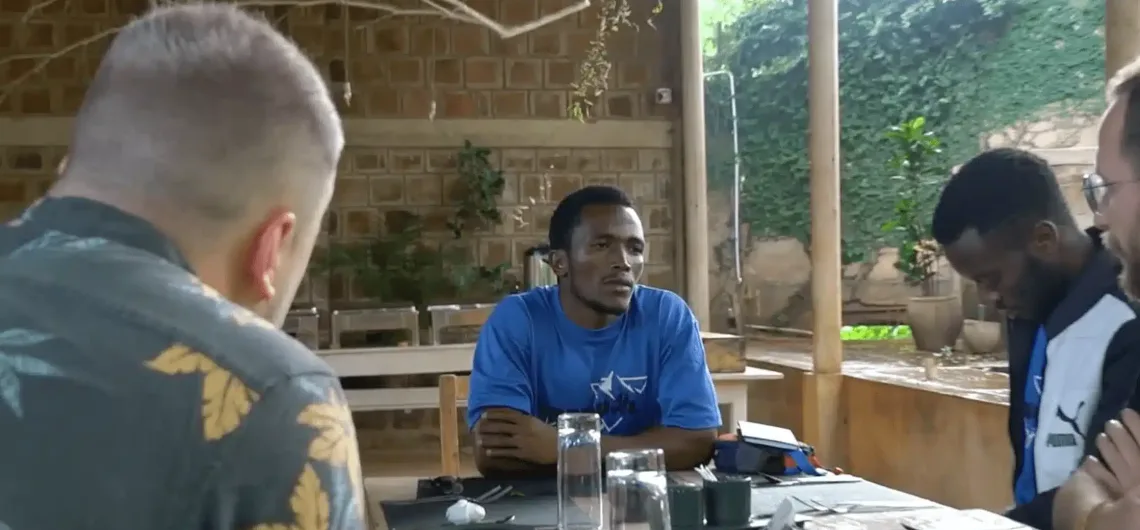
The pre-trek briefing and gear check might seem repetitive and monotonous, but it is one of the most important aspects when it comes to tackling Mount Kilimanjaro. You might be wondering, we have gone through the list, we have talked about it the whole time through emails and WhatsApp chats, why go over these lists again and again? Well, a lot happens during flights, or you might have forgotten something important while packing. We want your trek to be as comfortable and efficient as possible. You might have new questions or ideas that were not covered previously, but prior to your trip, feel free to shoot your questions. It is also a great time to know your mountain guide and make sure your needs are met, like dietary restrictions and the food menu on the mountain. It is also a great moment to plan how you will source the gear you are missing for your climb. What time does the pre-trek briefing and gear check take place? Usually, we begin with an introduction formality between you and the main guides, usually from 4 pm - 7 pm, depending on your arrival time at the airport. For example, if you are climbing on July 12th, the pre-trek briefing will take place on June 11th at 5 pm. If you arrive early, we usually leave you to rest before joining you later for the brief discussion. Where does the pre-trek briefing and gear check happen? Usually these sessions happen at your hotel, for example Chanya Lodge, Maridadi Hotel, or similar, because it is more convenient logistically unpacking your gear where you have settled well enough. Cross-checking your gear list and your packing list follows shortly after. mostly at your hotel in Moshi or Arusha. Climbing Mount Kilimanjaro is one of the world’s
The pre-trek briefing and gear check might seem repetitive and monotonous, but it is one of the most important aspects when it comes to tackling Mount Kilimanjaro. You might be wondering, we have gone through the list, we have talked about it the whole time through emails and WhatsApp chats, why go over these lists