
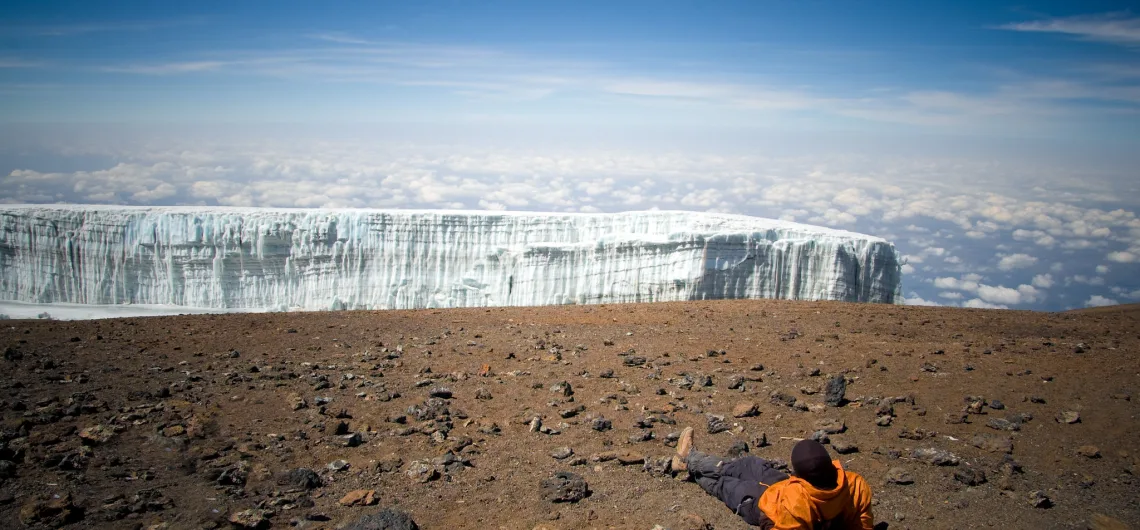
Tropical climates swing dramatically over time, from powerful year-to-year shifts like the 1997–1998 El Niño to multi-millennial changes such as the once-lush “green Sahara” that thrived roughly 10,000 to 5,500 years ago. Today, three-quarters of humanity lives in the tropics, so these fluctuations carry enormous consequences for societies, agriculture, and water supplies. With modern weather records spanning only a short period, scientists rely on ancient climate archives to understand the full picture: how the tropics influence global energy and water cycles, how they connect to polar regions, and how sensitive they might be to future warming.
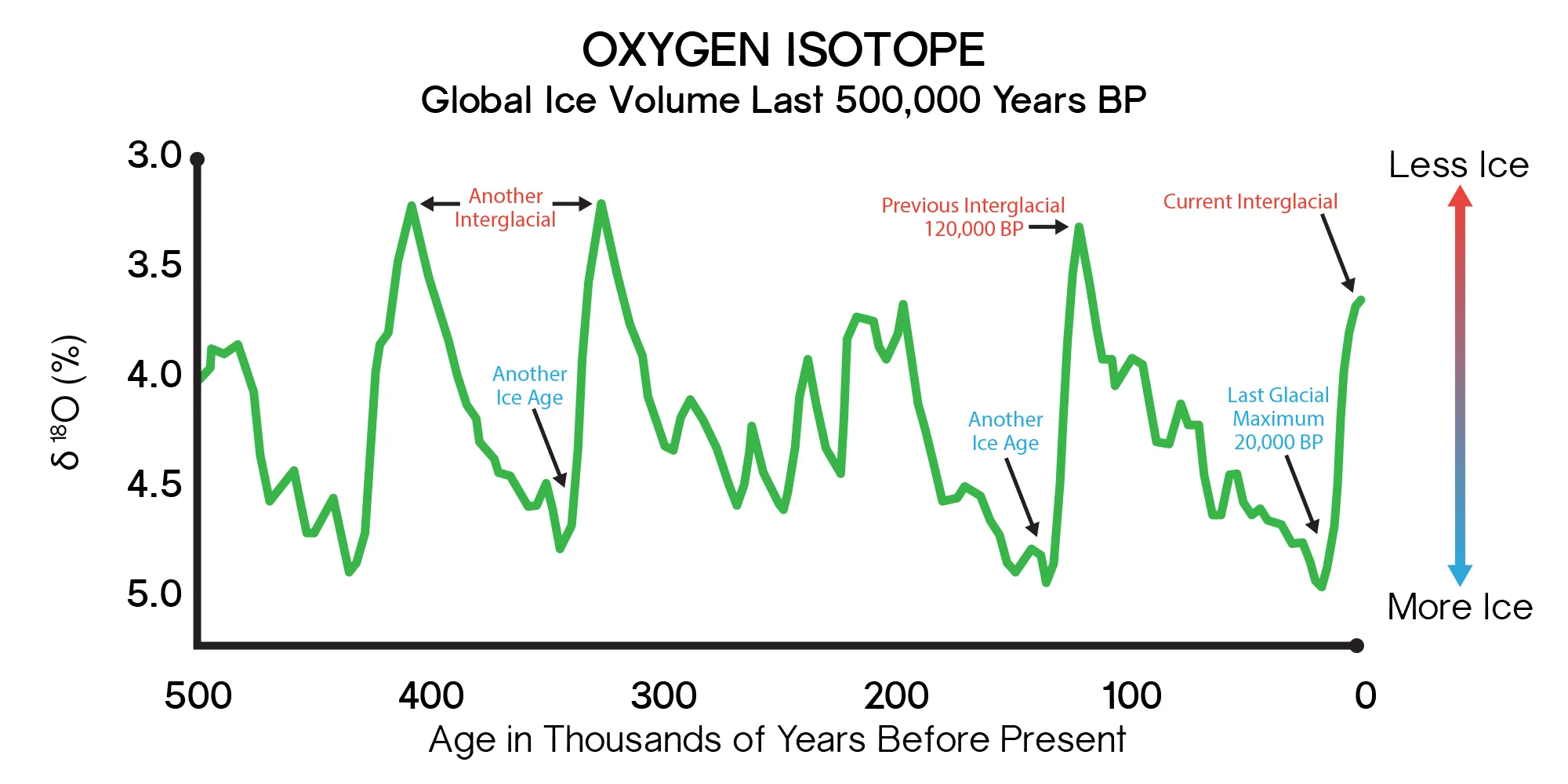 In a groundbreaking 2002 study, researchers led by Lonnie Thompson drilled the first ice cores ever recovered from Africa, taken from the glaciers atop Kilimanjaro—the continent’s highest mountain, sitting right on the equator in the East African monsoon zone. The nearly continuous, high-resolution record covers the entire Holocene epoch, stretching back about 11,500 years to the present. Writing in Science, paleoclimatologist Françoise Gasse highlights what this new African data adds to our understanding of tropical climate history and why it matters.
The team analyzed oxygen isotope ratios (δ¹⁸O) in the ice to reconstruct past temperatures, while spikes in insoluble dust and chemical aerosols served as markers of major dry periods. Sodium peaks hinted at shorter, localized erosion events tied to brief droughts. At the broadest scale, the record reveals two distinct climate eras: a warmer, much wetter phase from roughly 11,000 to 4,000 years ago, followed by cooler and drier conditions over the past four millennia. This long-term pattern matches evidence from lakes, oceans, and land sediments across the northern tropics and equatorial East Africa. Stronger monsoon rains during the early-to-middle Holocene were driven by subtle shifts in Earth’s orbit that increased summer solar heating in the Northern Hemisphere.
Shorter, abrupt climate flips—lasting decades to centuries—can hit human societies hardest. Dating ice cores from the tropics is notoriously tricky because they contain little organic material for radiocarbon analysis. Thompson’s team used a combination of markers: a clear 1952 layer identified from radioactive fallout of nuclear tests, a match with a dated speleothem (cave deposit) from the Eastern Mediterranean, and correlations between oxygen-isotope lows and known minima in solar activity. While these anchors make the timeline reasonably reliable when cross-checked against other records, Gasse cautions that some proposed event timings should be viewed carefully.
The vanishing glaciers of Mount Kenya and the disappearing Lewis Glacier
The Kilimanjaro data adds fresh detail to several well-known climate episodes. It points to significant cooling across equatorial Africa during the Little Ice Age (roughly 1270–1850 CE), a period of cooler conditions documented in Europe and elsewhere. Yet the hydrological impacts varied regionally: Lake Malawi in southern East Africa saw low water levels, while Kenya’s Lake Naivasha was relatively wet—especially during the Maunder Minimum of low solar activity. Three prominent dry episodes around 8,300, 5,200, and 4,000 years ago also stand out. The 4,000-year-ago drought coincides with major societal disruptions in ancient Egypt, Mesopotamia, and India, and has been linked to North Atlantic cooling. The 5,200-year event marks the sudden end of the “African Humid Period,” likely amplified by feedbacks involving sea-surface temperatures and vegetation loss. The 8,300-year drought aligns with a brief northern-hemisphere cooling and a global drop in atmospheric methane, probably triggered by solar variability that rippled through ocean and atmosphere circulation.
Ice cover on Kilimanjaro increases steadily to 5.92 square kilometres, almost triple the past size
One especially intriguing—and still debated—finding involves a marked drop in δ¹⁸O between about 6,500 and 5,200 years ago. Thompson’s group interpreted this as substantial mid-Holocene cooling. However, in the tropics, oxygen isotopes in rainfall often track precipitation amount and moisture sources more strongly than air temperature. A parallel high-resolution isotope record from alpine lakes on nearby Mount Kenya, backed by solid radiocarbon dates, suggests these same isotope shifts instead reflect heavier snowfall and changes in cloud height driven by Indian Ocean sea-surface temperatures. The two nearby records look similar, yet the temperature-versus-moisture interpretations differ. Resolving this will require better modern calibration of how tropical rainfall isotopes respond to climate variables.
Perhaps the most sobering takeaway is that these unique African ice cores may soon be the last of their kind. Kilimanjaro’s glaciers are retreating rapidly under 20th-century warming—the same trend affecting other tropical ice fields worldwide. If current patterns hold, the remaining ice could vanish within 15–20 years. For local communities, the immediate threat is not the temperature rise itself but the loss of reliable meltwater that supports farming, irrigation, and hydropower. At the same time, the disappearing ice means we are losing priceless archives of Earth’s climate history before they can be fully studied.
Kilimanjaro’s glaciers shrink as scientists warn Africa’s highest mountain may soon be ice free
The Kilimanjaro cores represent a major scientific milestone: Africa’s first direct window into long-term tropical climate behavior. They underscore both the value of these vanishing records and the pressing need to recover similar data from other tropical glaciers while it is still possible. As Gasse concludes, the tropics hold critical lessons about our planet’s climate system—and time is running out to read them.
Source: https://www.science.org/doi/10.1126/science.1078561
- Furtwängler Glacier
- Balleto Glacier
- Credner Glacier
- Heim Glacier and Kersten Decken Glaciers
- Arrow Glacier & Drygalsky Glacier
- Rebmann Glacier & Ratzel Glacier
- Kibo Crater
- Reusch Crater
- Ngorongoro Crater
- Northern ice field, Mount Kilimanjaro
- The Southern ice field, Mount Kilimanjaro

