
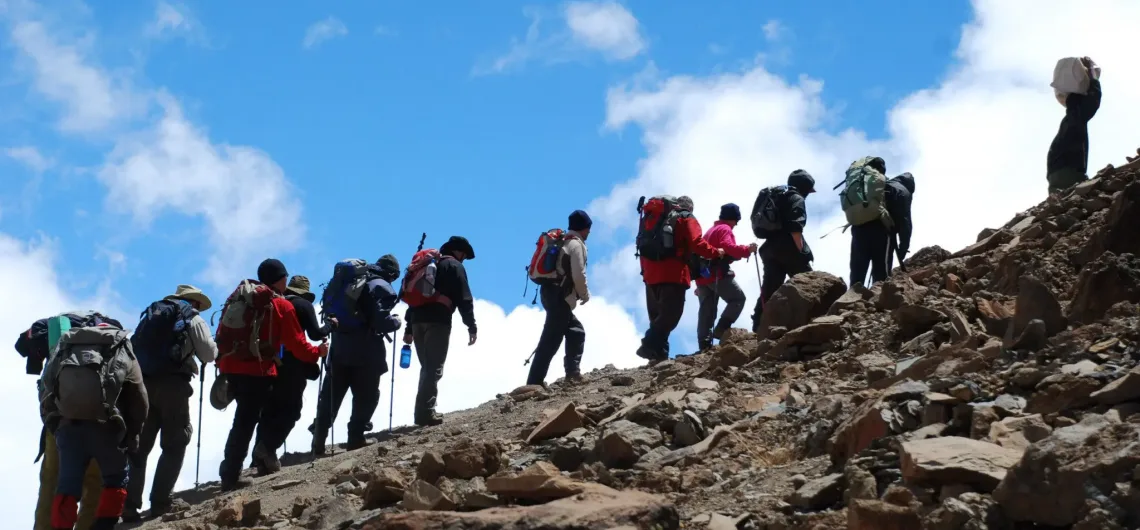
Mount Kilimanjaro can only be accessed from Tanzania; that is a fact because there are no established routes to climb Kilimanjaro from the Kenyan side to the north of Kilimanjaro. The only route near the Kenyan border is the Rongai Route, but it remains within Tanzania’s borders. So to climb Mount Kilimanjaro from Kenya, you have to go through the borders of Kenya, e.g., Namanga, Holili, etc., then enter Tanzania to begin your climb. Mount Kilimanjaro, Africa’s highest peak at 5,895 meters (19,341 feet), is one of the most iconic mountains on the planet. It draws tens of thousands of climbers every year who dream of standing on Uhuru Peak, the summit of the Kibo cone. Yet a persistent question arises among travelers: why can you only climb it from Tanzania? Why not from neighboring Kenya, especially since the mountain is clearly visible from Kenyan soil? The short answer is simple and unambiguous: the entire mountain lies within Tanzania’s borders. There are no legal, geographical, or practical routes that begin on Kenyan territory. All official climbing permits, gates, and infrastructure belong exclusively to Tanzania’s Kilimanjaro National Park. But the full story is richer—rooted in geography, colonial history, international treaties, and modern park management. Let’s unpack it fact by fact.
The Geographical Reality: Kilimanjaro Is 100% Tanzanian
Mount Kilimanjaro is a massive dormant volcano in northeastern Tanzania, approximately 20 kilometers (12.4 miles) south of the Kenya-Tanzania border. It rises dramatically from the surrounding plains as a free-standing massif made up of three distinct volcanic cones: Kibo (the highest and central summit), Mawenzi (the jagged eastern peak), and the eroded Shira plateau to the west. The Kenya-Tanzania border runs along the northern base of the mountain. Official boundary descriptions from the late 19th century explicitly state that the line “skirts the northern base of the Kilimanjaro range” before continuing eastward. This places every slope, ridge, glacier, and summit squarely inside Tanzania. Even the closest approach—the northeastern flank—remains on the Tanzanian side.
- Can you see Mt. Kilimanjaro from Mt. Kenya?
- How to travel from Nairobi to Kilimanjaro & Express booking in Tanzania
- Can Kilimanjaro be seen from Nairobi, Kenya?
- How can I get from Nairobi to Kilimanjaro?
- 3 Days Kilimanjaro View & Elephants, Amboseli Kenya Safari
- How to do a day hike with views of Kilimanjaro without having to enter the park
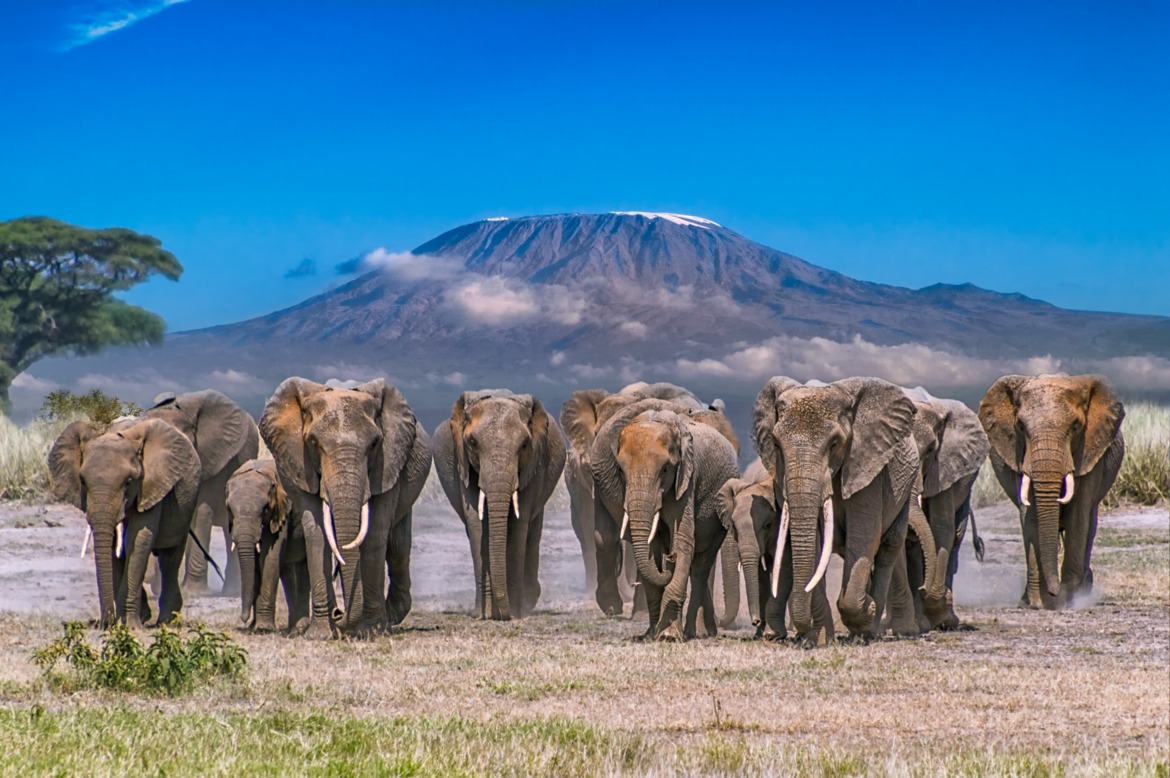
You can see the mountain clearly from Kenya, particularly from Amboseli National Park and Tsavo West. On clear days, the snow-capped dome of Kibo floats above the savanna like a mirage. But visibility is not access. No trail, road, or path crosses from Kenyan territory onto the mountain without first entering Tanzania.
Is Mount Kilimanjaro in Kenya or Tanzania?
Classic views of Kilimanjaro from Amboseli National Park in Kenya—stunning, but you’re still looking across an international border.
The Colonial Border Story: Fact, Fiction, and a Famous Anecdote
The placement of Kilimanjaro inside modern Tanzania stems from the 1886 Anglo-German Agreement, which partitioned East Africa between Britain and Germany. The border was drawn with a deliberate northward bulge around the mountain so that Kilimanjaro fell into German East Africa (later Tanganyika, now Tanzania). A straight-line border would have placed it in British East Africa (Kenya). A colorful anecdote has persisted for decades: Queen Victoria supposedly “gave” Kilimanjaro to her grandson, Kaiser Wilhelm II of Germany, as a birthday present because Britain already had Mount Kenya. The story claims she ordered the border redrawn so Germany could have its own snow-capped peak. It’s a charming tale—often repeated in guidebooks and social media—but historians consider it largely mythical. No contemporary documents support a personal royal gift. The 1886 treaty was a pragmatic diplomatic deal between governments, not a family birthday surprise. At the time, Wilhelm II had not yet ascended the throne; his grandfather was emperor. The border adjustment was about territorial claims, not royal generosity. Whatever the motivation, the result was clear: by the time Tanganyika became independent in 1961 and Kenya in 1963, the border was long settled. Kilimanjaro has been in Tanzanian territory for well over a century.
Remembering Queen Elizabeth, what her death means, and why Mount Kilimanjaro is in Tanzania?
Legal and Administrative Control: Kilimanjaro National Park
Since 1973, the mountain has been protected as Kilimanjaro National Park (KINAPA), a UNESCO World Heritage Site. The Tanzanian government, through KINAPA, holds sole authority over entry, permits, and operations. All seven official climbing routes—Marangu, Machame, Lemosho, Shira, Umbwe, Mweka, and Rongai—begin inside the park on Tanzanian soil. Climbers must purchase park permits, pay rescue fees, and hire licensed Tanzanian guides and porters. Independent climbing is prohibited; every expedition must be organized through a registered Tanzanian tour operator. These rules apply regardless of nationality. There are no equivalent Kenyan gates, fees, or authorities on the mountain. Even the Rongai Route—the one that starts nearest the Kenyan border—begins at the Rongai Gate inside Tanzania, roughly 12 km from the actual frontier. You approach from the Kenyan side of the border (often via the Loitokitok crossing), but you immediately enter Tanzanian territory and the national park.
Official Kilimanjaro route map showing all trails originate inside Tanzania. Note the Rongai Route on the far northeast, still well within the park boundary.
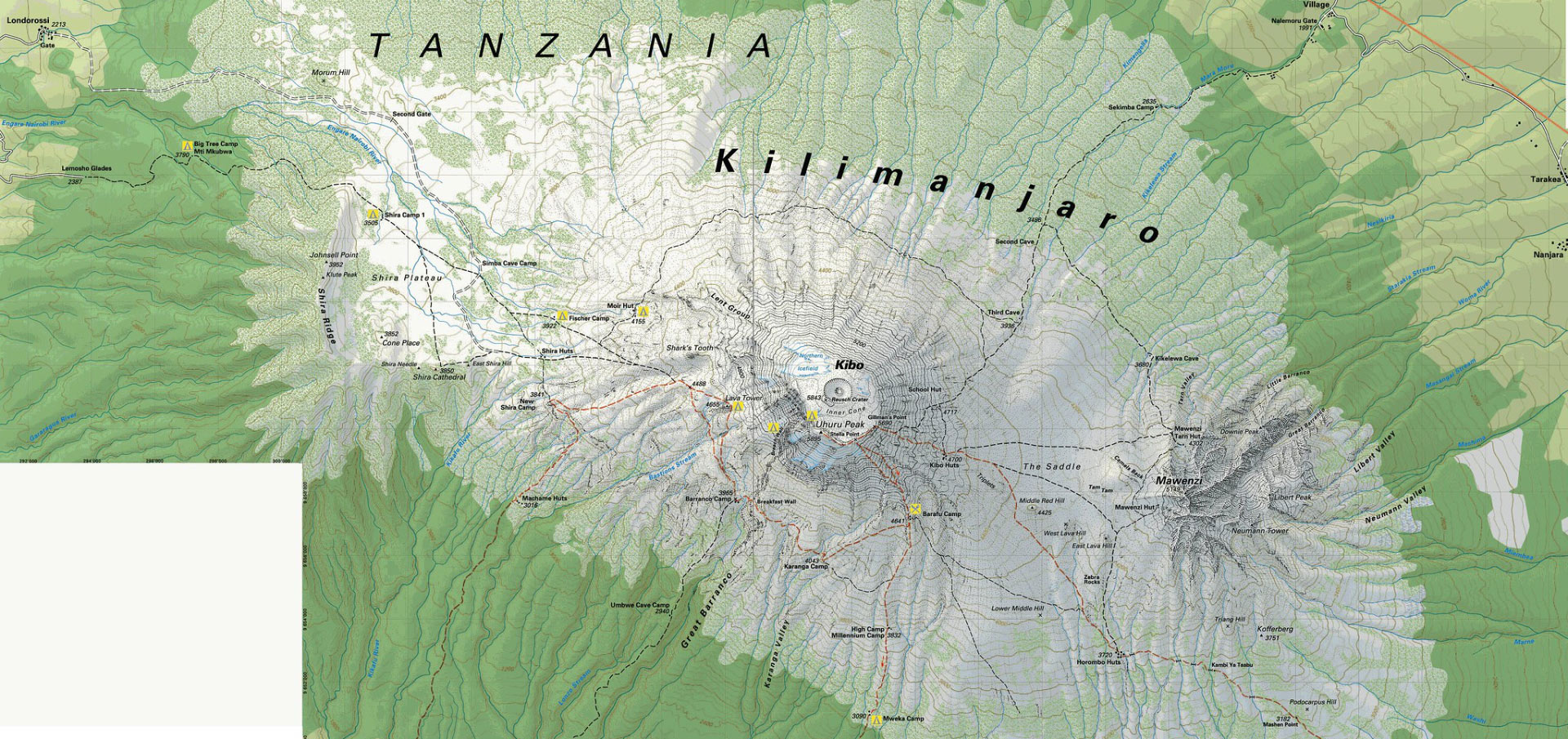
Detailed topographic map with Rongai highlighted—starting deep inside Tanzania near the border.
Practical Realities: No Kenyan Infrastructure Exists
From a climber’s perspective, attempting to “climb from Kenya” is impossible for logistical reasons:
- No access points: Kenya has zero official trailheads, gates, ranger stations, or rescue infrastructure on Kilimanjaro.
- Border logistics: Most international climbers fly into Kilimanjaro International Airport (JRO) near Arusha or cross from Nairobi via Namanga or Loitokitok border posts. You must clear Tanzanian immigration and obtain a visa (if required) before reaching any trail.
- Park regulations: Even if you physically crossed the border on foot near Rongai (which is heavily patrolled and not a public crossing), you would still need Tanzanian permits and guides. Unauthorized entry is illegal and dangerous.
- Safety and environment: The mountain’s glaciers, high-altitude zones, and wildlife corridors are managed exclusively by Tanzania. Kenya has no jurisdiction.
Some tour companies advertise “Kilimanjaro from Kenya” packages. These are simply overland transfers: you start in Nairobi, cross into Tanzania, and climb via standard routes. You are still climbing from Tanzania.
Why the Misconception Persists
Kenyans and international marketers have long highlighted the dramatic views from Amboseli and Tsavo. Kenya’s tourism industry benefits from the mountain’s silhouette without the climbing crowds. Add social media photos captioned “Kilimanjaro from Kenya” and the colonial-era border myth, and confusion spreads easily. Yet geography and law are clear: the mountain belongs to Tanzania. Kenya has its own world-class peak—Mount Kenya (5,199 m)—which offers technical climbing on Batian and Nelion and lies entirely within Kenyan borders. The two mountains are often compared, but they are distinct national treasures.
Climb Mount Kilimanjaro with Tranquil Kilimanjaro
Climbing Kilimanjaro is a bucket-list experience precisely because it is so carefully stewarded by Tanzania. The country has invested decades in sustainable tourism, porter welfare, and conservation. Every step you take on any route—from the lush rainforest of Lemosho to the frozen crater of Kibo—falls under Tanzanian protection.If you want to stand on the roof of Africa, book with a reputable Tanzanian operator, fly or drive to Moshi or Arusha, and start your trek from one of the official gates. The views from Kenya are free and spectacular, but the summit is only reachable from the south. Kilimanjaro isn’t “shared” or “on the border.” It is Tanzania’s mountain—proudly, legally, and geographically. And that’s exactly why your climb will be an authentic Tanzanian journey, one that respects the land, the people, and the history that placed this giant exactly where it belongs. Contact us today to climb with Tranquil Kilimanjaro.
- The best non-touristic or commercial routes to unlock on Kilimanjaro from the 2027-2028 climbing season
- Youngest person to summit Kilimanjaro and Mount Kenya
- 24 Days Ultimate East Africa Adventure & Gorilla Trekking, Mount Kenya, Kilimanjaro, and Safari in Tanzania
- Mount Kenya & Mount Kilimanjaro, 2 Weeks & 2 peaks
- Mount Kenya, Mount Meru & Mount Kilimanjaro (3 Peaks & 3 Weeks)
- 3 Peaks, 30 Days Grand East Africa Trek & Rwenzori (Uganda), Mount Kenya, Kilimanjaro (Tanzania)
- How to choose the best shirt for hiking Kilimanjaro, Mount Kenya & Mount Meru
- 5 Essential Pants to Pack for Climbing Kilimanjaro, Mount Kenya, Mount Meru

